ConvertKit Alternatives: 10 Email Platforms for Creators (Pricing & Features Compared)
Complete comparison of the best ConvertKit alternatives for newsletter creators. Real pricing at every tier, honest pros and cons, and which platform actually fits your needs and budget in 2026.

ConvertKit has become synonymous with "email marketing for creators." Walk into any creator community, and you'll hear the same advice: "Just use ConvertKit." And look, it's a solid platform. But here's what nobody tells you: ConvertKit might not be the best choice for YOUR specific needs, and it's definitely not the cheapest option.
I've talked to hundreds of newsletter creators, and the same complaints come up repeatedly: "ConvertKit is too expensive for my list size." "I don't need all these features I'm paying for." "The learning curve was steeper than I expected." "I can't monetize the way I want to." These are legitimate concerns, and they're driving creators to explore alternatives.
The email platform landscape has exploded in the past few years. What used to be a choice between 2-3 major players is now a diverse ecosystem of specialized platforms, each optimized for different creator types and business models. Some are built specifically for paid newsletters. Others excel at automation. Some prioritize simplicity. Others focus on monetization from day one.
In this comprehensive comparison, I'm breaking down 10 serious ConvertKit alternatives, including detailed pricing, feature sets, ideal use cases, and honest pros and cons. Whether you're migrating from ConvertKit, starting fresh, or just exploring options, you'll know exactly which platform fits your needs and budget.
And yes, we'll talk about actual numbers—monthly costs at different subscriber tiers, transaction fees, hidden charges, and the true cost of ownership. Because the "starting at $29/month" pricing you see advertised rarely tells the full story.
Why Creators Are Looking Beyond ConvertKit
Before we dive into alternatives, let's understand why creators are exploring other options. ConvertKit is good—really good—but it's not perfect for everyone. Here are the main pain points:
The Pricing Problem:
ConvertKit's pricing structure hits hard as you grow. Let's look at the actual costs:
- 1,000 subscribers: $29/month (Creator plan) or $59/month (Creator Pro)
- 3,000 subscribers: $49/month or $79/month
- 5,000 subscribers: $79/month or $124/month
- 10,000 subscribers: $149/month or $199/month
- 25,000 subscribers: $279/month or $379/month
For a creator with 10,000 subscribers paying $149/month, that's $1,788 per year just for email hosting. If you're not making at least $500-1,000/month from your newsletter, that's a significant chunk of your revenue going to platform fees.
The Feature Mismatch:
ConvertKit is built for digital product creators who need complex funnels and automation. But many newsletter creators just need:
- Simple email sending
- Basic segmentation
- Clean template design
- Monetization options
- Analytics that matter
You're paying for advanced automation, landing page builders, and integration capabilities you might never use. It's like buying a pickup truck when you need a sedan—yes, it works, but you're paying for utility you don't need.
The Monetization Gap:
ConvertKit doesn't have built-in paid subscriptions, programmatic ads, or native sponsorship management. You can work around this with integrations and third-party tools, but that adds complexity and often additional costs. Many creators want monetization features built into the platform they're already using.
The UI/UX Debate:
ConvertKit's interface is powerful but not intuitive for everyone. New users often report a steep learning curve. While powerful users love the flexibility, beginners want something simpler that just works out of the box.
None of these critiques make ConvertKit bad—it's still an excellent platform for the right creator. But they explain why exploring alternatives makes sense. Let's look at what else is out there.
How to Choose the Right Email Platform for Your Needs
Before we compare specific platforms, let's establish what matters. Different creators need different things. Here's a framework for evaluating email platforms:
The Five Critical Factors:
1. Pricing Structure and True Cost
Look beyond the advertised starting price:
- What's the cost at YOUR current subscriber count?
- What will it cost when you double or triple your list?
- Are there transaction fees on paid subscriptions?
- Are there hidden fees for features you need?
- What's included in the base plan vs. upsells?
2. Core Features You Actually Use
Be honest about what you need:
- Email editor: Drag-and-drop or HTML/Markdown?
- Automation: Complex sequences or simple autoresponders?
- Segmentation: Basic tags or advanced behavioral targeting?
- Analytics: What metrics do you actually check?
- Templates: Pre-built designs or custom flexibility?
3. Monetization Capabilities
How do you plan to make money?
- Built-in paid subscriptions?
- Programmatic advertising support?
- Sponsorship management tools?
- E-commerce integrations?
- Affiliate program functionality?
4. Ease of Use vs. Power
What's your technical comfort level?
- Beginner: Need simple, guided setup
- Intermediate: Want balance of simplicity and flexibility
- Advanced: Prefer full control and customization
5. Migration Difficulty
If switching from another platform:
- How easy is subscriber import?
- Can you migrate templates and sequences?
- What about maintaining subscriber engagement history?
- Does the new platform offer migration assistance?
Use this framework as you read through the platform comparisons below. Ask yourself which factors matter most for YOUR specific situation.
The 10 Best ConvertKit Alternatives (Detailed Comparison)
I've organized these platforms from most similar to ConvertKit (direct competitors) to more specialized alternatives. Each includes real pricing, key features, and who it's actually best for.
1. Beehiiv
Quick Take: The Modern Newsletter Platform
Best for: Serious newsletter creators who want modern features and built-in monetization
Pricing (2026):
- Launch (Free): Up to 2,500 subscribers, basic features
- Grow ($49/month): Up to 10,000 subscribers, removes branding, adds features
- Scale ($99/month): Up to 100,000 subscribers, advanced features, priority support
- Max ($266/month): Up to 1M subscribers, enterprise features
Key Features:
- Built-in paid subscriptions (takes 2.9% transaction fee)
- Native ad network for programmatic monetization
- Beautiful, modern email editor
- Referral program system (SparkLoop-like, built-in)
- Website and blog hosting included
- 3D analytics dashboard
- Multiple newsletters under one account
- Custom domains and branding
Pros:
- All-in-one platform (no need for external monetization tools)
- Better pricing than ConvertKit at scale
- Modern, intuitive interface
- Fast, responsive platform
- Active development with regular new features
- Strong community of newsletter creators
Cons:
- Less automation than ConvertKit
- Fewer integrations (though growing quickly)
- Not ideal if you need complex funnels
- 2.9% transaction fee on paid subscriptions adds up
Best for:
Newsletter-first creators who want a platform built specifically for publishing and monetizing written content. Perfect if you plan to do paid subscriptions, sponsorships, or programmatic ads.
Cost Comparison to ConvertKit:
- At 5,000 subscribers: Beehiiv $49/month vs. ConvertKit $79/month (38% cheaper)
- At 10,000 subscribers: Beehiiv $49/month vs. ConvertKit $149/month (67% cheaper)
- At 25,000 subscribers: Beehiiv $99/month vs. ConvertKit $279/month (65% cheaper)
2. Substack
Quick Take: The Simplest Path to Paid Newsletters
Best for: Writers who want to focus solely on content, not platform management
Pricing (2026):
- Free newsletters: $0/month (completely free)
- Paid subscriptions: 10% of subscription revenue (Substack takes 10%, Stripe takes 2.9% + $0.30)
- No monthly fees, no subscriber limits, no feature tiers
Key Features:
- Dead simple email editor (minimalist by design)
- Built-in paid subscriptions and payment processing
- Substack Reader app (discovery + reading experience)
- Custom domain support
- Podcast hosting included
- Basic analytics
- Comment system (community features)
- Recommendations network for cross-promotion
Pros:
- Zero setup cost—start immediately
- Extremely simple interface (can't get easier)
- Strong brand recognition ("I have a Substack")
- Built-in discovery through Substack network
- No platform fees if you stay free
- Payment processing handled seamlessly
Cons:
- 10% fee on paid subscriptions is expensive at scale
- Very limited customization and branding
- No automation or segmentation
- No programmatic ads or sponsor tools
- Can't export subscribers easily (lock-in concern)
- Limited analytics compared to other platforms
Best for:
Pure writers who want to focus 100% on content creation, not platform management. Ideal for paid newsletters where simplicity trumps features. Not great for marketers or creators who need automation.
Cost Comparison Example:
- If you have 1,000 paid subscribers at $10/month = $10,000/month revenue
- Substack takes 10% = $1,000/month ($12,000/year)
- ConvertKit at 1,000 subscribers = $29/month ($348/year)
- Substack is 34x more expensive IF you do paid subscriptions
- But for free newsletters, Substack costs $0 vs. ConvertKit's $29+/month
3. Ghost
Quick Take: The Open-Source Powerhouse
Best for: Tech-savvy creators who want full control and customization
Pricing (2026):
- Starter ($11/month): Up to 500 members, basic features
- Creator ($31/month): Up to 1,000 members, more features
- Team ($63/month): Up to 5,000 members, team features
- Business ($249/month): Up to 50,000 members, priority support
- Self-hosted: Free if you host yourself (requires technical skills)
Key Features:
- Full website + newsletter platform (not just email)
- Built-in paid memberships (multiple tiers)
- SEO-optimized publishing
- Custom theme development (full code access)
- Native integrations with Stripe for payments
- Advanced member segmentation
- Email newsletter automation
- Analytics and member insights
Pros:
- Open-source (can self-host for free if technical)
- Beautiful, modern design out of the box
- Website + newsletter in one platform
- Flexible paid membership tiers
- Strong SEO capabilities (better than pure email platforms)
- Active developer community and marketplace
- No transaction fees on paid memberships (just Stripe's 2.9%)
Cons:
- Steeper learning curve than simpler platforms
- Requires more setup and configuration
- Not as email-focused as dedicated newsletter platforms
- Self-hosting requires significant technical expertise
- Limited automation compared to marketing platforms
Best for:
Creators who want a professional website AND newsletter on the same platform. Ideal for bloggers transitioning to newsletters, or newsletter creators who want strong SEO and discoverability. Great if you're technical and want customization options.
Cost Comparison to ConvertKit:
- At 1,000 subscribers: Ghost $31/month vs. ConvertKit $29/month (similar)
- At 5,000 subscribers: Ghost $63/month vs. ConvertKit $79/month (20% cheaper)
- At 10,000 subscribers: Ghost $63/month vs. ConvertKit $149/month (58% cheaper)
4. InfluencersKit
Quick Take: Built Specifically for Creator Monetization
Best for: Content creators who want simple setup with powerful monetization from day one
Pricing (2026):
- Starter ($19/month): Up to 2,500 subscribers, all core features
- Growth ($39/month): Up to 10,000 subscribers, advanced features
- Pro ($79/month): Up to 50,000 subscribers, priority support
- Enterprise (Custom): 50,000+ subscribers, white glove service
- Free trial available—no credit card required
Key Features:
- Built-in programmatic ads (monetize from day 1, no minimums)
- Paid subscription management (no transaction fees)
- Sponsor management dashboard
- Email editor optimized for newsletters
- Automation and segmentation
- Landing pages for lead magnets
- Analytics focused on monetization metrics
- Multiple monetization streams in one platform
Pros:
- Cheapest option among full-featured platforms
- Monetization-first approach (vs. feature-bloat)
- No transaction fees on paid subscriptions
- Programmatic ads available immediately (no approval needed)
- Simple, creator-friendly interface
- Fast setup (15 minutes to first send)
- Excellent value at every tier
Cons:
- Newer platform (less brand recognition than ConvertKit/Substack)
- Fewer third-party integrations (though core ones covered)
- Smaller user community (growing rapidly)
Best for:
Content creators across YouTube, Instagram, TikTok , LinkedIn, Twitter who want to monetize their email list quickly without complexity. Perfect for creators who value simplicity, affordability, and built-in monetization over endless features they won't use.
Cost Comparison to ConvertKit:
- At 2,500 subscribers: InfluencersKit $49/month vs. ConvertKit $41/month (ConvertKit cheaper on plan; IK includes monetization)
- At 5,000 subscribers: InfluencersKit $49/month vs. ConvertKit $89/month (45% cheaper)
- At 10,000 subscribers: InfluencersKit $49/month vs. ConvertKit $139/month (65% cheaper)
- At 25,000 subscribers: InfluencersKit $99/month vs. ConvertKit $199/month (50% cheaper)
5. MailerLite
Quick Take: Budget-Friendly with Solid Features
Best for: Cost-conscious creators who need reliable email marketing basics
Pricing (2026):
- Free: Up to 1,000 subscribers, 12,000 emails/month
- Growing Business ($10/month): Up to 1,000 subscribers, unlimited emails
- Advanced ($20/month): 1,000 subscribers + advanced features
- Pricing scales: 5,000 subs = $50/month, 10,000 subs = $90/month
Key Features:
- Drag-and-drop email editor
- Landing pages and website builder
- Automation workflows
- Subscriber segmentation
- E-commerce integrations
- 24/7 customer support
- Transactional emails
- A/B testing
Pros:
- Very affordable pricing structure
- Generous free tier (great for starting out)
- Clean, modern interface
- Good deliverability rates
- Solid automation for the price
- Multiple users included (even on lower tiers)
Cons:
- Not specifically built for newsletters/creators
- No built-in paid subscription features
- No native monetization tools
- Automation less powerful than ConvertKit
- Analytics are basic
Best for:
Budget-conscious creators who need solid email marketing functionality without the premium price tag. Good for newsletters that don't require complex automation or built-in monetization.
6. AWeber
Quick Take: The Reliable Veteran
Best for: Creators who want stability and don't need cutting-edge features
Pricing (2026):
- Free: Up to 500 subscribers
- Lite ($15/month): Up to 500 subscribers, remove branding
- Plus ($30/month): Up to 2,500 subscribers
- Scales to: 5,000 subs = $50/month, 10,000 subs = $75/month
Key Features:
- Email automation and autoresponders
- Landing page builder
- Email templates (700+ pre-built)
- List management and segmentation
- Integration marketplace
- 24/7 support (phone, chat, email)
- A/B split testing
- Analytics and reporting
Pros:
- 25+ years in business (very stable)
- Excellent customer support
- High deliverability rates
- Simple, straightforward interface
- Competitive pricing for small lists
- Free migration service from other platforms
Cons:
- Interface feels dated compared to newer platforms
- Not built specifically for creators/newsletters
- Automation less intuitive than competitors
- No built-in monetization features
- Limited modern features creators expect
Best for:
Creators who prioritize reliability and support over modern features. Good choice if you want a platform that "just works" without learning new interfaces.
7. Buttondown
Quick Take: The Minimalist's Choice
Best for: Writers who want markdown-based simplicity and privacy focus
Pricing (2026):
- Free: Up to 100 subscribers
- Standard ($9/month): Up to 1,000 subscribers
- Professional ($29/month): Up to 5,000 subscribers
- Enterprise ($199/month): Up to 50,000 subscribers
Key Features:
- Markdown-based email editor
- Premium subscriptions (via Stripe)
- Automation and scheduling
- RSS-to-email
- API access
- Custom domains
- Privacy-focused (GDPR compliant)
- Clean, distraction-free interface
Pros:
- Extremely affordable
- Perfect for markdown lovers
- No-nonsense, minimal interface
- Strong privacy and ethical stance
- Built-in paid subscriptions
- Developer-friendly with API access
- Fast and lightweight
Cons:
- Very basic features (by design)
- No visual email editor (markdown only)
- Limited templates and design options
- Minimal automation capabilities
- Not suitable if you need rich design
- Small user community
Best for:
Technical writers, developers, and minimalists who prefer markdown and want a simple, privacy-focused newsletter tool. Not for creators who need visual design or complex automation.
8. Flodesk
Quick Take: The Designer's Platform
Best for: Visual creators who prioritize beautiful email design
Pricing (2026):
- Flat rate ($38/month): Unlimited subscribers, all features
- Annual option: $456/year ($38/month equivalent)
- No tiered pricing—same cost whether you have 100 or 100,000 subscribers
Key Features:
- Stunning email templates (best-in-class design)
- Intuitive drag-and-drop editor
- Landing pages and forms
- Workflows and automation
- Segmentation capabilities
- Email checkout (sell products directly)
- Analytics dashboard
- Custom fonts and branding
Pros:
- Most beautiful emails, hands down
- Flat pricing becomes incredible value at scale
- Extremely easy to use
- Perfect for visual brands (fashion, design, lifestyle)
- Mobile-optimized everything
- Can sell products directly through emails
Cons:
- Expensive for small lists (vs $0-20/month competitors)
- Limited automation compared to ConvertKit
- Fewer integrations than established platforms
- Analytics are basic
- Not ideal for text-heavy newsletters
Best for:
Visual creators, lifestyle brands, fashion/beauty newsletters, and anyone who wants their emails to look magazine-quality. The flat pricing makes it a steal once you pass 5,000+ subscribers.
Cost Comparison:
- At 1,000 subscribers: $38/month (expensive vs. competitors)
- At 10,000 subscribers: $38/month vs. ConvertKit $149/month (74% cheaper)
- At 50,000 subscribers: $38/month vs. ConvertKit $400+/month (90%+ cheaper)
9. Mailchimp
Quick Take: The Swiss Army Knife (That's Expensive)
Best for: Businesses with e-commerce needs and marketing automation
Pricing (2026):
- Free: Up to 500 subscribers, 1,000 sends/month
- Essentials ($13/month): 500 contacts, 5,000 sends/month
- Standard ($20/month): 500 contacts, 6,000 sends/month
- Premium ($350/month): 10,000 contacts, starts here
- At 5,000 contacts: $85-135/month depending on tier
- At 10,000 contacts: $135-270/month
Key Features:
- Comprehensive marketing automation
- E-commerce integrations (Shopify, WooCommerce, etc.)
- CRM capabilities
- Social media advertising
- Landing pages and forms
- Advanced analytics and reporting
- Audience insights
- Multi-channel campaigns
Pros:
- Industry-leading brand recognition
- Comprehensive feature set
- Strong e-commerce focus
- Extensive integration marketplace
- Robust automation capabilities
- Multi-user collaboration tools
Cons:
- Expensive, especially at scale
- Overwhelming for simple newsletter needs
- Interface can be confusing
- Not built for content creators/newsletters
- Customer service reputation has declined
- Deliverability concerns in recent years
Best for:
E-commerce businesses and companies needing full marketing automation suites. Not recommended for pure newsletter creators—you're paying for features you won't use. Better alternatives exist at every price point for creators.
10. ActiveCampaign
Quick Take: The Automation Powerhouse
Best for: Advanced marketers who need complex automation and CRM
Pricing (2026):
- Starter ($29/month): 1,000 contacts
- Plus ($49/month): 1,000 contacts + CRM
- Professional ($149/month): 2,500 contacts + advanced features
- Enterprise (Custom): 2,500+ contacts, white glove service
- At 5,000 contacts: $129-229/month
- At 10,000 contacts: $229-379/month
Key Features:
- Advanced marketing automation (best-in-class)
- Full CRM included
- Sales automation
- Lead scoring and predictive sending
- Site tracking and event tracking
- SMS marketing
- Machine learning recommendations
- Attribution reporting
Pros:
- Most powerful automation platform
- Excellent for complex funnels
- CRM integration is seamless
- Great for digital product creators
- Strong deliverability
- Detailed analytics and reporting
Cons:
- Most expensive option for most creators
- Steep learning curve
- Overkill for simple newsletters
- Complex interface
- Not designed for content creators specifically
Best for:
Digital product creators with complex sales funnels, course creators, and businesses needing advanced automation. Not recommended for simple newsletters—you'll pay premium prices for features you don't need.
Side-by-Side Comparison: Key Factors
Let's compare all 10 platforms across the factors that matter most to newsletter creators:
Pricing at Common Subscriber Tiers:
1,000 Subscribers:
- Buttondown: $9/month
- MailerLite: $10/month
- AWeber: $15/month
- InfluencersKit: Free (up to 1,000)
- ConvertKit: $29/month
- Ghost: $31/month
- Flodesk: $38/month
- Beehiiv: Free (under 2,500)
- Substack: Free (for free newsletters)
5,000 Subscribers:
- Buttondown: $29/month
- Flodesk: $38/month
- InfluencersKit: $49/month
- Beehiiv: $49/month
- MailerLite: $50/month
- Ghost: $63/month
- ConvertKit: $89/month
- Mailchimp: $85-135/month
10,000 Subscribers:
- Flodesk: $38/month (flat rate wins)
- InfluencersKit: $49/month
- Beehiiv: $49/month
- Ghost: $63/month
- AWeber: $75/month
- MailerLite: $90/month
- ConvertKit: $139/month
- ActiveCampaign: $229+/month
Built-in Monetization Features:
- Paid Subscriptions: Beehiiv, Substack, Ghost, InfluencersKit, Buttondown
- Programmatic Ads: Beehiiv, InfluencersKit
- Sponsor Management: InfluencersKit
- E-commerce: Flodesk, Mailchimp, ActiveCampaign
- None: ConvertKit, MailerLite, AWeber (require integrations)
Best For Specific Creator Types:
- YouTubers/Instagram Creators: InfluencersKit, Beehiiv
- Pure Writers: Substack, Buttondown, Ghost
- Visual/Design Focus: Flodesk
- Tech-Savvy: Ghost, Buttondown
- Budget-Conscious: MailerLite, InfluencersKit, Buttondown
- Advanced Automation: ActiveCampaign, ConvertKit
- Scaling Fast: Flodesk (flat rate), Beehiiv
How to Actually Choose Your Platform
With 10 solid options, choosing can feel overwhelming. Here's my decision framework based on your specific situation.If monetization is your priority, also read our full monetization guide.',
Choose Based on Your Primary Goal:
If your goal is: MONETIZATION FROM DAY ONE
→ InfluencersKit (built-in programmatic ads, no minimums)
Alternative: Beehiiv (but requires 2,500 subs for ad network)
If your goal is: PAID SUBSCRIPTIONS
→ Substack (easiest setup) or Ghost (more control)
Alternative: Beehiiv or InfluencersKit (no 10% fee)
If your goal is: SAVE MONEY
→ MailerLite (small lists) or InfluencersKit (any size)
Alternative: Flodesk (if over 10k subscribers)
If your goal is: BEAUTIFUL DESIGN
→ Flodesk (best templates, hands down)
Alternative: Beehiiv (modern but not as design-focused)
If your goal is: MAXIMUM SIMPLICITY
→ Substack (can't get simpler)
Alternative: Buttondown (for markdown lovers)
If your goal is: COMPLEX AUTOMATION
→ ActiveCampaign (most powerful)
Alternative: ConvertKit (creator-focused automation)
If your goal is: FAST GROWTH AT SCALE
→ Beehiiv (built-in referral program)
Alternative: Any platform + SparkLoop integration
The Three-Question Decision Tree:
Question 1: Do you need complex automation and funnels?
- YES: ConvertKit, ActiveCampaign
- NO: Continue to Question 2
Question 2: Is monetization a primary focus?
- YES - Paid subscriptions: Substack, Ghost, Beehiiv
- YES - Ads/sponsors: InfluencersKit, Beehiiv
- NO: Continue to Question 3
Question 3: What's your budget priority?
- Lowest cost: MailerLite, Buttondown
- Best value: InfluencersKit, Ghost
- Premium features worth paying for: Beehiiv, Flodesk
Migration Guide: Switching from ConvertKit
If you're currently on ConvertKit and considering a switch, here's what you need to know about the migration process:
What's Easy to Migrate:
- Subscriber list: Export CSV from ConvertKit, import to new platform (30 minutes)
- Email templates: Most platforms accept HTML imports or have converters
- Basic automation: You'll need to rebuild, but logic transfers (2-4 hours)
- Custom fields/tags: Export with CSV, map to new platform's structure
What's Challenging:
- Complex automation sequences: Need manual rebuild (varies)
- Historical engagement data: Usually lost in migration
- Landing pages: Need to recreate on new platform
- Custom integrations: May not exist on new platform
Migration Timeline:
Week 1-2: Research and Testing
- Sign up for trial of new platform
- Import small segment (100 subscribers) to test
- Recreate key automation sequences
- Send test campaigns
- Verify deliverability
Week 3: Full Migration
- Export full subscriber list from ConvertKit
- Import to new platform
- Rebuild all automation
- Update forms and signup pages
- Test everything thoroughly
Week 4: Transition
- Send first newsletter from new platform
- Monitor engagement and deliverability
- Keep ConvertKit active for one more month (safety net)
- Cancel ConvertKit after confirming everything works
Final Recommendation: The Best Alternative for Most Creators
After evaluating all 10 platforms, here's my honest recommendation for different creator profiles. Also compare Beehiiv vs ConvertKit vs InfluencersKit head-to-head.
For 80% of Newsletter Creators:
InfluencersKit offers the best combination of affordability, monetization features, and ease of use. At 50-75% cheaper than ConvertKit while including programmatic ads, paid subscriptions, and sponsor management, it's specifically built for creators who want to monetize without complexity.
Runner-up: Beehiiv for creators who prioritize growth features and don't mind paying a bit more. Excellent platform with strong momentum and community.
For Pure Writers:
Substack if you want maximum simplicity and built-in discovery. See our Ghost vs Substack comparison for more detail. Just know you're paying a 10% premium on paid subscriptions for that simplicity.
Alternative: Ghost if you want more control and better economics, and you're comfortable with a bit more complexity.
For Budget-Conscious Creators:
MailerLite for small lists (under 1,000 subscribers). InfluencersKit once you pass 2,000 subscribers. Flodesk once you pass 15,000 subscribers (flat rate becomes unbeatable value).
For Advanced Marketers:
Stick with ConvertKit or upgrade to ActiveCampaign. You need the automation power, and the premium price is justified by the complexity you're managing.
Conclusion: You Have Options
ConvertKit is a great platform—nobody's disputing that. But the assumption that it's the only choice for creators, or even the best choice for most creators, simply isn't true in 2026.
The email platform market has matured. You now have specialized options built specifically for different creator needs and budgets. Whether you prioritize cost savings, built-in monetization, beautiful design, or maximum simplicity, there's a platform optimized for your specific situation.
Here's my advice: Don't choose a platform based on what everyone else uses. Choose based on YOUR specific needs, budget, and goals. Sign up for 2-3 free trials. Actually use them. Send test emails. See which interface makes sense to you. Check if the features you need are actually there, not just promised.
The right platform is the one that makes it easy for you to focus on what matters—creating valuable content for your audience and building a sustainable creator business. Everything else is just tooling.
And remember: You can always switch later. Most platforms make migration relatively painless. Don't let analysis paralysis keep you from starting. Pick the platform that looks best for your current situation, commit to it for 3-6 months, and adjust if needed.
Your newsletter's success depends on your content quality and consistency, not which email platform you choose. Pick one, get started, and focus on writing great stuff.
Try InfluencersKit Free for 14 Days
Built specifically for content creators who want to monetize their email list without complexity. Programmatic ads from day one, paid subscriptions with no transaction fees, and sponsor management—all at 50-75% less than ConvertKit.
Simple setup in under 15 minutes. No credit card required for trial. Migrate from ConvertKit (or any platform) with free migration assistance.
Start your free trial today and see why thousands of creators are choosing InfluencersKit over ConvertKit.
Stay Updated
Get the latest insights, strategies, and tips delivered directly to your inbox. Join thousands of creators who are building their email communities with our weekly newsletter.
No spam, unsubscribe at any time. We respect your privacy.
Related Articles
ActiveCampaign Alternatives: Cheaper, Creator-Focused Platforms That Do More
ActiveCampaign starts at $49/month, scales to $500+, and is built for B2B sales teams. Most creators use 15% of what they pay for while missing the features that actually matter: programmatic ads, referral programs, and paid subscriptions. Six alternatives compared honestly.

AWeber Alternatives: 7 Better Email Platforms for Creators in 2026
AWeber was built in 1998. It shows. No creator monetization features, charges for unsubscribes, and pricing that doesn't reflect modern alternatives. Honest breakdown of 7 better options — with specific recommendations by creator type and a migration guide.

Mailchimp for Creators: Why It's Not Built for Content Monetization (+ Better Alternatives)
Mailchimp is powerful for e-commerce, but falls short for content creators. Discover why creator-specific platforms offer better monetization, growth tools, and value for newsletters and content businesses.

Ghost vs Substack vs Email Marketing Platforms: Complete Comparison for Creators
Choosing between Ghost, Substack, and email platforms? This detailed comparison breaks down pricing, monetization, and features to help creators pick the right tool.

Your Readers Can Leave Without Ever Seeing Your Page.
Since 2024, Gmail and Yahoo require one-click unsubscribe. A mail-app button removes the reader instantly, with no page, no options and no reason. Your preference centre now reaches only footer-link leavers, so the 'less, not none' options belong inside the email.

They Unsubscribed, Then Signed Up Again. Now What?
Only the reader can reverse an unsubscribe. A fresh signup is a request, not proof. Why imports, forms and bulk edits quietly resubscribe people, and how to build a confirmation step that a link scanner or a stranger cannot trigger.

Your List Grew 1,500 Overnight. None of Them Are Real.
A signup spike with no launch behind it is usually list bombing. Fifteen hundred fake signups can push a welcome stream to six times Gmail's complaint limit and overstate your list by 30% to sponsors. How to spot them, why Apple Mail hides some, and how to clean up without making it worse.

Moving Your Newsletter? The List Is the Easy Part.
The CSV moves in five minutes. Sender reputation, unsubscribes, paid subscriptions, automations and old signup forms do not. The order that gets a newsletter to a new platform without losing inbox placement or emailing people who opted out.
Apple Broke Your Open Rate. And Your Subject Line Tests.
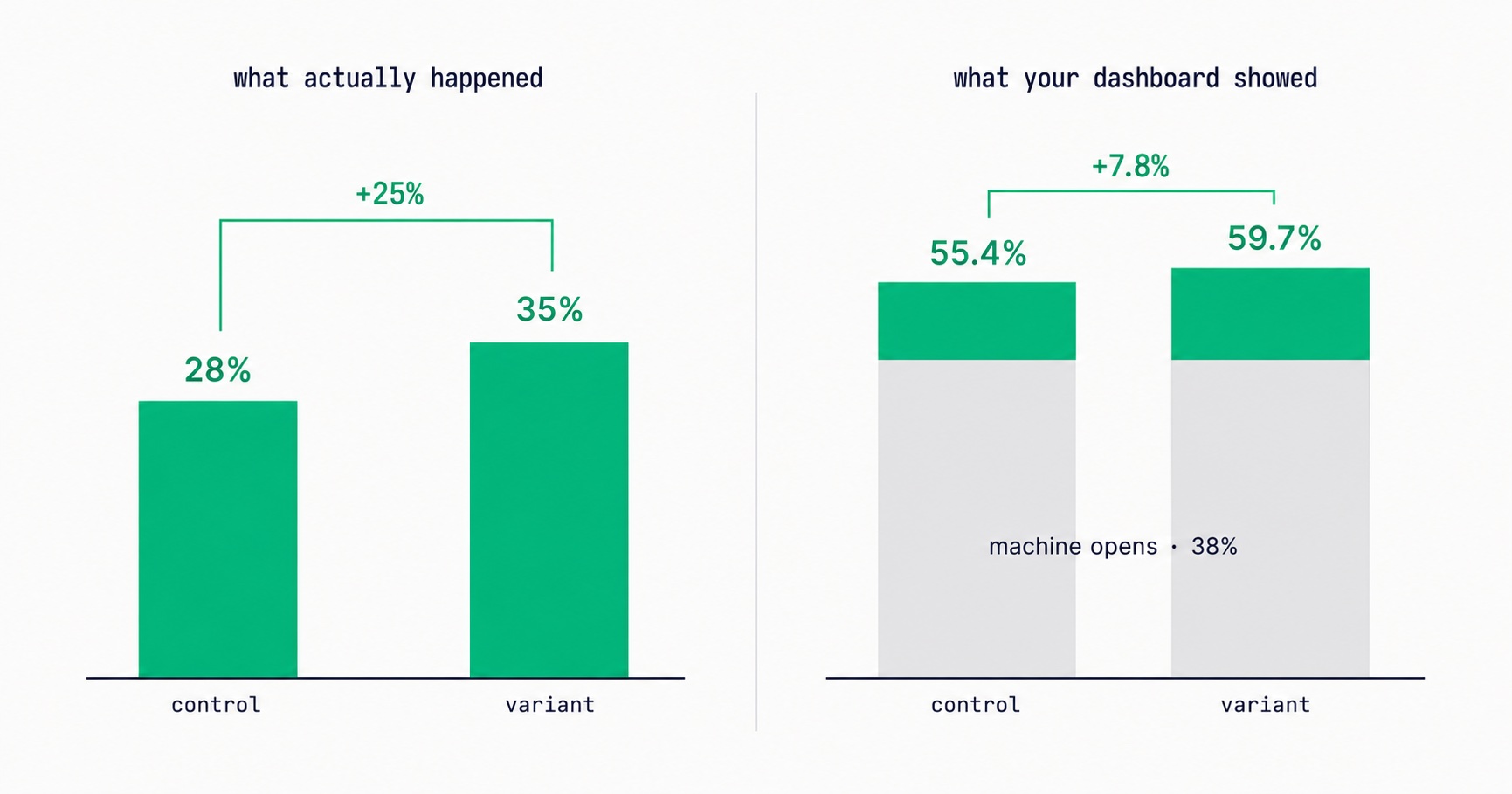
Every article about Apple Mail Privacy Protection says open rates are unreliable. None of them explain the part that actually changes your decisions: MPP doesn't add random noise, it systematically compresses the measured gap between two subject lines by roughly 3x — which is why so many creators ran good tests, saw flat results, and concluded subject lines don't matter.

Flodesk vs InfluencersKit: Which Email Platform Is Right for Your Creator Business?
Flodesk was built for beautiful emails. InfluencersKit was built for creator revenue. That design philosophy drives every product decision — and determines which platform is right for your business model. Honest comparison across pricing (including the flat-rate illusion), automation, monetization (where the gap is decisive), analytics, growth tools, and a three-year opportunity cost calculation that most platform reviews never run.

Newsletter Reactivation: How to Win Back Inactive Subscribers (With Templates)
Every newsletter has inactive subscribers silently dragging down deliverability. A well-designed reactivation campaign recovers 8–20% of them while identifying the truly unrecoverable. The four-part reactivation sequence, subject lines that break through inbox habituation, the list hygiene logic that improves metrics after removal, and the onboarding system that prevents inactivity from accumulating in the first place.

Newsletter Strategy for Course Creators: Build Your List, Warm Your Audience, Fill Your Program
Course sales require the deepest trust of any creator product. Email is the only channel that builds that trust systematically. The complete system: lead magnets that pre-qualify students, a 10-email welcome sequence designed for enrollment, inter-launch content strategy, launch sequence framework, post-launch re-engagement, and evergreen enrollment system.