Programmatic Ads for Newsletters: The Easiest Way to Monetize Your Email List (2026 Guide)
Start earning from your newsletter today with programmatic advertising. No sales calls, no minimum subscribers, just automated revenue. Learn which networks pay best, optimal ad placement, and realistic earnings at every subscriber tier.
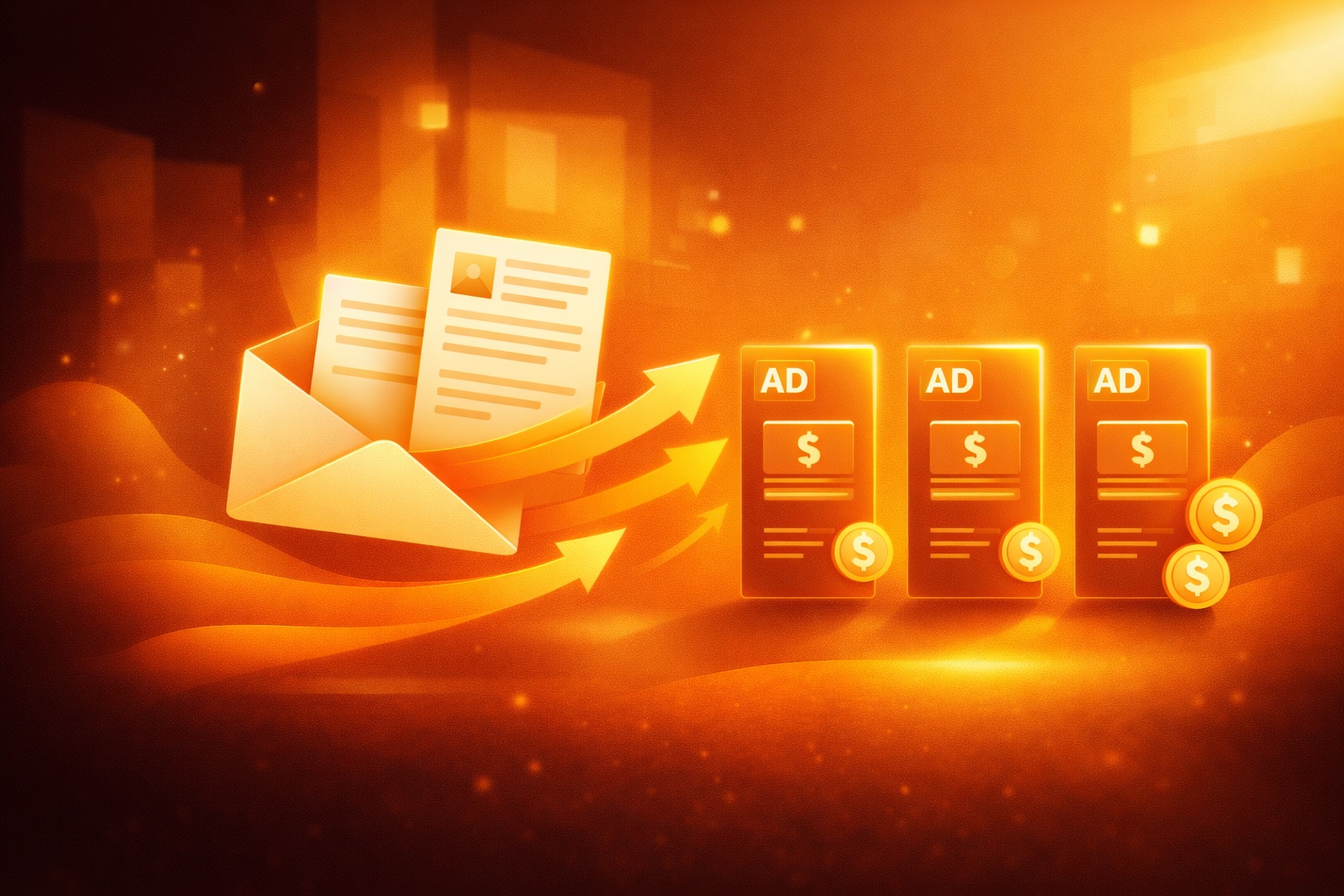
Here's something most newsletter creators don't realize: You can start making money from your email list today. Not next month when you finally land that sponsor. Not next quarter when you launch your paid tier. Today.
I'm talking about programmatic advertising—the most overlooked and underrated monetization method for newsletters in 2026. While everyone's obsessing over landing $2,000 sponsorship deals and building paid subscription tiers, they're ignoring the monetization method that requires zero negotiation, zero sales calls, and literally zero subscribers minimum.
You enable programmatic ads, and boom—you're making money. Every newsletter you send generates revenue automatically. It's not going to make you rich overnight, but it's the fastest path from $0 to your first $100, then $500, then $1,000+ per month. And unlike sponsorships where you need to constantly pitch and manage relationships, programmatic ads run on autopilot.
But here's what nobody tells you: Most creators set up programmatic ads completely wrong. They choose the wrong ad networks, place ads in positions that kill engagement, or worse—they wait until they have 10,000 subscribers to even try, missing out on thousands of dollars in revenue.
In this guide, I'm going to show you exactly how programmatic advertising works for newsletters, which platforms actually pay well in 2026, how to optimize placement without annoying your readers, and the realistic revenue you can expect at every subscriber tier. Whether you have 100 subscribers or 100,000, you'll know exactly how to implement programmatic ads the right way.
What Are Programmatic Ads for Newsletters? (And Why They're Perfect for Creators)
Let's start with the basics because there's a lot of confusion about what programmatic advertising actually means. In simple terms: programmatic ads are automated advertisements that get inserted into your newsletter. They work alongside direct sponsorships to maximize revenue. based on your content and audience, without you having to find advertisers or negotiate deals.
How Programmatic Ads Actually Work:
Think of programmatic ad networks as middlemen between you and thousands of advertisers. Here's the process:
- You integrate an ad network: Sign up with a programmatic ad platform, add a code snippet or use their built-in integration
- Network analyzes your content: The platform reads your newsletter content and understands your audience demographics
- Advertisers bid in real-time: When you send an email, hundreds of advertisers automatically bid to place their ad in your newsletter
- Highest bidder wins: The ad with the highest bid gets shown to your readers (this happens in milliseconds)
- You get paid: You earn money based on impressions (CPM). See our 2026 CPM rate benchmarks to know what to expect.
The entire process is automated. Start your free trial to enable programmatic ads in one click. You don't approve individual ads. You don't negotiate rates. You don't invoice advertisers. The network handles everything and pays you monthly. That's why it's called "programmatic"—it's all done by algorithms.
Why Programmatic Ads Are Perfect for Newsletter Creators:
Compared to other monetization methods, programmatic ads have unique advantages:
- Zero sales effort: No pitching, no proposals, no negotiation. When you're ready to add sponsors on top, read our sponsorship guide.
- No subscriber minimum: Most networks accept newsletters with as few as 100-500 subscribers. Learn how to build your list to increase your earnings.
- Consistent revenue: Every email you send makes money, creating predictable baseline income
- Works alongside other monetization strategies: You can run programmatic ads AND have sponsors AND offer paid subscriptions. They complement each other
- Scales automatically: As your list grows, your programmatic ad revenue grows proportionally without extra work
- No inventory management: Unlike sponsorships where you need to sell each slot, programmatic fills every email automatically
- Quick setup: Most platforms have you earning within 24 hours of signing up
Programmatic Ads vs. Direct Sponsorships:
Let me be clear: Direct sponsorships pay more per placement. A sponsor might pay $50-150 CPM while programmatic typically pays $15-50 CPM. But here's why programmatic still matters:
Programmatic Ads are better for:
- Small newsletters (under 2,000 subscribers)
- Newsletters without time to do sales
- Filling unsold inventory between sponsors
- Testing monetization before committing to sponsors
- Generating immediate cash flow while building audience
Direct Sponsorships are better for:
- Established newsletters (2,000+ engaged subscribers)
- Creators who enjoy sales and relationship building
- Maximizing revenue per email (2-3x higher rates)
- Building long-term partnerships with brands
- When you have time for sponsor management
The smart approach? Use programmatic ads when starting out or to fill gaps, then layer in direct sponsors as you grow. Many successful newsletter creators use both: premium direct sponsors pay $100+ CPM for 60% of their sends, while programmatic fills the other 40% at $25-40 CPM. This maximizes total revenue without leaving money on the table.
Realistic Revenue: What You'll Actually Make from Programmatic Ads
Let's cut through the hype and look at real numbers. Programmatic ad revenue varies widely based on your niche, audience quality, and subscriber count. Here's what you can realistically expect in 2026:
Current CPM Rates by Niche (2026):
Premium Niches ($30-50 CPM):
- Technology and software development
- Finance and investing
- B2B SaaS and enterprise
- Cryptocurrency and blockchain
- Real estate investing
Mid-Tier Niches ($20-35 CPM):
- Business and entrepreneurship
- Marketing and growth
- Career development
- E-commerce and retail
- Health and wellness (with caveats)
Standard Niches ($15-25 CPM):
- Design and creativity
- Productivity and personal development
- Food and cooking
- Travel and lifestyle
- Parenting and family
Lower-Paying Niches ($10-20 CPM):
- General news and entertainment
- Fashion and beauty (consumer-focused)
- Sports and fitness (recreational)
- Hobbies and crafts
- General lifestyle and inspiration
Monthly Revenue Projections by Subscriber Count:
Here are realistic monthly revenue estimates assuming average CPM rates for your niche, 40% open rate, and sending 3 emails per week:
500 Subscribers (Premium Niche - $35 CPM)
500 × 0.40 = 200 impressions per email
200 × ($35 ÷ 1,000) = $7 per email
$7 × 12 emails/month = $84/month
1,000 Subscribers (Mid-Tier Niche - $25 CPM)
1,000 × 0.40 = 400 impressions per email
400 × ($25 ÷ 1,000) = $10 per email
$10 × 12 emails/month = $120/month
2,500 Subscribers (Premium Niche - $40 CPM)
2,500 × 0.40 = 1,000 impressions per email
1,000 × ($40 ÷ 1,000) = $40 per email
$40 × 12 emails/month = $480/month
5,000 Subscribers (Mid-Tier Niche - $28 CPM)
5,000 × 0.40 = 2,000 impressions per email
2,000 × ($28 ÷ 1,000) = $56 per email
$56 × 12 emails/month = $672/month
10,000 Subscribers (Premium Niche - $45 CPM)
10,000 × 0.40 = 4,000 impressions per email
4,000 × ($45 ÷ 1,000) = $180 per email
$180 × 12 emails/month = $2,160/month
25,000 Subscribers (Mid-Tier Niche - $32 CPM)
25,000 × 0.40 = 10,000 impressions per email
10,000 × ($32 ÷ 1,000) = $320 per email
$320 × 12 emails/month = $3,840/month
These are conservative estimates. If you have higher open rates (50%+), send more frequently (daily), or command premium CPMs, your actual revenue could be 50-100% higher. Conversely, if your open rates are lower (under 35%) or you're in a lower-paying niche, expect 20-30% less.
The Compounding Effect:
What makes programmatic ads powerful isn't the per-email revenue—it's the compounding effect. Let's say you start with 800 subscribers making $80/month from programmatic ads. You grow 15% month-over-month (very achievable for newsletters). Here's what happens:
- Month 1: 800 subscribers = $80/month
- Month 3: 1,058 subscribers = $106/month
- Month 6: 1,609 subscribers = $161/month
- Month 9: 2,446 subscribers = $245/month
- Month 12: 3,717 subscribers = $372/month
Over 12 months, you've earned approximately $2,500 from programmatic ads alone—while you were simultaneously building sponsorship relationships, creating digital products, or launching paid subscriptions. The programmatic revenue required zero extra effort beyond your initial setup.
The Best Programmatic Ad Networks for Newsletters in 2026
Not all programmatic ad networks are created equal. Some pay better, some have better ad quality, some are easier to work with. Here's my breakdown of the top networks in 2026, with real pros and cons:
Top-Tier Networks:
1. Paved
Best for: Tech, business, and professional newsletters
Minimum requirements: 1,000 subscribers, 40%+ open rate
CPM range: $30-60 (premium niches)
Pros:
- Highest CPMs in the industry for B2B content
- Quality advertisers (SaaS, tech companies, professional services)
- Easy integration with major newsletter platforms
- Excellent support and optimization recommendations
Cons:
- Selective acceptance—not everyone gets approved
- Takes 25% commission (still worth it for the CPMs)
- Requires consistent publishing schedule
2. Carbon Ads
Best for: Design, development, and creative newsletters
Minimum requirements: 5,000 subscribers for newsletters
CPM range: $25-45
Pros:
- Excellent for design and tech audiences
- Clean, native-looking ad formats
- Premium advertisers focused on creative tools
- Strong fill rates (ads in most sends)
Cons:
- Higher subscriber requirement
- Less flexible with content categories
- Application process can take 2-4 weeks
3. SparkLoop Ads
Best for: Newsletters already using SparkLoop for growth
Minimum requirements: 1,000 subscribers
CPM range: $20-40
Pros:
- Seamless integration if you use SparkLoop
- Growing advertiser base
- Good analytics and reporting
- Can monetize recommendation space
Cons:
- Requires SparkLoop subscription ($50+/month)
- Still building advertiser network vs. established players
- CPMs can vary significantly week-to-week
Mid-Tier Networks (Good for Getting Started):
4. Letterwell
Best for: Various niches, newer newsletters
Minimum requirements: 500 subscribers
CPM range: $15-30
Pros:
- Lower barrier to entry
- Fast approval process
- Accepts broader range of content categories
- Good for building initial ad revenue
Cons:
- Lower CPMs than premium networks
- Fill rate can be inconsistent
- Ad quality varies more
5. BuySellAds
Best for: Tech and professional content
Minimum requirements: 2,500 subscribers
CPM range: $18-35
Pros:
- Established network with quality advertisers
- Also supports website and podcast monetization
- Transparent pricing and reporting
- Mix of programmatic and direct-sold inventory
Cons:
- Higher minimum than some competitors
- Interface less modern than newer platforms
- Can take time to optimize performance
Platform-Integrated Options:
6. Beehiiv Ad Network
Best for: Beehiiv users
Minimum requirements: 2,500 subscribers on Beehiiv
CPM range: $10-25
Pros:
- Built directly into platform (zero integration work)
- No additional fees beyond Beehiiv subscription
- Growing quickly with new advertisers
Cons:
- CPMs generally lower than dedicated networks
- Only available on Beehiiv
- Less control over ad placement
7. InfluencersKit Built-in Programmatic
Best for: InfluencersKit users at any size
Minimum requirements: None—works from day one
CPM range: $20-40 (varies by niche)
Pros:
- No subscriber minimum—monetize immediately
- One-click setup (literally toggle on/off)
- Optimized for creator audiences
- Transparent reporting in your dashboard
- No additional fees or commissions
Cons:
- Only available on InfluencersKit platform
- Newer network (though growing fast)
Which Network Should You Choose?
Here's my recommendation based on where you are:
- Under 1,000 subscribers: Use platform-integrated options (InfluencersKit, Beehiiv) or Letterwell. Don't wait to monetize.
- 1,000-5,000 subscribers: Apply to Paved (if B2B/tech) or SparkLoop Ads. These offer better CPMs as you grow.
- 5,000-15,000 subscribers: Get on Paved or Carbon Ads for premium rates. Consider running multiple networks to test.
- 15,000+ subscribers: Use premium networks (Paved, Carbon) for 70% of inventory, keep 30% for direct sponsors.
Pro tip: Many creators run 2-3 networks simultaneously, rotating them across different sends to maximize fill rates and CPMs. One week you use Network A, next week Network B. This prevents ad fatigue and lets you compare performance.
Strategic Ad Placement: Where to Put Ads Without Killing Engagement
This is where most creators get it wrong. They either bury ads where nobody sees them (wasting monetization potential) or plaster them everywhere (destroying the reading experience). The truth? Ad placement is a strategic decision that affects both revenue AND reader satisfaction.
The Three Primary Placement Options:
Option 1: Top of Newsletter (After Opening/Intro)
Performance: Highest visibility, best CTR (8-15%)
Reader impact: Most intrusive, can feel pushy
Best for: Established newsletters with very engaged audiences who trust you
Example structure: Subject → One-sentence hook → Sponsored section → Main content
Option 2: Mid-Newsletter (Between Content Sections)
Performance: Good visibility, solid CTR (5-10%)
Reader impact: Balanced—feels like a natural break
Best for: Most newsletters—sweet spot of monetization + experience
Example structure: Intro + first section → Sponsored section → Remaining content
Option 3: Bottom/Footer
Performance: Lower visibility, modest CTR (2-5%)
Reader impact: Least intrusive, barely noticeable
Best for: New newsletters testing monetization, ultra-sensitive audiences
Example structure: Full content → Conclusion → Sponsored section → Footer
My Recommended Approach:
Use mid-newsletter placement for programmatic ads. Here's why: You've already delivered value in your opening section, so readers are engaged and receptive. The ad sits naturally between content chunks, almost like a sponsored interlude. And you still have strong content following the ad, maintaining engagement through the end.
Specific positioning: Place the ad after you've delivered 30-40% of your core content. If your newsletter is 600 words, put the ad around word 200-250. This ensures readers get value first, see the ad when they're engaged, and still have more content to look forward to.
The Multi-Ad Strategy (For Newsletters with 10K+ Subscribers):
Once you're established, you can run multiple ads per newsletter without killing engagement:
- Primary ad: Mid-newsletter, full format (150-200 words with image)
- Secondary ad: Footer, brief mention (50-75 words, text only)
- Tertiary (optional): Sidebar or callout box if your design supports it
This can increase revenue per email by 60-80% while keeping unsubscribe rates steady. But only do this after you've tested single-ad placement and confirmed your audience accepts ads well.
Design Best Practices for Programmatic Ads:
- Clear visual separation: Use borders, background colors, or spacing to distinguish ads from content
- Label it clearly: "Sponsor," "Advertisement," or "Partner Spotlight"—transparency builds trust
- Match your brand aesthetic: Ads should feel native, not jarring. Use your fonts and colors
- Optimal sizing: 150-200 words for primary placement, one image max, mobile-optimized
- White space: Give ads breathing room. Cramming them between paragraphs feels desperate
Setting Up Programmatic Ads: Step-by-Step Implementation
Enough theory. Let's get you set up and earning. Here's the exact process for implementing programmatic ads, regardless of which platform you're using:
Step 1: Choose Your Network and Apply
Based on the network recommendations above, select 1-2 networks that fit your audience size and niche. Go to their website and complete the application. You'll typically need:
- Newsletter name and description
- Current subscriber count (be honest)
- Average open rate (last 10 emails)
- Link to recent newsletter issues
- Publishing frequency
- Niche/category
- Basic demographics if available
Most networks approve within 3-7 business days. Some (like Paved) are selective and may take longer or request more information. If rejected, don't take it personally—grow your list another 500-1,000 subscribers and reapply.
Step 2: Complete Technical Integration
Once approved, you'll get integration instructions specific to your newsletter platform. Most networks support:
- Substack: Usually requires embedding HTML in your template
- ConvertKit: Add custom HTML block to your email template
- Beehiiv: Built-in toggle or drag-and-drop ad block
- MailChimp: Code block insertion in template
- Ghost: HTML in newsletter template
- InfluencersKit: One-click toggle in settings
The integration is typically a snippet of code or iframe that dynamically loads ads. Don't worry if you're not technical—most platforms provide step-by-step visual guides. Average setup time: 15-30 minutes.
Step 3: Configure Ad Placement and Formatting
In your ad network dashboard, you'll configure:
- Ad format: Text only, text + image, or native format
- Word count: Usually 100-200 word range
- Image specifications: If allowed, typically 600x400px or similar
- Custom styling: Colors, fonts to match your brand
- Disclosure language: "Sponsor," "Advertisement," etc.
Pro tip: Start with text-only ads or minimal formatting. They feel more native and often perform better than heavily designed ads that scream "ADVERTISEMENT!"
Step 4: Send Your First Monetized Newsletter
Before hitting send, do these checks:
- Send yourself a test: Verify the ad loads correctly and looks good on desktop and mobile
- Check positioning: Confirm the ad is where you intended (mid-content, not awkwardly placed)
- Verify tracking: Click the ad link in your test to ensure tracking pixels fire
- Review disclosure: Make sure "Sponsor" or similar label is visible
- Content quality check: Your actual content should still be strong—ads shouldn't be a crutch for weak content
Then send to your list as normal. The ad network handles everything else—serving ads, tracking impressions and clicks, and calculating your earnings.
Step 5: Monitor Performance and Optimize
After your first few sends with ads, review these metrics in your ad network dashboard:
- CPM rate: What you're earning per 1,000 impressions
- Fill rate: Percentage of sends that successfully get ads (aim for 90%+)
- CTR: Click-through rate on ads (3-8% is typical)
- Total revenue: What you actually earned per send
- Unsubscribe rate: Compare to pre-ads rate (slight increase is normal)
If CPMs are lower than expected, try: adjusting ad placement, improving content quality (better content = higher-value audience), or switching to a different network. Give it 5-10 sends before making major changes.
Optimizing for Maximum Revenue (Without Annoying Readers)
Once programmatic ads are running, most creators leave them on autopilot. That's fine, but you're leaving money on the table. Here are advanced optimization tactics that can increase your programmatic ad revenue by 30-50%:
Tactic 1: A/B Test Ad Placement
Run an experiment: For 4 weeks, alternate between top-of-newsletter and mid-newsletter ad placement. Track:
- CPM earned per placement
- Click-through rate
- Unsubscribe rate
- Overall engagement (replies, forwards)
You might discover that top placement earns 25% more CPM but increases unsubscribes by 0.3%. Is that trade-off worth it? You won't know until you test. Data beats assumptions every time.
Tactic 2: Strategic Send Timing
Advertisers bid differently based on day and time. In general:
- Tuesday-Thursday: Highest CPMs (peak business week, higher ad budgets active)
- Monday and Friday: Moderate CPMs
- Weekends: Lower CPMs (fewer advertisers bidding)
- Business hours (9am-5pm): Better rates than evening/night
If you're currently sending Sunday evenings, try Tuesday morning and watch your CPMs increase 15-30%. The same content, better monetization timing.
Tactic 3: Audience Quality Signals
Ad networks pay more for high-quality audiences. Signal quality by:
- Maintaining 40%+ open rates: Shows genuine engagement, not zombie subscribers
- Regular list cleaning: Remove inactive subscribers every 3 months (those who haven't opened in 6+ months)
- Collecting demographic data: Add optional fields to signup forms (job title, company size, industry)
- Sharing audience insights: Some networks let you input audience data that improves ad targeting and CPMs
A clean, engaged list of 5,000 subscribers can earn more than a neglected list of 8,000. Quality trumps quantity for programmatic ad revenue.
Tactic 4: Content Optimization for Ad Revenue
Certain content topics command higher CPMs because they attract premium advertisers:
- How-to guides and tutorials: Readers actively learning = ready to buy tools
- Tool reviews and comparisons: High commercial intent topics
- Industry news and analysis: Professional audiences in decision-making roles
- Career and skill development: People investing in themselves spend more
Meanwhile, pure entertainment or opinion pieces often get lower CPMs. I'm not saying abandon those—variety keeps audiences engaged—but understanding the dynamic helps you optimize your content mix for both engagement and revenue.
Tactic 5: Run Multiple Networks Simultaneously
Instead of committing to one network, rotate 2-3 options:
- Week 1: Network A in all sends
- Week 2: Network B in all sends
- Week 3: Network C in all sends
- Week 4: Best performer from previous 3 weeks
Track which network consistently delivers higher CPMs for your specific audience. After 2-3 months, you'll have definitive data on which network pays you best. Then negotiate: "Network A pays me 25% more than you—can you match that?" Networks often have flexibility to increase rates for proven performers.
Tactic 6: Seasonal Optimization
Programmatic ad rates fluctuate seasonally:
- Q4 (October-December): Highest rates, up to 50% above baseline (holiday spending, year-end budgets)
- Q1 (January-March): Strong rates, new year budgets and planning
- Q2 (April-June): Moderate rates
- Q3 (July-September): Lower rates, summer slowdown
Strategy: Increase email frequency in Q4 to maximize high-CPM period. Send 4x/week instead of 3x/week in November-December. Your readers won't mind (it's short-term), and you'll capture peak ad rates.
Common Mistakes That Kill Programmatic Ad Revenue
Learn from others' errors. Here are the mistakes I see constantly that cost creators thousands in lost revenue:
Mistake #1: Waiting Too Long to Start
"I'll wait until I have 5,000 subscribers to monetize." Meanwhile, you send 150 emails over 18 months earning $0, when you could've been earning $50-200/month from month one. That's $900-3,600 left on the table. Start monetizing immediately, even if it's just $30/month. Something is better than nothing, and you're learning the mechanics early.
Mistake #2: Poor Ad Placement
Burying ads at the very bottom where 10% of readers make it, or plastering them at the top before readers get any value. Both kill either revenue or engagement. The sweet spot is mid-content after you've delivered value but before the conclusion. Test it, don't guess.
Mistake #3: Neglecting List Hygiene
Keeping 3,000 dead subscribers on your list dilutes your open rate, lowers CPMs, and costs you money in email sending fees. Clean your list quarterly. Remove anyone who hasn't opened in 6 months. A list of 2,000 active subscribers earns more than 4,000 with half inactive.
Mistake #4: Not Monitoring Performance
Set-it-and-forget-it is fine for autopilot revenue, but you should check your ad dashboard monthly minimum. Are CPMs declining? Is fill rate dropping? Did a better network launch? Five minutes of monthly monitoring can identify issues or opportunities worth hundreds of dollars.
Mistake #5: Over-Monetizing
Three programmatic ads + two affiliate links + one direct sponsor = your newsletter is now an advertising platform, not valuable content. Readers will flee. Maximum monetization should be 30% of your newsletter content. If your newsletter is 500 words, keep monetization elements to 150 words total.
Mistake #6: Choosing Networks Based on Hype
Just because everyone talks about Network X doesn't mean it's best for your audience. A tech newsletter might crush it on Paved but get mediocre results on Letterwell. A lifestyle newsletter might be the opposite. Test multiple networks and use real data, not Twitter buzz, to decide.
Combining Programmatic Ads with Other Monetization Methods
Here's the secret successful creators understand: Programmatic ads work best as part of a diversified monetization stack, not as your only revenue source. Here's how to layer them effectively:
The Hybrid Approach: Programmatic + Direct Sponsors
This is the most common and effective combination:
- When you have a direct sponsor: Turn off programmatic ads for that send. Direct sponsors pay 2-3x more, so they get exclusive placement
- When you don't have a sponsor: Run programmatic ads so no send goes unmonetized
- Fill rate optimization: If you have sponsors for 2 sends per week, run programmatic on the 3rd send
Example: You send 3x/week. Two sends have direct sponsors at $1,500 each = $3,000/month. The third send runs programmatic ads at $50/send × 12 sends = $600/month. Total: $3,600/month vs. $3,000 if you only did direct sponsors.
Programmatic Ads + Paid Subscriptions
Use programmatic ads on your free newsletter tier, keep paid subscriber content ad-free. This gives free readers valuable content with minimal monetization, while paid subscribers get the premium, uninterrupted experience. Classic freemium model that works.
Bonus: You can pitch paid subscriptions as "ad-free access" which is a compelling benefit. "Subscribe for $10/month and never see another ad" converts well when free readers are used to seeing programmatic ads weekly.
Programmatic Ads + Affiliate Marketing
This works but requires careful balance. Structure it like this:
- Programmatic ad: Mid-newsletter placement (150 words)
- Affiliate mention: Naturally woven into your content (1-2 sentences with link)
- Or affiliate in PS: "P.S. Tool I'm loving this week: [affiliate link]"
Don't run programmatic ad + separate affiliate callout section + another monetization element. That's too much. One programmatic ad plus one natural affiliate mention is the maximum for maintaining good user experience.
The Revenue Stack Example:
Here's what a mature newsletter monetization stack looks like with programmatic ads:
Newsletter: 8,000 subscribers, 45% open rate, 3x/week sends
Revenue Sources:
- Programmatic ads (20% of sends): $800/month
- Direct sponsors (50% of sends): $4,000/month
- Paid subscriptions (4% conversion): $3,200/month (320 paid × $10/month)
- Affiliate revenue: $600/month
- Digital products (quarterly launches): $1,500/month average
Total Monthly Revenue: $10,100
Notice programmatic ads are only 8% of total revenue but require 0% of ongoing effort. That $800/month is pure passive income filling gaps between higher-value monetization.
Your 30-Day Programmatic Ads Action Plan
Let's make this concrete. Here's exactly what to do over the next 30 days to get programmatic ads running and optimized:
Week 1: Research and Application
- Day 1-2: Review ad networks from this guide. Choose 2 that fit your niche and audience size
- Day 3: Complete applications for both networks. Gather required info: subscriber count, open rates, sample newsletters
- Day 4-5: While waiting for approval, audit your newsletter template. Identify where ad placement would work best
- Day 6-7: Review last 10 newsletters. Calculate true average open rate and engagement. Clean any obvious inactive subscribers
Week 2: Setup and Integration
- Day 8-9: Hopefully you've been approved by at least one network. Follow their integration instructions
- Day 10-11: Set up ad block in your newsletter template. Configure styling to match your brand
- Day 12: Send yourself multiple test emails. Check on desktop, mobile, different email clients
- Day 13-14: Make any adjustments needed. Finalize placement and formatting
Week 3: First Monetized Sends
- Day 15: Send your first newsletter with programmatic ads to your full list
- Day 16-17: Monitor immediate response. Check unsubscribe rate, any reader feedback, ad performance in network dashboard
- Day 18-21: Send 2-3 more newsletters with ads. Start gathering performance data across multiple sends
Week 4: Analysis and Optimization
- Day 22-23: Review first week of data. Calculate average CPM, fill rate, total revenue earned
- Day 24-25: Compare engagement metrics to pre-ads baseline. Open rates, clicks, replies—any negative changes?
- Day 26-27: If second network approved, test it on one send. Compare performance to first network
- Day 28-30: Make first optimization decisions: Keep current placement? Try different timing? Switch networks? Document learnings and set 30-day targets
Expected Results After 30 Days:
- 8-12 monetized newsletters sent
- First month revenue: $50-300 depending on list size
- Clear data on what CPMs you're getting
- Baseline metrics to optimize against
- Confidence in the process and what to expect going forward
The Future of Newsletter Programmatic Advertising
Before we wrap up, let's talk about where programmatic newsletter advertising is heading. Understanding these trends helps you position yourself for maximum revenue as the market evolves:
Trend 1: Rising CPMs for Quality Newsletters
As more brands realize newsletters outperform social media ads, they're allocating bigger budgets. This means higher CPMs, especially for engaged audiences. We're seeing premium newsletters command $60-80 CPMs on programmatic networks—rates that were rare just 2 years ago. Quality beats quantity more than ever.
Trend 2: Better Targeting Technology
Ad networks are getting smarter about audience matching. New AI-powered targeting means ads are more relevant to your specific readers, which improves CTR and justifies higher rates. The result: better ads, happier readers, more revenue for you.
Trend 3: Platform-Integrated Monetization
Newsletter platforms like InfluencersKit, Beehiiv, and others are building programmatic ads directly into their products. This reduces friction dramatically—monetization becomes a single toggle switch. Expect this to become standard across all major platforms by 2027.
Trend 4: Performance-Based Pricing Evolution
Some networks are experimenting with hybrid pricing: base CPM plus performance bonuses for clicks or conversions. This could increase creator earnings by 20-40% for newsletters that drive strong engagement. Keep an eye on these models as they mature.
What This Means for You:
Start building programmatic ad revenue now, even if it's small. As the market matures and CPMs rise, you'll be positioned to benefit. A newsletter earning $300/month from programmatic ads today could be earning $600/month in 18 months with the same audience size, just from market evolution.
Final Thoughts: The Power of Automated Revenue
Here's what I want you to understand: Programmatic advertising won't make you rich. It's not going to replace a full-time income by itself. But that's not the point.
The point is this: Every newsletter you send can generate revenue automatically, without sales calls, without pitching, without negotiating. It's the foundation of your monetization stack—the reliable baseline that's always there, generating cash flow while you work on higher-value opportunities.
Think about it this way: $500/month from programmatic ads is $6,000 per year. That's a new laptop every year. A conference ticket every quarter. Your email marketing tools paid for. Or just pure profit that compounds as you grow.
And it scales beautifully. That $500/month becomes $1,000 as you grow to 10,000 subscribers. Then $2,000 at 20,000 subscribers. All while requiring zero additional effort beyond your initial setup.
The creators who win in the newsletter space aren't the ones who rely on a single monetization method. They're the ones who build diversified revenue stacks where each piece contributes. Programmatic ads are that reliable piece that's always working in the background.
So stop overthinking it. If you have more than 100 subscribers, you can start monetizing with programmatic ads today. Pick a network from this guide, complete the application, set up the integration, and send your first monetized newsletter this week.
Your first $10 in programmatic ad revenue might not seem like much. But it's $10 you didn't have yesterday, and it's the beginning of a revenue stream that grows automatically as your audience grows.
That's the power of programmatic advertising. Start building it today.
Start Earning from Your Newsletter Today
InfluencersKit has programmatic advertising built right in—no minimums, no applications, no waiting. Just toggle it on and start earning from your very first newsletter. Our platform optimizes ad placement automatically and provides transparent reporting so you always know what you're earning.
Plus, as your newsletter grows, you can seamlessly add direct sponsors, paid subscriptions, and all other monetization methods—all managed from one platform.
Start your free trial today and begin monetizing your newsletter immediately. Set up takes less than 15 minutes.
Stay Updated
Get the latest insights, strategies, and tips delivered directly to your inbox. Join thousands of creators who are building their email communities with our weekly newsletter.
No spam, unsubscribe at any time. We respect your privacy.
Related Articles

How Much Do Newsletter Ads Pay? Real CPM Rates & Revenue Examples (2026)
Discover real newsletter advertising rates, CPM benchmarks, and revenue calculations. See exactly how much creators earn from newsletter ads across different niches and audience sizes.

Newsletter Sponsorship Guide: How to Make $5,000+/Month from Your Email List
Learn the exact process successful newsletter creators use to land high-paying sponsors, from pricing your placements to building recurring revenue. A complete guide to newsletter sponsorship monetization.

Newsletter Upsell Strategies: How to Sell Digital Products to Your Email Subscribers
Email converts digital product sales at 40x the rate of social media — yet most newsletter creators undermonetize because they upsell incorrectly. The complete architecture: the 7-email post-subscribe sequence that warms subscribers before the pitch, the four mid-issue CTA formats ranked by conversion rate, dedicated launch issue structure, product-type positioning for courses/templates/ebooks/coaching, segmentation-based upselling, and the non-buyer re-engagement approach that reaches subscribers on their own timeline.

Flodesk vs InfluencersKit: Which Email Platform Is Right for Your Creator Business?
Flodesk was built for beautiful emails. InfluencersKit was built for creator revenue. That design philosophy drives every product decision — and determines which platform is right for your business model. Honest comparison across pricing (including the flat-rate illusion), automation, monetization (where the gap is decisive), analytics, growth tools, and a three-year opportunity cost calculation that most platform reviews never run.

How to Create a Paid Membership Newsletter: Tiers, Pricing, and Content Strategy
Paid newsletters generate revenue that compounds with every subscriber and is immune to algorithm changes. The complete framework: pricing that reflects actual content value, the free-to-paid content split that converts without giving everything away, founding member launch mechanics, retention systems that reduce churn, and the platform fee math that decides how much you actually keep.

Newsletter Strategy for Course Creators: Build Your List, Warm Your Audience, Fill Your Program
Course sales require the deepest trust of any creator product. Email is the only channel that builds that trust systematically. The complete system: lead magnets that pre-qualify students, a 10-email welcome sequence designed for enrollment, inter-launch content strategy, launch sequence framework, post-launch re-engagement, and evergreen enrollment system.

Affiliate Marketing for Newsletter Creators: Building a Recurring Commission Base in 2026
The gap between $200/month and $4,000/month in affiliate income usually isn't audience size — it's programme selection (recurring vs. one-time commissions), recommendation quality, and placement architecture. The complete system: which programmes compound, how to integrate recommendations without damaging editorial trust, and the month-by-month build to a passive recurring base.

How to Price Newsletter Sponsorships: The Complete Rate Card Guide for 2026
Most newsletter creators undercharge because they don't understand how newsletter advertising is actually priced. CPM benchmarks by niche, the variables that justify rates above the benchmark, how to price small-list sponsorships without CPM, placement tiers, package structures, and how to build a media kit that gets the conversation to yes.
How to Monetize a Small Newsletter: Making Real Money with Under 1,000 Subscribers
The 10,000-subscriber threshold is a myth. Creators are making $1,000-$3,000/month with under 500 subscribers — using the right monetization model matched to their audience depth. The 5 models that work at small scale, what fails before you have volume, and a realistic revenue stack for under-1,000-subscriber creators.
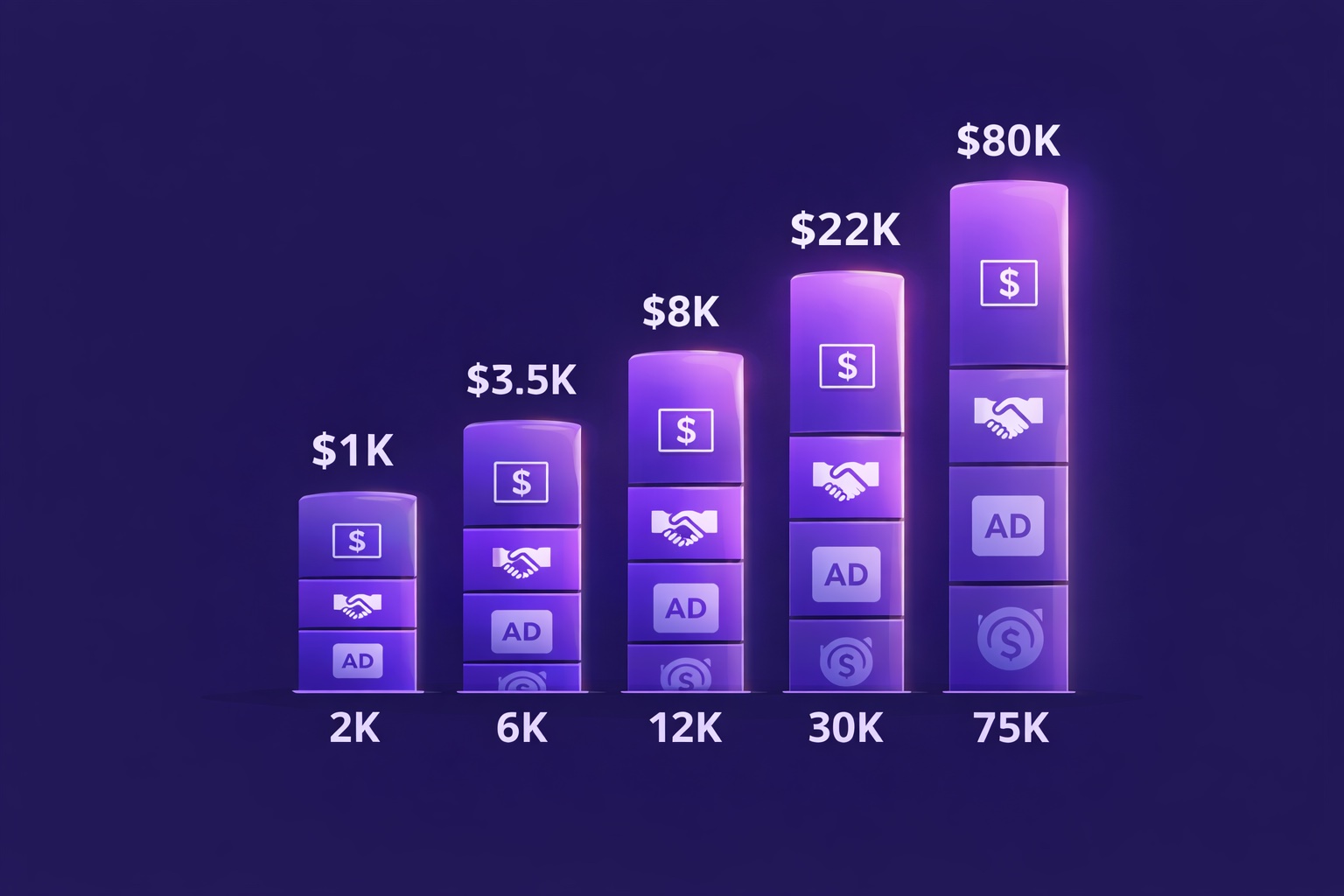
Real Newsletter Income Reports: How Creators Make $1K to $100K/Month (Actual Numbers)
The real data that creators search for but can't find. 5 detailed income profiles at different subscriber tiers — from $1,000/month at 2,000 subscribers to $80,000/month at 75,000 — with full revenue breakdowns by source, time invested, platform used, and the one decision that mattered most at each stage.
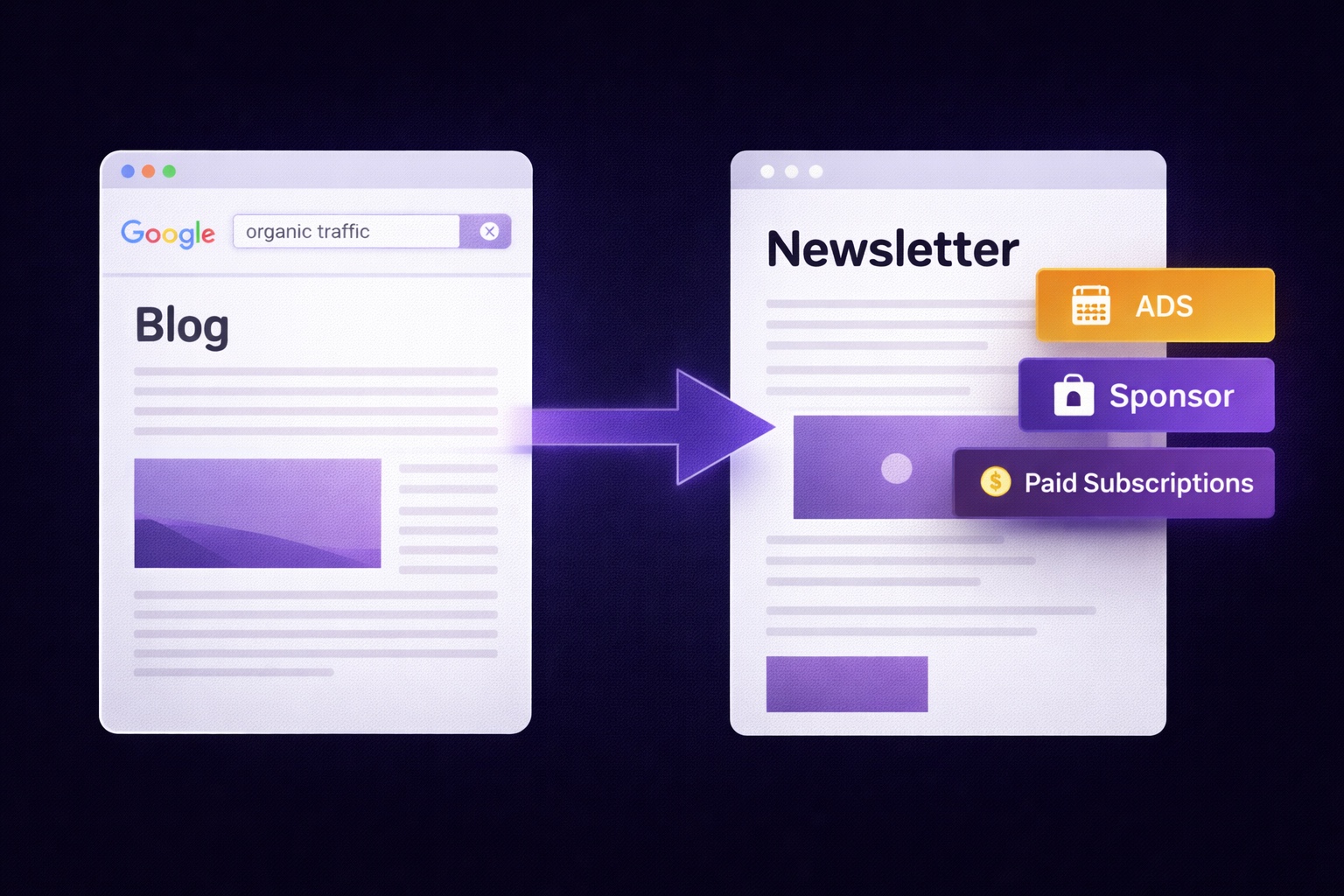
Bloggers & Writers: How to Turn Your Blog Into a $5,000+/Month Newsletter Business
Bloggers already have the hardest parts: proven content demand, warm traffic, and writing discipline. The step-by-step system to convert that foundation into a newsletter business — content upgrades that convert at 15-35%, migrating from Substack or Ghost, the SEO + newsletter flywheel, and 6 revenue streams that replace display ad income.
How to Launch a Paid Newsletter: Complete Step-by-Step Guide for 2026
The paid newsletter market is $2B+ and growing. But most creators launch wrong — wrong pricing, wrong timing, wrong content split. This is the definitive playbook: when you're actually ready, how to price it, the 14-day pre-launch sequence, and why 0% platform fees matter enormously at scale.