Mailchimp for Creators: Why It's Not Built for Content Monetization (+ Better Alternatives)
Mailchimp is powerful for e-commerce, but falls short for content creators. Discover why creator-specific platforms offer better monetization, growth tools, and value for newsletters and content businesses.

Mailchimp is a household name. When most people think "email marketing," Mailchimp is the first platform that comes to mind. It's been around since 2001, has millions of users, and offers an impressive array of features. So naturally, when you're starting your newsletter or content business, Mailchimp seems like the obvious choice.
But here's what nobody tells you: Mailchimp was built for small businesses selling products, not for creators building audiences around content. The features that make Mailchimp powerful for an e-commerce store make it clunky and expensive for a newsletter creator. The pricing that seems reasonable at 500 subscribers becomes outrageous at 5,000. And the capabilities you actually need as a content creator? Many of them simply don't exist in Mailchimp.
I've talked to dozens of creators who started with Mailchimp because it's familiar, only to migrate away within 6-12 months once they realized it wasn't serving their needs. They lost time, paid more than necessary, and missed monetization opportunities while using a tool that wasn't designed for what they're building.
This isn't a hit piece on Mailchimp—it's an excellent platform for what it was designed to do. But if you're a writer, podcaster, YouTuber, or content creator building an audience through newsletters, you deserve to understand exactly where Mailchimp falls short and what alternatives actually serve creator needs better. Let's break it down honestly.
What Mailchimp Was Actually Designed For
Understanding Mailchimp's shortcomings starts with understanding its origin story. Mailchimp wasn't created for content creators—it was created for small businesses running email marketing campaigns.
The E-commerce DNA
Mailchimp's core DNA is e-commerce email marketing. Think: a small online store that wants to send promotional emails about product sales, abandoned cart reminders, and seasonal campaigns. The platform excels at segmentation based on purchase behavior, integration with e-commerce platforms like Shopify and WooCommerce, and transactional emails tied to product sales.
These are valuable features—if you're selling physical or digital products through an online store. But if you're a content creator building an audience through valuable newsletters, most of these features are irrelevant. You don't have shopping carts to abandon. You're not running flash sales on inventory. You're building relationships through consistent, valuable content.
The Traditional Marketing Mindset
Mailchimp approaches email from a traditional marketing perspective: businesses pushing messages to customers. This works for promotional campaigns but feels off for creator newsletters. Creators aren't "marketing" to their audience—they're publishing content and building community. The distinction matters because it shapes what features get prioritized.
Mailchimp invests in features like multi-channel marketing campaigns (combining email, social ads, and postcards), detailed customer journey mapping for e-commerce, and CRM functionality for sales teams. These are sophisticated features that content creators simply don't need. Meanwhile, features creators desperately want—like built-in monetization, referral programs, or content-focused analytics—either don't exist or are awkwardly tacked on.
Where Mailchimp Falls Short for Content Creators
Let's get specific about where Mailchimp fails to serve creator needs. These aren't minor inconveniences—they're fundamental gaps that impact your ability to grow and monetize effectively.
Problem #1: Zero Native Monetization Features
This is the biggest issue. Mailchimp offers no built-in way to monetize your newsletter audience. No programmatic ads. No sponsorship management tools. No paid subscription functionality. No integration with creator payment platforms. Nothing.
If you want to make money from your newsletter in Mailchimp, you have to figure it out completely separately. Want to run ads? You'll need to manually insert them and track performance yourself. Want sponsors? You're managing that entire relationship outside Mailchimp with spreadsheets and manual reporting. Want to charge for premium content? You'll need to integrate a separate platform like Memberful or Patreon and hope it plays nicely with Mailchimp.
Compare this to creator-focused platforms that include programmatic ad networks, built-in sponsorship tools, and payment integration. The difference in monetization ease is night and day. With Mailchimp, monetization is your problem to solve. With creator platforms, it's built into the tool.
Problem #2: Pricing That Punishes Growth
Mailchimp's pricing structure is brutal for growing creators. Let's look at real numbers:
- 500 subscribers: Free (limited features) or $13/month (Essentials)
- 2,500 subscribers: $60/month (Essentials) or $120/month (Standard)
- 5,000 subscribers: $100/month (Essentials) or $175/month (Standard)
- 10,000 subscribers: $160/month (Essentials) or $250/month (Standard)
- 25,000 subscribers: $350/month (Essentials) or $500/month (Standard)
These prices are significantly higher than creator-focused alternatives. At 10,000 subscribers, you're paying $160-250/month for features you don't need while lacking features you do need. Creator platforms typically charge $50-100/month at that tier with more relevant features included.
The pricing structure also creates perverse incentives. Growing your list costs you substantially more each month, with no corresponding increase in value from the platform. You're essentially being penalized for success.
Problem #3: No Growth Tools for Content Creators
Modern creator platforms include growth features specifically designed for content businesses: referral programs that incentivize readers to share your newsletter, recommendation networks that help you cross-promote with similar creators, viral loops that make it easy for subscribers to invite friends, embeddable subscribe widgets optimized for content sites, and growth analytics that show which content drives the most signups.
Mailchimp has... basic signup forms and landing pages. That's it. No referral mechanics. No recommendation network. No viral growth features. You're expected to drive all growth through your own efforts without any platform assistance.
This matters more than you might think. Creators on platforms with built-in referral programs often see 15-30% of new subscribers coming from referrals. That's free growth you're missing on Mailchimp.
Problem #4: Analytics That Don't Matter for Content
Mailchimp provides extensive analytics about customer lifetime value, purchase attribution, product performance, and e-commerce ROI. These metrics are valuable if you're selling products. They're completely irrelevant if you're publishing content.
Meanwhile, analytics that content creators actually need are missing or basic: Which articles/newsletters drive the most engagement? Who are your most engaged readers versus inactive subscribers? What content topics generate the highest open rates? Which calls-to-action in your newsletters actually convert? How is your audience growing over time by traffic source?
Mailchimp provides some of this data, but it's not organized around content publishing workflows. You're digging through analytics designed for e-commerce campaigns, trying to extract insights relevant to content performance.
Problem #5: Interface Complexity for Simple Needs
Mailchimp's interface is powerful but overwhelming for creators with straightforward needs. You're navigating menus filled with features you'll never use—website builders, social ad campaigns, postcard marketing, complex audience segmentation based on purchase behavior, advanced CRM functionality, and multi-step marketing automation workflows.
For a creator who just wants to write a newsletter, collect subscribers, and build an audience, Mailchimp feels like using a commercial kitchen to make toast. Yes, it can do the job, but you're paying for a lot of equipment and complexity you don't need.
Creator-focused platforms prioritize simplicity. The interface is organized around publishing content and growing your audience, not managing complex marketing campaigns across multiple channels.
Problem #6: Poor Content Publishing Experience
Mailchimp's email editor is functional but not optimized for long-form content publishing. It's designed for promotional emails with images, calls-to-action buttons, and product showcases. If you're writing 1,000-2,000 word essays or articles, the editing experience feels clunky.
There's no markdown support (loved by writers for its simplicity), limited text formatting options compared to dedicated writing platforms, awkward handling of long-form content structure, no native support for content archiving or building a newsletter archive website, and templates designed for marketing campaigns rather than readable articles.
Compare this to platforms like Substack, Ghost, or Beehiiv, where the writing and publishing experience is designed specifically for people creating long-form content. The difference in daily usability is substantial.
Problem #7: Limited Creator Community Features
Content creators aren't just sending newsletters—they're building communities. Modern creator platforms recognize this and include features like comments on newsletters, reader polls and surveys, community discussion features, subscriber profiles to understand your audience, and ways for readers to interact with each other.
Mailchimp has minimal community features. It's a one-way broadcast tool. You send emails, people receive them, end of interaction. If you want to build community engagement, you'll need separate tools.
When Mailchimp Actually Makes Sense
To be fair, Mailchimp isn't wrong for everyone. There are specific scenarios where it's actually a good choice. For most creators, better alternatives exist.
You Should Use Mailchimp If:
- You're running an e-commerce business: If you're selling products through Shopify, WooCommerce, or another e-commerce platform, Mailchimp's e-commerce features are genuinely valuable. The purchase behavior segmentation, abandoned cart emails, and product recommendation features all work well for online stores.
- You need multi-channel marketing: If your strategy involves coordinated campaigns across email, social media ads, and even direct mail, Mailchimp's multi-channel capabilities are hard to beat. This matters for traditional businesses, less so for content creators.
- You already have complex Mailchimp automation: If you've invested significant time building sophisticated automation workflows in Mailchimp and they're working well, migration might not be worth the effort. Sometimes the devil you know is better than the disruption of changing.
- You're a small local business: If you're a restaurant, retail store, or local service business using email for promotions and customer updates, Mailchimp's features align well with your needs.
Notice what's not on this list? Content creators, newsletter publishers, writers, podcasters, or anyone building an audience primarily through content. For these use cases, creator-specific platforms serve you better.
Better Alternatives to Mailchimp for Content Creators
Let's explore creator-focused alternatives that solve the problems Mailchimp doesn't address. Each platform has different strengths depending on your specific needs.
For Newsletter Writers: Substack and Ghost
Substack is the polar opposite of Mailchimp—dead simple, entirely focused on writers publishing newsletters. You get a clean writing interface, beautiful reader experience, built-in paid subscriptions, discovery network to help readers find you, and literally nothing else to distract from writing and publishing.
The tradeoff: Substack takes 10% of all subscription revenue. This seems like a lot (and is), but you get simplicity and zero thinking about technical setup. If you just want to write and build a paid newsletter, Substack removes all obstacles.
Pricing comparison at 5,000 subscribers: Mailchimp costs $100-175/month with limited features. Substack costs $0/month until you monetize, then 10% of revenue. If you're making $5,000/month from subscriptions, Substack costs $500/month—but you're also earning that revenue directly through their platform, which you can't do in Mailchimp.
Ghost gives you more control than Substack. It's open-source publishing software you can self-host or use their managed hosting. You get complete design control, built-in membership and subscription features, zero platform fees (just payment processing fees), native content editor for writers, and SEO-friendly publishing.
The tradeoff: More technical complexity. Ghost requires more setup and maintenance than Mailchimp or Substack. But you own everything completely.
Pricing comparison at 5,000 subscribers: Ghost costs $50-200/month depending on your plan, with zero platform fees. Mailchimp costs $100-175/month with no monetization features. For newsletter writers who want control without Mailchimp's complexity, Ghost is superior.
For Creators Who Want Multiple Monetization Options: Beehiiv
Beehiiv is purpose-built for newsletter creators who want to monetize through multiple channels. You get programmatic ad network (monetize from day one), paid subscriptions, referral program for viral growth, poll and survey features, subscriber attribution to track growth sources, and recommendation network for discovery.
The tradeoff: Advanced features require the Scale plan ($49/month). But this includes monetization features that can generate significant revenue, making the platform pay for itself.
Pricing comparison at 5,000 subscribers: Mailchimp costs $100-175/month with no monetization. Beehiiv costs $49/month with ad network access, referral programs, and growth features. You're paying less while gaining revenue-generating features.
For Creators Who Need Full Marketing Power: ConvertKit / Kit
ConvertKit (now rebranded as Kit) is specifically designed for creators who sell products, courses, or services alongside their content. You get powerful visual automation builder, landing pages and forms optimized for creators, subscriber tagging and segmentation, commerce features for selling digital products, and integration with creator tools and platforms.
The tradeoff: Higher pricing than some alternatives and no built-in sponsorship or ad features. But if you're selling courses or coaching, the automation and commerce features justify the cost.
Pricing comparison at 5,000 subscribers: Mailchimp costs $100-175/month. ConvertKit costs around $66-100/month. You're paying similar amounts but getting creator-specific automation and commerce features Mailchimp lacks.
For Budget-Conscious Creators: MailerLite
MailerLite offers excellent value with creator-friendly features at affordable prices. You get clean, simple interface that's easier than Mailchimp, solid automation features, good email deliverability, website and landing page builder, free tier up to 1,000 subscribers, and paid plans starting at $9/month.
The tradeoff: Fewer advanced creator features than specialized platforms. But for straightforward newsletter publishing with automation, it's excellent value.
Pricing comparison at 5,000 subscribers: Mailchimp costs $100-175/month. MailerLite costs $21/month. You save $80-155 monthly while getting a simpler, more intuitive interface.
For Creators Who Want Monetization from Day One: InfluencersKit
InfluencersKit is built specifically for content creators who want to monetize their newsletters regardless of audience size. You get programmatic ads integrated (earn from your first subscriber), affordable pricing that doesn't punish growth, automation and segmentation features, sponsorship management tools, analytics focused on content performance, and no hidden fees or surprise charges.
The tradeoff: Newer platform without Mailchimp's decades of history. But the creator-first approach and built-in monetization features address exactly what Mailchimp lacks.
Pricing comparison at 5,000 subscribers: Mailchimp costs $100-175/month with zero monetization features. InfluencersKit costs $49/month (Creator) with programmatic ads included. Illustrative, not guaranteed — actual fill rate and CPM vary by niche and audience — but even a small newsletter of 1,000 subscribers can generate an estimated $50-150/month in ad revenue, which would offset the platform cost.
Real Cost Comparison: The True Price of Mailchimp
Let's do honest math comparing Mailchimp to creator alternatives across different growth stages.
Scenario 1: Small Newsletter (1,000 subscribers, 2 newsletters/week)
Mailchimp Essentials:
Cost: $13/month
Monetization: $0 (no features)
Net monthly: -$13
InfluencersKit:
Cost: $0/month (Free up to 1,000 subscribers)
Programmatic ads revenue: $12 CPM × 1 × 8 newsletters = $96/month
Net monthly: +$96 profit
Difference: Using InfluencersKit generates an estimated ~$109/month more value than Mailchimp at this list size (illustrative ad revenue on a free plan vs Mailchimp's paid Essentials with no monetization) — actual ad revenue depends on fill rate and niche.
Scenario 2: Growing Newsletter (5,000 subscribers, 3 newsletters/week)
Mailchimp Standard:
Cost: $175/month
Monetization: $0
Net monthly: -$175
Beehiiv Scale:
Cost: $49/month
Programmatic ads: $15 CPM × 5 × 12 newsletters = $900/month
Net monthly: +$851 profit
Difference: Illustrative, not guaranteed — actual ad CPM and fill rate vary by niche — but on these assumptions, Beehiiv generates an estimated $1,026/month more value than Mailchimp, roughly $12,000 annualized.
Scenario 3: Established Newsletter (10,000 subscribers, 3 newsletters/week)
Mailchimp Standard:
Cost: $250/month
Monetization: $0
Net monthly: -$250
ConvertKit + InfluencersKit hybrid approach:
Cost: $100/month (ConvertKit for automation + direct sponsorship management)
Direct sponsors: $70 CPM × 10 × 2/month = $1,400
Programmatic ads on remaining newsletters: $20 CPM × 10 × 10 = $2,000
Net monthly: +$3,300 profit
Difference: Illustrative, not guaranteed — actual sponsor rates and fill vary by niche and audience — but on these assumptions, the creator-platform approach generates an estimated $3,550/month more value than Mailchimp, roughly $42,000 annualized.
These are modeled scenarios, not observed outcomes — the assumptions are stated above so you can substitute your own CPM and fill-rate numbers. What's not in question: Mailchimp has no built-in monetization at any tier, so any ad or sponsorship revenue on Mailchimp requires a separate tool and its own fees on top of the Mailchimp bill.
Migrating Away from Mailchimp: What to Expect
If you're already on Mailchimp and considering a switch, here's what the migration process actually looks like.
The Migration Process (Step-by-Step)
Week 1: Choose Your New Platform
Research alternatives, sign up for trials, test the interface. Make sure it feels right before committing. Most platforms offer 14-day trials—use them.
Week 2: Export Your Data
Mailchimp makes exporting reasonably easy. Export your full subscriber list with all data fields, tag and segment information, email templates you want to keep, and any automation workflows (you'll need to rebuild these, but document them first).
Week 3: Set Up New Platform
Import subscribers to your new platform, recreate key automations, rebuild email templates (or use new platform's templates), set up forms and signup pages, and configure monetization features if available.
Week 4: Test and Launch
Send test emails to yourself and friends, verify automations trigger correctly, update signup forms on your website and social profiles, send your first newsletter from the new platform, and announce the switch to subscribers (optional but good transparency).
What You'll Lose in Migration
Be realistic about what doesn't transfer smoothly. Historical analytics (you'll start fresh with new platform data), email history within the platform (though subscribers keep their emails), automation workflows (need to be rebuilt from scratch), and any custom integrations specific to Mailchimp.
Most of this isn't critical. Historical data is interesting but not essential. Rebuilding automations is annoying but forces you to optimize them. The long-term benefits of a better platform far outweigh short-term migration inconvenience.
Time and Cost Investment
Expect to invest 10-20 hours total for a complete migration depending on complexity. If your time is valuable, consider this: How much revenue are you losing monthly by staying on Mailchimp? If you're losing $500-1,000+/month in revenue opportunities, even 20 hours of migration work pays for itself in weeks.
Making the Switch: Decision Framework
Use this framework to decide if switching from Mailchimp makes sense for you right now.
Question 1: Are You Primarily a Content Creator?
If you're building an audience through newsletters, articles, podcasts, videos, or other content (versus selling products through an online store), creator platforms serve you better. Mailchimp's strengths don't align with your needs.
Question 2: Are You Paying More Than $50/Month?
At this price point, you're likely paying for features you don't use while lacking features you need. Compare your current Mailchimp cost to creator platform pricing at your subscriber count. The savings often justify switching.
Question 3: Do You Have Clear Monetization Goals?
If you want to monetize through ads, sponsorships, or paid subscriptions, platforms with built-in monetization features will generate more revenue than Mailchimp. Calculate potential revenue difference and compare to migration effort.
Question 4: Are You Growing Your List Actively?
If you're actively growing, you'll hit expensive Mailchimp pricing tiers quickly. Creator platforms with flat or more reasonable scaling pricing save you significant money as you grow.
Question 5: Do You Find Mailchimp Complicated?
If you're constantly confused by Mailchimp's interface or only using 20% of its features, simpler creator-focused platforms will save you time and frustration weekly.
The Decision
Switch if: You answered yes to 3+ questions above. The combination of better pricing, relevant features, and monetization potential makes switching worthwhile.
Stay on Mailchimp if: You answered no to most questions, or you're using Mailchimp's e-commerce features extensively, or you have complex custom integrations that would break.
What Creators Actually Need (That Mailchimp Doesn't Provide)
Let's summarize the creator-specific needs that Mailchimp fails to address:
Built-in Monetization
Creators need ways to make money from their audience without complex workarounds. This means programmatic ads for any audience size, paid subscription handling, sponsorship management tools, and affiliate tracking features. Mailchimp offers none of this. Creator platforms make monetization central, not an afterthought.
Growth Tools for Audience Building
Creators need help growing their audience organically. This includes referral programs that incentivize sharing, recommendation networks for cross-promotion, viral mechanics in signup flows, and analytics showing what content drives growth. Mailchimp provides basic signup forms and hopes you figure out growth yourself.
Content-Focused Analytics
Creators need to understand what content resonates. This means engagement scoring by subscriber, content performance analytics, subscriber behavior tracking (what they read, when they engage), and growth attribution (where subscribers come from). Mailchimp's analytics are built for campaign performance, not content publishing.
Publishing-First Interface
Creators need tools that make writing and publishing easy and enjoyable. This includes clean, distraction-free writing interfaces, markdown support for fast formatting, content scheduling that makes sense for publishers, archive management for past content, and templates designed for readability, not sales. Mailchimp's interface is built for marketers running campaigns, not writers publishing content.
Pricing That Supports Growth
Creators need pricing that doesn't punish success. Growing your list should feel good, not stress you out with ballooning costs. Creator platforms typically offer more generous subscriber limits at each price tier, flat pricing that doesn't scale dramatically with growth, and monetization features that help platform costs pay for themselves. Mailchimp's pricing increases rapidly as you grow, often faster than revenue increases for content businesses.
The Bigger Picture: Why Platform Choice Matters
Choosing an email platform isn't just about features and pricing—it's about aligning your tools with your business model and growth strategy.
Your Platform Shapes Your Possibilities
The platform you choose determines what's possible. With Mailchimp, certain monetization strategies simply aren't feasible without extensive workarounds. With creator platforms, those strategies are built-in and encouraged. Your platform either enables your business model or forces you to fight against limitations.
This matters more as you grow. Early on, any platform works because you're just publishing and building an audience. But once you're ready to monetize, scale, or implement advanced strategies, platform limitations become roadblocks. Choosing a creator-focused platform from the start means your tools grow with you instead of constraining you.
Time Is Your Most Valuable Resource
Every hour you spend fighting your platform, working around limitations, or managing monetization manually is an hour you're not creating content. Creator platforms save you time through automation, built-in features, and intuitive interfaces designed for publishing workflows.
If switching from Mailchimp to a creator platform saves you 3 hours per month (a conservative estimate), that's 36 hours annually. What could you create with an extra 36 hours? How much more revenue could you generate? Time savings compound over years into substantial value.
The Creator Economy Is Evolving
The creator economy is maturing rapidly. What worked 5 years ago doesn't work today. Audiences expect more professionalism, monetization strategies are more sophisticated, and competition is fiercer. Using tools designed for the modern creator economy gives you an edge.
Mailchimp is a 2001-era tool adapted for modern email marketing. Creator platforms are built from the ground up for 2026 creator needs. That fundamental difference shows in every aspect of the product.
Action Plan: What to Do Next
Stop overthinking and take action. Here's your step-by-step plan:
If You're Currently Using Mailchimp
This Week: Calculate Your True Costs
List your monthly Mailchimp cost, estimate potential monthly revenue from built-in monetization (programmatic ads, paid subscriptions, or sponsorships), calculate the difference, and project this annually. If the revenue opportunity exceeds migration effort, you have your answer.
Next Week: Research Alternatives
Based on your specific needs (monetization model, budget, technical comfort level), identify 2-3 platforms to test. Sign up for free trials and actually use them—send test newsletters, set up automations, explore monetization features.
Week 3: Make the Decision
Choose one platform and commit to migration. Set a target migration date (typically 2-4 weeks out), document your current Mailchimp setup, and start the export process.
Week 4-6: Execute Migration
Follow the migration process outlined earlier. Take it step-by-step, test thoroughly, and don't rush. Better to migrate correctly than quickly.
If You're Choosing Your First Platform
Don't Start with Mailchimp
If you're a content creator starting fresh, skip Mailchimp entirely. You'll save yourself a future migration and start with tools designed for your needs.
Choose Based on Your Primary Goal:
- Simple writing and publishing: Substack or Ghost
- Monetization from day one: InfluencersKit or Beehiiv
- Selling courses or products: ConvertKit / Kit
- Budget-friendly full features: MailerLite
Start with a Trial
Every platform mentioned offers free trials or free tiers. Test before committing. Send a few newsletters, experience the workflow, and make sure it feels right.
Final Thoughts: The Right Tool for the Job
Mailchimp is an excellent platform—for the right use case. If you're running an e-commerce store, managing email campaigns for a traditional business, or need sophisticated multi-channel marketing automation, Mailchimp delivers tremendous value.
But if you're a content creator building an audience through newsletters, Mailchimp is simply the wrong tool. It's expensive for what you need, missing features critical to your success, and built around a business model fundamentally different from content publishing.
The good news? Better alternatives exist. Creator-focused platforms solve exactly the problems Mailchimp doesn't address: they make monetization simple, provide growth tools that actually help content businesses, offer publishing interfaces designed for writers, include analytics relevant to content performance, and price themselves to support creator growth rather than punish it.
The question isn't whether Mailchimp is good or bad—it's whether Mailchimp is right for you. For content creators, the honest answer is usually no. You deserve tools designed for what you're building.
Every month you spend on Mailchimp as a content creator is a month of higher costs, missed monetization opportunities, and working harder than necessary. The migration might seem daunting, but the long-term benefits—better features, lower costs, and higher revenue—make it worthwhile.
Don't choose Mailchimp just because it's familiar or has name recognition. Choose the platform that aligns with your creator business model, supports your growth, and helps you monetize effectively. Your newsletter deserves tools designed for success in the creator economy.
Switch to a Platform Built for Creators
InfluencersKit is designed specifically for content creators who want to monetize their newsletters from day one. Get programmatic ads, sponsorship tools, and creator-focused analytics—all at affordable pricing that doesn't punish growth.
Try InfluencersKit free for 14 days. Migrate your Mailchimp list in minutes with our easy import tool. Start monetizing immediately with built-in ad features. See why creators are switching from Mailchimp to platforms built for their needs.
Stay Updated
Get the latest insights, strategies, and tips delivered directly to your inbox. Join thousands of creators who are building their email communities with our weekly newsletter.
No spam, unsubscribe at any time. We respect your privacy.
Related Articles
ActiveCampaign Alternatives: Cheaper, Creator-Focused Platforms That Do More
ActiveCampaign starts at $49/month, scales to $500+, and is built for B2B sales teams. Most creators use 15% of what they pay for while missing the features that actually matter: programmatic ads, referral programs, and paid subscriptions. Six alternatives compared honestly.

AWeber Alternatives: 7 Better Email Platforms for Creators in 2026
AWeber was built in 1998. It shows. No creator monetization features, charges for unsubscribes, and pricing that doesn't reflect modern alternatives. Honest breakdown of 7 better options — with specific recommendations by creator type and a migration guide.

Ghost vs Substack vs Email Marketing Platforms: Complete Comparison for Creators
Choosing between Ghost, Substack, and email platforms? This detailed comparison breaks down pricing, monetization, and features to help creators pick the right tool.

ConvertKit Alternatives: 10 Email Platforms for Creators (Pricing & Features Compared)
Complete comparison of the best ConvertKit alternatives for newsletter creators. Real pricing at every tier, honest pros and cons, and which platform actually fits your needs and budget in 2026.

Flodesk vs InfluencersKit: Which Email Platform Is Right for Your Creator Business?
Flodesk was built for beautiful emails. InfluencersKit was built for creator revenue. That design philosophy drives every product decision — and determines which platform is right for your business model. Honest comparison across pricing (including the flat-rate illusion), automation, monetization (where the gap is decisive), analytics, growth tools, and a three-year opportunity cost calculation that most platform reviews never run.
MailerLite vs Kit (ConvertKit): Which Email Platform Is Better for Creators in 2026?
MailerLite costs 59% less than Kit at every subscriber tier. But for course creators running complex product funnels, Kit's automation and commerce capabilities justify the premium. For newsletter-first creators, neither is optimal. Honest comparison across pricing, automation depth, monetization, growth tools, ease of use, integrations, and migration — with a clear verdict by creator revenue model.

Beehiiv vs Substack: The Honest Platform Comparison for Newsletter Creators (2026)
Substack charges 10% on paid subscriptions forever. Beehiiv charges 2.9% with growth tools and an ad network. But the real comparison runs deeper — discovery networks, automation depth, data ownership, and who each platform was actually built for. A complete breakdown including when neither is the right answer.
Mailchimp vs Beehiiv: Which Is Actually Better for Newsletter Creators in 2026?
Mailchimp was built for e-commerce businesses. Beehiiv was built for newsletter publishers. That philosophical difference drives every feature decision — and determines which platform is right for your specific creator business. Honest comparison across pricing at every tier, monetization, growth tools, deliverability, and the third option most creators never evaluate.
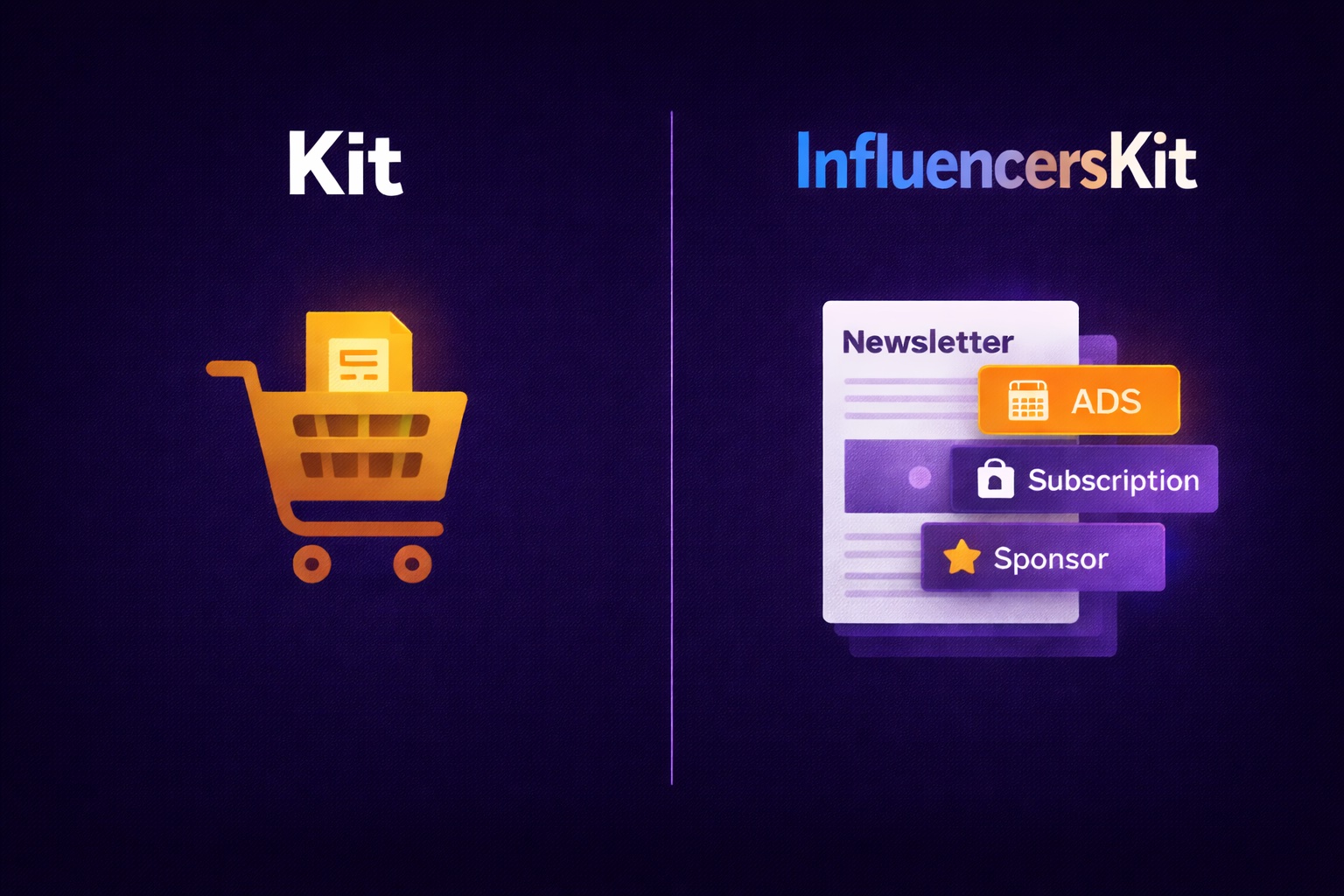
Kit (ConvertKit) vs InfluencersKit: The Honest Comparison for Creators Who Want to Monetize
Kit was built for creators who sell courses and digital products. InfluencersKit was built for creators who monetize through ads, sponsorships, and paid subscriptions. Direct, fair, data-driven comparison — with real pricing at every tier and a clear verdict by creator type.
Substack vs InfluencersKit: Which Platform Is Actually Better for Creators in 2026?
Substack's 10% fee costs you $6,000/year at $5,000/month in subscription revenue. A fair but complete comparison: pricing at every revenue tier, monetization features (where the gap is enormous), growth tools, and who should actually use which platform.

Free vs Paid Email Marketing Platforms: What Creators Actually Need
Should you start with a free email platform or invest in paid tools? Honest breakdown of what creators actually need at each stage, hidden costs of 'free' platforms, and when to upgrade.

Beehiiv vs ConvertKit vs InfluencersKit: Best Email Platform for Creators 2026
Comprehensive comparison of the top 3 email platforms for creators. Real pricing at every tier, feature breakdowns, monetization capabilities, and honest recommendations for different creator types.