Newsletter Sponsorship Guide: How to Make $5,000+/Month from Your Email List
Learn the exact process successful newsletter creators use to land high-paying sponsors, from pricing your placements to building recurring revenue. A complete guide to newsletter sponsorship monetization.

Let me tell you something most newsletter creators don't realize: The difference between making $500 per month from your newsletter and making $5,000+ per month often isn't about having 10x more subscribers. It's about understanding how sponsorships actually work.
I've seen creators with 3,000 engaged subscribers making more from sponsorships than creators with 30,000 disengaged ones. The secret? They know how to position their newsletter as a premium advertising opportunity, how to find the right sponsors, and most importantly—how to deliver results that keep sponsors coming back month after month.
Sponsorships are the bread and butter of newsletter monetization. Unlike programmatic ads that pay pennies per impression, or affiliate links that require conversions, sponsorships pay you upfront regardless of performance. A single sponsor paying $2,000 per newsletter placement, four times per month, is $8,000 in predictable monthly revenue. That's life-changing money for most creators.
But here's what nobody tells you: Getting that first sponsor is a skill. Pricing your sponsorships correctly is a skill. Delivering value that makes sponsors want to renew is a skill. And in this guide, I'm going to teach you every single one of these skills.
Whether you have 500 subscribers or 50,000, whether you're just starting to think about sponsorships or you've been rejected by dozens of brands, this guide will show you the exact process successful newsletter creators use to consistently land and retain high-paying sponsors. Let's turn your newsletter into a sponsorship magnet.
Understanding the Newsletter Sponsorship Landscape in 2026
Before we dive into tactics, you need to understand what sponsors are actually buying when they invest in newsletter advertising. They're not just buying eyeballs—they can get those cheaper on Facebook or Google. They're buying three things that only newsletters can provide:
What Makes Newsletter Sponsorships Valuable:
- Your endorsement and credibility: When you recommend a product in your newsletter, it carries weight. Your subscribers trust you. That trust transfer is worth exponentially more than a generic display ad.
- A captive, engaged audience: Unlike social media where people scroll past ads in milliseconds, newsletter readers actually consume the content. Average read time for newsletters is 5-7 minutes. That's genuine attention.
- Precise audience targeting: If you write about SaaS marketing, sponsors know they're reaching SaaS marketers. This precision targeting is incredibly valuable and justifies premium pricing.
In 2026, the newsletter sponsorship market has matured significantly. Brands are allocating serious budgets to newsletter advertising—we're talking hundreds of thousands of dollars for the right newsletters. But they've also gotten smarter about what they're looking for. Gone are the days when you could charge high rates just for having a big list. Now, sponsors want to see engagement metrics, audience demographics, and proof of past performance.
Current Sponsorship Rate Benchmarks:
Here's a benchmark of what sponsors typically pay across different niches and audience sizes in 2026, compiled from public newsletter sponsorship marketplaces and rate-card reports — treat these as ranges to negotiate from, not guarantees:
Tech/SaaS/Development Newsletters:
- 1,000-5,000 subscribers: $500-$1,500 per placement
- 5,000-15,000 subscribers: $1,500-$4,000 per placement
- 15,000-50,000 subscribers: $4,000-$12,000 per placement
- 50,000+ subscribers: $12,000-$30,000+ per placement
Business/Marketing/Entrepreneurship:
- 1,000-5,000 subscribers: $400-$1,200 per placement
- 5,000-15,000 subscribers: $1,200-$3,500 per placement
- 15,000-50,000 subscribers: $3,500-$10,000 per placement
- 50,000+ subscribers: $10,000-$25,000+ per placement
Finance/Investing:
- 1,000-5,000 subscribers: $600-$2,000 per placement
- 5,000-15,000 subscribers: $2,000-$5,000 per placement
- 15,000-50,000 subscribers: $5,000-$15,000 per placement
- 50,000+ subscribers: $15,000-$40,000+ per placement
Design/Creative:
- 1,000-5,000 subscribers: $300-$900 per placement
- 5,000-15,000 subscribers: $900-$2,500 per placement
- 15,000-50,000 subscribers: $2,500-$7,000 per placement
- 50,000+ subscribers: $7,000-$18,000+ per placement
Lifestyle/General Interest:
- 1,000-5,000 subscribers: $200-$600 per placement
- 5,000-15,000 subscribers: $600-$1,800 per placement
- 15,000-50,000 subscribers: $1,800-$5,000 per placement
- 50,000+ subscribers: $5,000-$15,000+ per placement
Notice the wide ranges? That's because pricing depends heavily on engagement rates, audience quality, and your ability to demonstrate ROI. A 5,000-subscriber newsletter with 50% open rates and a highly targeted B2B audience can command the upper end of these ranges. A 15,000-subscriber newsletter with 20% open rates and a generic audience will be at the lower end.
When You're Actually Ready for Sponsorships
Here's the hard truth: Most creators approach sponsors too early, get rejected, and then give up thinking sponsorships aren't for them. The reality? They just weren't ready yet. Let me save you months of wasted outreach by telling you exactly when you're sponsor-ready.
The Minimum Viable Newsletter for Sponsorships:
You need to meet these criteria before seriously pitching sponsors:
- At least 500 subscribers: This is the absolute minimum. Ideally, aim for 1,000+ before your first outreach. Below 500, focus on growth.
- 40%+ open rate: This proves engagement. If your open rate is below 35%, work on improving content quality and list hygiene first.
- Consistent publishing schedule: You've sent at least 12 newsletters and maintain a predictable cadence (weekly minimum). Sponsors want reliability.
- Clear niche and audience: You can articulate exactly who reads your newsletter and why. "People interested in marketing" is too broad. "B2B SaaS marketing managers at companies with $1M-$10M ARR" is perfect.
- Professional presentation: Your newsletter looks polished, your website exists (even if basic), and you have a professional email address (not Gmail).
- Basic analytics: You can provide data on open rates, click rates, subscriber demographics, and growth rate. Sponsors will ask for these.
If you don't meet these criteria yet, don't worry. Use programmatic advertising and affiliate marketing to monetize while you build toward sponsorship readiness. Getting your first sponsor when you're truly ready is much easier than trying to force it prematurely.
The Engagement Quality Test:
Beyond raw metrics, ask yourself these questions honestly:
- Do subscribers regularly reply to your emails?
- When you ask questions, do you get responses?
- Do people share your content organically?
- Have readers ever told you they look forward to your newsletter?
- If you recommended a product, would people actually consider buying it?
If you answered yes to most of these, you have the kind of engaged audience that sponsors pay premium rates for. If you answered no to most, you need to work on deepening audience connection before pitching sponsorships.
Creating Your Sponsorship Package and Media Kit
Before you reach out to a single sponsor, make sure your landing page is ready to capture subscribers., you need professional assets that make saying yes easy. Think of this as your sponsorship sales materials. A sponsor should be able to understand your value proposition, see your metrics, and know how to work with you—all within 60 seconds of looking at your materials.
Your One-Page Media Kit (Essential):
Create a single-page PDF (or web page) that includes:
Header Section:
- Newsletter name and tagline
- Your photo and brief bio (2-3 sentences establishing credibility)
- Contact information (professional email, LinkedIn if relevant)
Audience Overview:
- Total subscribers (be honest, don't inflate)
- Average open rate (last 10 emails)
- Average click-through rate
- Publishing frequency
- Subscriber growth rate (e.g., "Growing 15% month-over-month")
Audience Demographics:
- Primary job titles/roles (if B2B)
- Industry breakdown (if applicable)
- Geographic distribution (if relevant to sponsor)
- Age range and gender split (if you have this data)
- Income level (if known and relevant)
What Makes Your Newsletter Special:
- Unique angle or positioning
- Notable achievements or recognition
- Past sponsor testimonials (if available)
- Sample content or best-performing newsletter examples
Sponsorship Options:
- Primary sponsor placement with description and price
- Secondary placement with description and price (if applicable)
- Multi-week discount rates
- What's included (word count, images, links, etc.)
Previous Sponsors (if applicable):
- Logos of past sponsors (with permission)
- Brief testimonial or result if available
Designing Your Media Kit:
Don't overthink this. Use Canva with a clean, professional template. Your media kit should be:
- Visually clean: Lots of white space, easy-to-read fonts, your brand colors
- Scannable: Use headers, bullets, and numbers so sponsors can skim quickly
- Data-focused: Lead with numbers that matter—open rates, subscriber count, growth
- Professional but not corporate: You're a creator, not IBM. Show personality while maintaining credibility
Your Sponsorship Rate Card:
Create a simple pricing structure. Here's a proven template:
Primary Sponsor Placement
Position: Top of newsletter, immediately following opening
Format: 150-200 word sponsored section with heading, description, call-to-action, and one image
Includes: Logo, 2 links, tracking parameters
Single placement: $[your price]
4-week commitment: $[15% discount]
8-week commitment: $[25% discount]
Secondary Sponsor Placement (optional)
Position: Mid-newsletter or footer
Format: 75-100 word mention with link
Single placement: $[50-60% of primary rate]
Pro tip: Always offer multi-week discounts. It's easier to sell one sponsor on a 4-week commitment than to find four different sponsors. Plus, sponsors who work with you for multiple weeks can optimize their messaging and see better results, making them more likely to renew.
How to Calculate Your Sponsorship Rates (The Formula)
Pricing is where most creators either undersell themselves or price themselves out of opportunities. Here's the exact formula I recommend, based on what actually works in 2026:
The CPM-Based Pricing Formula:
CPM means "cost per mille" (cost per thousand). It's the standard metric for newsletter sponsorships. Here's how to calculate your rate:
Step 1: Calculate your engaged reach
Total Subscribers × Average Open Rate = Engaged Reach
Example: 5,000 subscribers × 45% open rate = 2,250 engaged readers
Step 2: Apply your target CPM
Engaged Reach × (Target CPM ÷ 1,000) = Your Sponsorship Rate
Example: 2,250 × ($60 ÷ 1,000) = $135 base rate
Round up to $150 for clean pricing
Choosing Your Target CPM:
Your target CPM depends on your niche and audience quality. Use these guidelines:
- $40-60 CPM: General interest, lifestyle, broad topics with consumer audiences
- $60-100 CPM: Niche topics with specific professional audiences (designers, marketers, small business owners)
- $100-150 CPM: B2B audiences with buying power (executives, managers, decision-makers)
- $150-200+ CPM: Premium B2B audiences in high-value industries (finance, tech, enterprise software)
The Quality Multiplier:
If your newsletter has exceptional qualities, you can justify higher CPMs:
- +$20-40 CPM: Open rates above 55%
- +$15-30 CPM: Click-through rates above 5%
- +$20-50 CPM: Highly specific, hard-to-reach audience
- +$30-60 CPM: Proven track record of sponsor ROI
- +$25-50 CPM: Strong personal brand or thought leadership position
Real example: Let's say you have 3,000 subscribers, a 48% open rate, targeting B2B marketing professionals. Your base CPM is $80 (B2B professional audience). Your high open rate adds $25. Your rate calculation:
3,000 × 0.48 = 1,440 engaged readers
Target CPM: $80 + $25 = $105
1,440 × ($105 ÷ 1,000) = $151.20
Your rate: $150-175 per placement
Start at the lower end ($150) for your first sponsors. Once you have proven results, increase to $175 for new sponsors while keeping existing sponsors at their original rate (grandfather pricing).
Finding Your First Sponsors: The Outbound Strategy
Don't wait for sponsors to find you. When you're starting out, you need to proactively reach out. But here's the key: You're not begging for sponsorships. You're offering a valuable advertising opportunity. That mindset shift changes everything.
Building Your Prospect List:
Create a spreadsheet with 30-50 potential sponsors. Focus on companies that:
- Sell to your exact audience: If you write for freelance designers, prospect design tool companies, not general productivity tools
- Already sponsor similar newsletters: If they're spending on newsletter ads, they understand the channel
- Have marketing budgets: B2B SaaS companies, established consumer brands, funded startups—not bootstrap side projects
- Products you've actually used: Start with products in your own toolkit. Authentic endorsement is more valuable
- Align with your values: Don't promote crypto scams or products you don't believe in, regardless of price
Finding the Right Contact:
Don't send sponsorship pitches to info@company.com. First, make sure you know how much to charge, Find the actual decision-maker:
- For smaller companies (under 50 employees): Head of Marketing, Marketing Manager, or Founder/CEO
- For mid-size companies (50-500 employees): Content Marketing Manager, Growth Marketing Manager, or Marketing Director
- For larger companies (500+ employees): Partnership Manager, Sponsorship Manager, or Brand Marketing Manager
Use LinkedIn to find names and titles. Use tools like Hunter.io or RocketReach to find email addresses. If you can't find an email, LinkedIn message works (if you have Premium or InMail credits).
The Sponsorship Pitch Email That Works:
Your pitch email needs to be short, specific, and value-focused. Here's the proven template:
Subject: Partnership opportunity - [Your Newsletter] + [Their Company]
Hi [First Name],
I'm [Your Name], creator of [Newsletter Name], a [frequency] newsletter for [specific audience description]. We have [subscriber count] subscribers with an [X]% average open rate.
I've been using [Their Product] for [timeframe/context] and think it would be incredibly valuable for my audience of [audience description with job titles/roles]. [Include one specific reason why it's a good fit - be genuine].
I'm reaching out to explore a sponsorship partnership. Our typical sponsors see [include a result if you have one, like "5-10% click-through rates" or if first sponsor say "strong engagement based on our audience metrics"].
I've attached our media kit with audience demographics, engagement metrics, and sponsorship options. Would you be open to a quick call to discuss how we might work together?
Best,
[Your Name]
[Newsletter Name] | [Link to latest issue or signup page]
What Makes This Pitch Work:
- Establishes credibility immediately: Subscriber count and open rate in the first sentence
- Shows genuine familiarity: You actually use their product, not just mass emailing
- Focuses on their benefit: Not "please sponsor me" but "this would be valuable for my audience"
- Includes social proof: Even if it's just engagement metrics, show you deliver results
- Clear call-to-action: Asks for a call, not a yes/no answer
- Professional and concise: Under 150 words, easy to read in 30 seconds
The Follow-Up Sequence:
80% of sponsorship deals happen after follow-ups, not from the initial email. Here's your sequence:
- Day 0: Send initial pitch
- Day 3: If no response, send a brief "just wanted to make sure this didn't get buried" follow-up
- Day 7: If still no response, send one more follow-up: "I know you're busy. If the timing isn't right, no problem. Would love to stay in touch for future opportunities."
- After Day 7: Move on. Don't be pushy. Add them to your quarterly check-in list
Reality check: Expect a 5-15% response rate on cold outreach. For a deeper pitch walkthrough, see our first sponsor guide. That means if you email 30 companies, you'll get 2-5 responses. Of those, maybe 1-2 will convert to actual sponsorships. This is why you need volume—pitch consistently and regularly.
Scaling from One Sponsor to Consistent Monthly Revenue
Landing your first sponsor is a milestone. But one-off sponsorships don't create financial stability. You need to build a pipeline of recurring sponsors. Here's exactly how to do it:
The Sponsorship Staircase:
Your goal is to move up this progression:
Month 1-2: Land your first sponsor (single placement)
Month 3-4: Get first sponsor to extend + add second sponsor
Month 5-6: Have 2-3 rotating sponsors on monthly commitments
Month 7-12: Build waitlist, increase rates for new sponsors
Month 12+: Fully booked, At this stage, combine sponsors with list growth strategies to raise your rates, grandfathered rates for loyal sponsors, premium rates for new ones
Delivering Exceptional Value (So Sponsors Renew):
The secret to recurring sponsorship revenue isn't getting new sponsors—it's keeping the ones you have. Here's how to make sponsors want to renew:
- Treat sponsored content like regular content: Don't make it obviously promotional. Integrate it naturally into your newsletter's flow and voice. Your readers should find it genuinely useful.
- Go beyond what's promised: If you promised 150 words, write 200. If you promised one mention, add a subtle callback later in the newsletter. Overdeliver slightly—it's noticed.
- Provide detailed performance reports: After each placement, send the sponsor a report: impressions (opens), click-through rate, any other relevant metrics. Include screenshots. Make it easy for them to show ROI to their boss.
- Ask for feedback: After the first placement, ask what worked and what could be improved. This shows you care about their results, not just collecting payment.
- Suggest optimization ideas: "Based on performance, here's what I think might work better next time..." Position yourself as a partner, not just ad space.
The Renewal Conversation:
Don't wait for sponsors to tell you they want to renew or stop. About a week before their commitment ends, proactively reach out:
Hi [Sponsor Contact],
Your 4-week sponsorship wraps up next week. I wanted to check in—how are you feeling about the results?
[If you have specific performance data]: Our readers really engaged with your placements—we saw [specific metric like "an average 8% CTR" or "strong click-through rates compared to other sponsors"].
If you'd like to extend, I have availability for [specific dates]. I can keep you at the same rate, or we can explore other options like trying a different format or positioning.
Let me know what you think!
Best,
[Your Name]
This approach works because you're making renewal easy. You're not asking them to re-pitch or go through approvals again. You're simply confirming they want to continue. Most sponsors will renew if they're seeing decent results—the inertia works in your favor.
Advanced Tactics: Getting to $5,000+/Month
Once you have 1-2 consistent sponsors and proven results, it's time to scale your sponsorship revenue. Here are the advanced strategies that take you from $1,000-2,000/month to $5,000+/month:
Strategy 1: Multi-Tier Sponsorship Offerings
Instead of one sponsorship slot per newsletter, offer multiple tiers at different price points:
- Presenting Sponsor ($$): Top placement, 200+ words, logo in email subject line or preheader, exclusive category (no competing sponsors)
- Featured Sponsor ($): Mid-newsletter placement, 150 words, prominent positioning
- Classified/Callout Sponsor ($): Footer or sidebar placement, 50-75 words, lower price point
This allows you to have 2-3 sponsors per newsletter without overwhelming readers, while significantly increasing revenue per send. A newsletter might have a $1,500 presenting sponsor, $800 featured sponsor, and $400 classified sponsor—$2,700 total per newsletter.
Strategy 2: Annual Sponsorship Packages
Once you have a proven track record, pitch annual contracts to sponsors. The pitch: "Lock in current rates for 12 months of guaranteed placement." Benefits for both parties:
- For sponsors: Rate protection (your rates will increase), guaranteed inventory, budget certainty
- For you: Massive cash injection upfront, revenue security, fewer sales conversations
Typical structure: Monthly rate × 12 months × 85% (15% discount for annual commitment). Example: $2,000/month rate becomes $20,400 annual contract paid upfront or quarterly. Land 2-3 annual contracts and you've secured $40,000-60,000+ in revenue for the year.
Strategy 3: Create a Public Rate Card with Waitlist
Once you're regularly selling out sponsorship slots, publish your rates publicly and create a waitlist. This does three powerful things:
- Creates scarcity: "Booked through Q2" makes sponsors act faster
- Qualifies prospects: Only serious sponsors who accept your rates will reach out
- Builds inbound pipeline: Sponsors come to you instead of you chasing them
Add a simple "Advertise" page to your website with your rates, audience stats, and a contact form. Update it monthly with current availability. This single page can generate 20-30% of your sponsorship inquiries once you have momentum.
Strategy 4: Strategic Rate Increases
Don't keep the same rates forever. As your newsletter grows and proves ROI, increase rates strategically:
- Every 2,000 new subscribers: Increase rates by 15-20%
- Every 6 months: Minimum 10% rate increase for new sponsors (grandfather existing sponsors)
- When consistently sold out: Raise rates until you have 20% unsold inventory (optimal balance)
Example path: Start at $500/placement → 6 months later with proven results: $650/placement → Another 6 months with 2,000 more subscribers: $800/placement → Year 2: $1,000/placement. Your early sponsors staying at $500-650 is fine—they're rewarded for betting on you early. New sponsors pay current market rates.
Strategy 5: Leverage Your Sponsor Network
Your satisfied sponsors are your best source of new sponsors. Ask them:
- "What other companies should I be talking to about sponsorships?"
- "Can you introduce me to your marketing team colleagues who might be interested?"
- "Would you be comfortable providing a testimonial about working with us?"
Referrals from existing sponsors convert at 3-5x higher rates than cold outreach because trust transfers. One happy sponsor can lead to 3-4 referral sponsors in their network.
Working with Sponsorship Networks and Agencies
Once you reach 10,000+ subscribers with strong engagement, you become attractive to sponsorship networks and agencies. These platforms connect you with advertisers looking for newsletter placements. Here's what you need to know:
Top Newsletter Sponsorship Networks in 2026:
- Paved: Focuses on tech, business, and professional newsletters. Takes 25% commission but brings quality sponsors.
- Swapstack: Marketplace model connecting sponsors with newsletters. Lower barrier to entry, good for growing newsletters.
- Letterwell: Premium network for established newsletters. Selective acceptance, higher rates.
- SparkLoop Ads: Growing advertiser network, integrates with SparkLoop growth tools.
- Newsletter networks by niche: BuySellAds (design/dev), Carbon (design/dev), and others focused on specific industries.
When Networks Make Sense:
Networks are great when you want to:
- Fill unsold inventory without sales effort
- Access sponsors you couldn't reach directly
- Test demand at different price points
- Reduce administrative overhead (billing, contracts, etc.)
Networks don't make sense when:
- You're consistently sold out with direct sponsors
- The commission (typically 20-30%) significantly reduces your effective rate
- You have strong sales capabilities and direct relationships
Pro approach: Use networks to fill 30-40% of inventory while keeping 60-70% for higher-paying direct relationships. This gives you consistent baseline revenue while pursuing premium deals.
Creating Sponsor-Friendly Content (That Readers Actually Like)
The key to sustainable sponsorship revenue is creating sponsored content that serves three masters: your readers, your sponsors, and yourself. Here's how top newsletter creators write sponsored sections that get results:
The Sponsored Content Formula:
1. Clear Disclosure (5-10 words)
"Today's newsletter is sponsored by [Company]" or "Partner Spotlight: [Company]"
2. Attention-Grabbing Headline (5-8 words)
Focus on the problem solved or benefit delivered, not the product name
Example: "Stop wasting 10 hours per week on repetitive tasks"
3. Problem Statement (20-30 words)
Articulate a pain point your readers experience that the product solves
4. Solution/Product Introduction (40-60 words)
Explain what the product is and how it solves the problem. Use your voice—sound like yourself, not a press release.
5. Specific Use Case or Benefit (30-50 words)
One concrete example of how readers would use this. "Imagine..." or "For example, you could..." works well.
6. Social Proof or Credibility (15-25 words)
Customer count, known clients, funding, or other trust signals
7. Call-to-Action (10-15 words)
Clear, specific next step with custom URL/code for tracking
Example of Excellent Sponsored Content:
Sponsor Spotlight: Acme Analytics
Your marketing data is spread across 12 different tools. What a mess.
Every morning, you're copy-pasting numbers from Google Analytics, your email platform, social media dashboards, and trying to piece together what's actually working. It takes an hour you don't have.
Acme Analytics solves this by pulling all your marketing data into one dashboard that updates automatically. Connect your tools once, and you get a real-time view of every channel—no more spreadsheet gymnastics.
Here's what I love: You can create custom reports that answer your specific questions. "What's my customer acquisition cost by channel this month?" Click, and you have your answer. You can even schedule these reports to email your team every Monday morning.
Over 5,000 marketing teams use Acme Analytics, including companies like Stripe, Notion, and Figma. They've raised $50M from top-tier VCs to build the best marketing analytics platform.
Try Acme Analytics free for 14 days—no credit card required. Use code NEWSLETTER20 for 20% off your first year. → [Custom link]
Notice what makes this work: It's genuinely useful even though it's sponsored. A reader learns about a solution to a real problem. The sponsor gets a compelling pitch. And it's written in a conversational tone that fits naturally into the newsletter.
What NOT to Do in Sponsored Content:
- ❌ Use marketing jargon and corporate speak ("innovative solution," "cutting-edge technology," "game-changing platform")
- ❌ Make it obviously promotional with excessive exclamation points and hype
- ❌ Be vague about what the product actually does
- ❌ Include multiple CTAs or links (confuses readers, dilutes performance)
- ❌ Make false claims or exaggerate benefits
- ❌ Forget to disclose it's sponsored (illegal in most jurisdictions, destroys trust)
Tracking and Reporting Sponsor Performance
Sponsors who can see clear ROI renew. Sponsors who can't, don't. It's that simple. You need to provide data that proves their investment is working. Here's what to track and how to report it:
Essential Metrics to Track:
- Impressions (Opens): How many people saw the sponsored content
- Click-through rate (CTR): Percentage of readers who clicked the sponsor's link
- Total clicks: Absolute number of clicks (some sponsors care more about volume)
- Open rate for that specific email: Context for overall performance
- UTM tracking: Use custom UTM parameters so sponsors can see newsletter traffic in their analytics
The Sponsor Performance Report Template:
Send this within 48 hours of newsletter send:
Sponsorship Performance Report
[Newsletter Name] - [Date]
Campaign Overview:
- Newsletter sent: [Day, Date]
- Total subscribers at send time: [X]
- Subject line: [Subject]
Performance Metrics:
- Email opens: [X] ([Y]% open rate)
- Sponsored link clicks: [X] ([Y]% click-through rate)
- Total impressions delivered: [X]
- Effective CPM: $[calculated rate]
Context:
- Average open rate (last 10 emails): [X]%
- Average CTR for sponsor placements: [X]%
- Your performance vs. average: [Above/Below/In-line]
Notes:
[Include any relevant context about performance, reader feedback, or suggestions for next time]
Pro tip: Even if the performance was mediocre, always provide context and suggest improvements. "CTR was 4.2%, which is slightly below our average of 5.1%. For the next placement, we could try [specific suggestion] to improve performance."
Common Sponsorship Mistakes (And How to Avoid Them)
I've seen creators make the same mistakes repeatedly. Learn from their errors:
Mistake #1: Accepting Every Sponsor
Not all money is good money. One bad sponsor can damage your reputation permanently. Red flags to watch for:
- Products you haven't used or wouldn't personally recommend
- Companies with questionable ethics or business practices
- Sponsors whose audience doesn't match yours (desperation advertising)
- Requests to be misleading or exaggerate claims
- Non-payment history or unreasonable contract terms
Turn down 20-30% of sponsor inquiries. Your readers' trust is worth more than any single payment.
Mistake #2: Underselling Yourself
New creators often charge 50-70% less than they should because they lack confidence. Remember: Sponsors have budgets allocated for this. If you charge $500 when you should charge $1,200, you're not doing anyone a favor—you're training the market to expect low rates from newsletter creators.
Start at fair market rates. The worst they can say is no. And often, they'll say yes.
Mistake #3: Poor Contract Terms
Always have a simple contract or insertion order that covers:
- Exact placement dates
- Word count and format
- Number of links and images
- Payment terms (typically Net 30)
- Cancellation policy
- Performance guarantees (none—you're selling exposure, not results)
- Editorial control (you have final say on content)
Use a simple template. Don't overcomplicate it, but protect yourself with clear terms.
Mistake #4: Not Getting Paid
Get 50% payment upfront for new sponsors, especially smaller companies. Once you have a relationship, Net 30 payment terms are fine. But don't run placements without payment assurance for first-time sponsors.
If a sponsor is 30+ days late on payment, pause future placements until you're current. Be professional but firm.
Mistake #5: Over-Sponsoring
The maximum should be 3 sponsors per newsletter, and that's already pushing it. More than that, and you're training readers to ignore sponsored content. See how programmatic ads can fill the gaps. A single thoughtful sponsor performs better than three competing for attention.
Ideal ratio: 20-30% of your newsletter content should be monetization (sponsors, affiliates, products). The other 70-80% is pure value. This keeps readers engaged while maintaining strong monetization.
Your 90-Day Sponsorship Action Plan
Let's make this actionable. Here's exactly what to do over the next 90 days to land your first sponsors and build toward $5,000+/month:
Week 1-2: Foundation
- Create your one-page media kit (2 hours)
- Calculate your sponsorship rates using the CPM formula (30 minutes)
- Set up proper tracking for sponsor links (use Bitly or custom UTMs) (1 hour)
- Build prospect list of 30-50 potential sponsors (2 hours)
Week 3-4: Initial Outreach
- Send 10 sponsor pitches per week (1 hour per week)
- Follow up on non-responses from previous week (30 minutes per week)
- Take any sponsor calls that come in
- Refine pitch based on feedback
Week 5-8: First Sponsor + Optimization
- Land and fulfill first sponsorship
- Send detailed performance report
- Ask for testimonial and referrals
- Continue outreach to new prospects (5-10 per week)
- Adjust rates or pitch based on early learnings
Week 9-12: Scale
- Have 2-3 sponsors in rotation
- Create multi-week packages for best performers
- Build public rate card page on your site
- Apply to sponsorship networks for fill inventory
- Start raising rates for new sponsors
Expected Revenue Timeline:
- Month 1: $0-500 (first sponsor or two)
- Month 2: $500-1,500 (2-3 sponsors, some repeating)
- Month 3: $1,500-3,000 (consistent sponsors, raised rates)
- Month 6: $3,000-5,000 (full sponsorship calendar)
- Month 12: $5,000-10,000+ (premium rates, waitlist, annual deals)
This timeline assumes consistent execution and a newsletter with at least 1,000 engaged subscribers. If you're smaller, add 2-3 months. If you're larger, you can compress this timeline significantly.
Final Thoughts: Building a Sustainable Sponsorship Business
Making $5,000+ per month from newsletter sponsorships isn't about luck or having a massive audience. It's about understanding the mechanics of newsletter advertising, positioning yourself professionally, and consistently delivering value to both readers and sponsors.
The creators who succeed with sponsorships share these traits:
- They're patient but persistent: It takes time to build sponsor relationships. Keep pitching.
- They focus on sponsor success: Make your sponsors look good to their bosses, and they'll keep coming back.
- They protect their audience's trust: Only promote products they believe in, and their readers respect that authenticity.
- They think long-term: One satisfied sponsor at a fair rate beats ten one-off deals with difficult sponsors.
- They treat it like a real business: Professional materials, clear terms, reliable delivery, good communication.
Start where you are. If you have 800 subscribers and 42% open rates, you're ready to pitch your first sponsors today. If you have 5,000 subscribers, you should already have 2-3 rotating sponsors. If you have 20,000 subscribers and aren't making $5,000+/month from sponsorships, you're leaving significant money on the table.
The newsletter sponsorship market in 2026 is more mature and more lucrative than ever. Brands are allocating real budgets to newsletter advertising because it works. The question isn't whether you can build a sustainable sponsorship business—it's whether you'll take the actions necessary to make it happen.
You have everything you need in this guide. Create your media kit this week. Build your prospect list. Send your first ten pitches. The sponsors are out there, and they're looking for newsletters exactly like yours.
Now go get your first sponsor.
Ready to Start Landing Newsletter Sponsors?
InfluencersKit makes it easy to manage sponsors, track performance, and deliver professional reports. Built-in analytics show you exactly what sponsors need to see—open rates, click-through rates, and detailed campaign performance. Plus, our media kit templates help you pitch with confidence.
Start your free trial today and build your newsletter sponsorship business with the tools professional creators use. Set up in under 15 minutes.
Stay Updated
Get the latest insights, strategies, and tips delivered directly to your inbox. Join thousands of creators who are building their email communities with our weekly newsletter.
No spam, unsubscribe at any time. We respect your privacy.
Related Articles

How to Price Newsletter Sponsorships: The Complete Rate Card Guide for 2026
Most newsletter creators undercharge because they don't understand how newsletter advertising is actually priced. CPM benchmarks by niche, the variables that justify rates above the benchmark, how to price small-list sponsorships without CPM, placement tiers, package structures, and how to build a media kit that gets the conversation to yes.

How Much Do Newsletter Ads Pay? Real CPM Rates & Revenue Examples (2026)
Discover real newsletter advertising rates, CPM benchmarks, and revenue calculations. See exactly how much creators earn from newsletter ads across different niches and audience sizes.
Programmatic Ads for Newsletters: The Easiest Way to Monetize Your Email List (2026 Guide)
Start earning from your newsletter today with programmatic advertising. No sales calls, no minimum subscribers, just automated revenue. Learn which networks pay best, optimal ad placement, and realistic earnings at every subscriber tier.
Newsletter Upsell Strategies: How to Sell Digital Products to Your Email Subscribers
Email converts digital product sales at 40x the rate of social media — yet most newsletter creators undermonetize because they upsell incorrectly. The complete architecture: the 7-email post-subscribe sequence that warms subscribers before the pitch, the four mid-issue CTA formats ranked by conversion rate, dedicated launch issue structure, product-type positioning for courses/templates/ebooks/coaching, segmentation-based upselling, and the non-buyer re-engagement approach that reaches subscribers on their own timeline.
Flodesk vs InfluencersKit: Which Email Platform Is Right for Your Creator Business?
Flodesk was built for beautiful emails. InfluencersKit was built for creator revenue. That design philosophy drives every product decision — and determines which platform is right for your business model. Honest comparison across pricing (including the flat-rate illusion), automation, monetization (where the gap is decisive), analytics, growth tools, and a three-year opportunity cost calculation that most platform reviews never run.
How to Create a Paid Membership Newsletter: Tiers, Pricing, and Content Strategy
Paid newsletters generate revenue that compounds with every subscriber and is immune to algorithm changes. The complete framework: pricing that reflects actual content value, the free-to-paid content split that converts without giving everything away, founding member launch mechanics, retention systems that reduce churn, and the platform fee math that decides how much you actually keep.

Newsletter Strategy for Course Creators: Build Your List, Warm Your Audience, Fill Your Program
Course sales require the deepest trust of any creator product. Email is the only channel that builds that trust systematically. The complete system: lead magnets that pre-qualify students, a 10-email welcome sequence designed for enrollment, inter-launch content strategy, launch sequence framework, post-launch re-engagement, and evergreen enrollment system.
Affiliate Marketing for Newsletter Creators: Building a Recurring Commission Base in 2026
The gap between $200/month and $4,000/month in affiliate income usually isn't audience size — it's programme selection (recurring vs. one-time commissions), recommendation quality, and placement architecture. The complete system: which programmes compound, how to integrate recommendations without damaging editorial trust, and the month-by-month build to a passive recurring base.
How to Monetize a Small Newsletter: Making Real Money with Under 1,000 Subscribers
The 10,000-subscriber threshold is a myth. Creators are making $1,000-$3,000/month with under 500 subscribers — using the right monetization model matched to their audience depth. The 5 models that work at small scale, what fails before you have volume, and a realistic revenue stack for under-1,000-subscriber creators.
Real Newsletter Income Reports: How Creators Make $1K to $100K/Month (Actual Numbers)
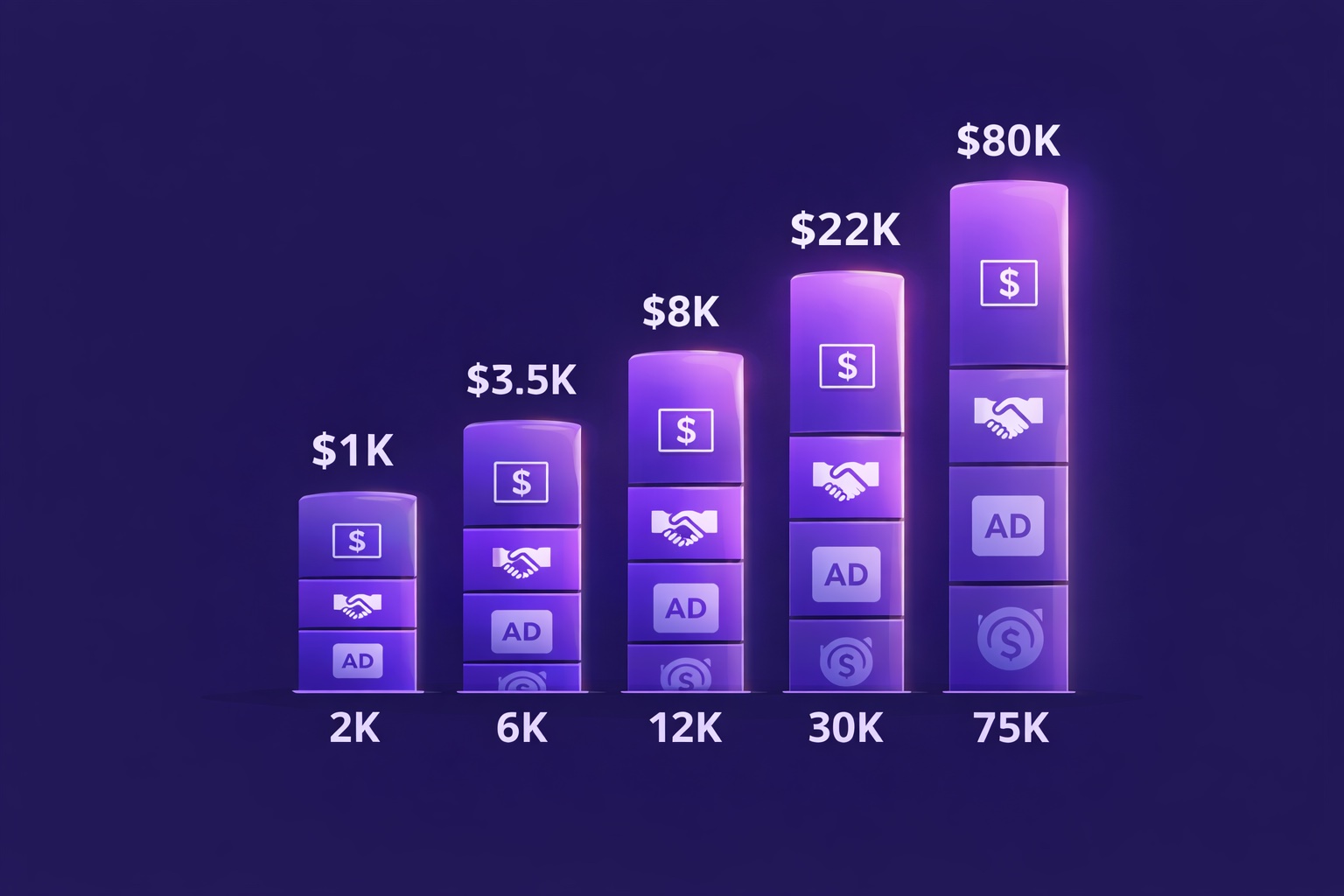
The real data that creators search for but can't find. 5 detailed income profiles at different subscriber tiers — from $1,000/month at 2,000 subscribers to $80,000/month at 75,000 — with full revenue breakdowns by source, time invested, platform used, and the one decision that mattered most at each stage.
Bloggers & Writers: How to Turn Your Blog Into a $5,000+/Month Newsletter Business
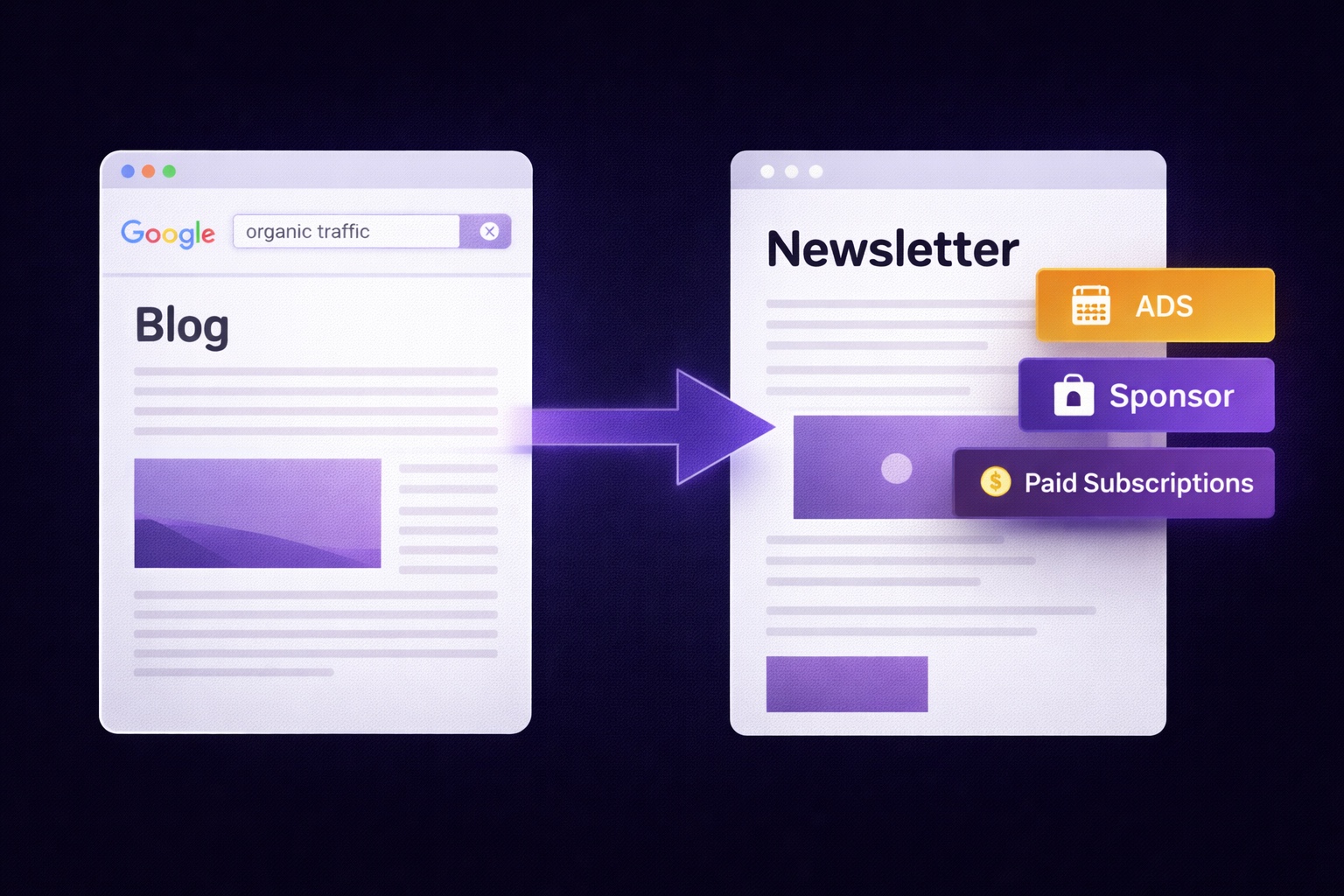
Bloggers already have the hardest parts: proven content demand, warm traffic, and writing discipline. The step-by-step system to convert that foundation into a newsletter business — content upgrades that convert at 15-35%, migrating from Substack or Ghost, the SEO + newsletter flywheel, and 6 revenue streams that replace display ad income.
How to Launch a Paid Newsletter: Complete Step-by-Step Guide for 2026
The paid newsletter market is $2B+ and growing. But most creators launch wrong — wrong pricing, wrong timing, wrong content split. This is the definitive playbook: when you're actually ready, how to price it, the 14-day pre-launch sequence, and why 0% platform fees matter enormously at scale.