How to Monetize Your Email List in 2026: 7 Proven Strategies for Content Creators
Turn your email list into a revenue-generating asset with these 7 proven monetization strategies. From programmatic ads to paid subscriptions, learn exactly how content creators are earning consistent income from their newsletters in 2026.

You've spent months building your email list. Every subscriber represents someone who chose to hear from you—a direct connection that no algorithm can take away. But here's the question that keeps most creators up at night: How do I actually turn these subscribers into revenue?
If you're a content creator with an email list—whether you have 500 subscribers or 50,000—you're sitting on one of the most valuable assets in the creator economy. While social media platforms change their algorithms overnight and ad rates fluctuate wildly, your email list remains yours. It's the only audience you truly own.
The truth is, most creators leave thousands of dollars on the table because they either don't know how to monetize their email list or they're using outdated strategies that no longer work. In 2026, email monetization has evolved beyond simple affiliate links and occasional sponsored posts. The creators who are thriving have diversified their revenue streams and implemented multiple monetization strategies that work together.
In this comprehensive guide, I'll walk you through seven proven strategies that content creators are using right now to monetize their email lists. These aren't theoretical concepts—these are battle-tested methods that creators across YouTube, Instagram, LinkedIn, and Twitter are using to generate consistent revenue. Some of these strategies can start making you money within days, while others build long-term sustainable income.
Whether you're just starting out or looking to scale your existing email revenue, you'll find actionable strategies you can implement immediately. Let's dive in.
1. Programmatic Advertising: The Easiest Entry Point
Here's what most creators don't realize: You don't need 10,000 subscribers or brand partnerships to start making money from your newsletter. Programmatic advertising is the fastest way to monetize your email list, and it works from day one.
Programmatic ads are automated advertisements that are inserted into your newsletters based on your content and audience. Think of it like display advertising on websites, but for email. The best part? You don't have to find advertisers, negotiate rates, or manage relationships. The entire process is automated.
How Programmatic Ads Work:
When you enable programmatic advertising on your newsletter platform, ad networks automatically match relevant advertisers with your content. Every time you send an email, ads are dynamically inserted based on your audience demographics and content topic. You get paid based on impressions (how many people see the ad) or clicks (how many people engage with it).
The revenue model is straightforward: Most platforms pay on a CPM basis (cost per thousand impressions). In 2026, newsletter CPM rates typically range from $15 to $50, depending on your niche and audience quality. Tech, finance, and business newsletters command the highest rates, while lifestyle and entertainment niches tend to be lower.
Real Revenue Example:
Let's say you have 2,000 subscribers with a 40% open rate. That's 800 impressions per email. If you're getting a $30 CPM, you're earning $24 per email you send. Send three newsletters per week, and that's $288 per month—or $3,456 per year—just from automated ads. And this scales directly with your list size.
The beauty of programmatic ads is that they require almost zero effort once set up. You don't have to pitch brands, create custom content, or manage relationships. You simply create your regular content, and the ads appear automatically. This makes it the perfect starting point for creators who are new to email monetization.
Best Practices for Programmatic Ads:
- Choose ad placement carefully: Place ads in the middle or end of your content, not at the top. Your content should always come first.
- Match ad frequency to content quality: If you're sending daily emails, one ad is enough. For longer, weekly deep-dives, you can include 2-3 ads without overwhelming readers.
- Monitor subscriber feedback: Watch your unsubscribe rate. A small increase in unsubscribes is normal when you introduce ads, but if it spikes above 0.5% per send, you may need to adjust placement or frequency.
- Test different platforms: Not all programmatic ad networks are equal. Test a few to see which delivers the best CPM rates for your niche.
- Optimize for higher CPMs: Business-focused content, specific expertise, and professional audiences typically command 2-3x higher ad rates than general lifestyle content.
Platforms like InfluencersKit have built-in programmatic advertising, making it incredibly simple to enable. You literally flip a switch, and ads start appearing in your newsletters. No minimum subscriber count required. This is how many creators start generating their first newsletter revenue within their first month.
2. Direct Sponsorships: Premium Revenue for Engaged Audiences
Once you've built an engaged audience—even just 1,000 active subscribers—direct sponsorships become your highest-earning monetization channel. While programmatic ads might pay $30 CPM, direct sponsors regularly pay $50-$100+ CPM for the same audience. Some premium newsletters command $200+ CPM in specialized niches.
The difference? Direct sponsors aren't just buying ad space—they're buying your endorsement, your audience's trust, and the context you provide around their product or service. This is why sponsors are willing to pay premium rates for newsletters with smaller but highly engaged audiences.
When You're Ready for Sponsorships:
You don't need tens of thousands of subscribers to land your first sponsor. I've seen creators with 800 subscribers secure $500 sponsorship deals. What matters more than list size is engagement. If your open rates are above 40% and your click-through rates are above 3%, you have a sponsorship-ready audience.
Here's what brands actually care about when evaluating newsletters for sponsorships:
- Engagement metrics: Open rates, click-through rates, and subscriber growth rate
- Audience demographics: Who your subscribers are (age, location, job titles, income level)
- Content alignment: How well their product fits your content and audience
- Your voice and credibility: How authentically you can promote their product
- Previous sponsor performance: If you have data from past sponsorships, this is gold
How to Price Your Sponsorships:
Use this simple formula as your starting point: Take your average open rate and multiply by your total subscribers. Then multiply by your target CPM rate. For example, with 3,000 subscribers, a 45% open rate, and a $60 CPM target:
3,000 × 0.45 = 1,350 opens
1,350 × ($60 ÷ 1,000) = $81 per sponsored email
In 2026, typical CPM rates by niche are:
- SaaS/Tech/Development: $75-$150 CPM
- Business/Entrepreneurship: $60-$120 CPM
- Finance/Investing: $80-$200 CPM
- Marketing/Growth: $50-$100 CPM
- Design/Creative: $40-$80 CPM
- Lifestyle/General: $30-$60 CPM
Finding Your First Sponsors:
Don't wait for brands to find you. Be proactive. Start by creating a simple one-page media kit that includes your subscriber count, open rates, audience demographics, and sample content. Then reach out to companies whose products you genuinely use and believe in.
Your pitch email should be short and focused on value:
Subject: Partnership opportunity - [Your Newsletter Name] + [Their Company]
Hi [Name],
I'm [Your Name], creator of [Newsletter Name], a weekly newsletter for [specific audience] with [X] subscribers and a [Y]% average open rate.
I've been using [Their Product] for [timeframe] and regularly recommend it to my audience. I'd love to explore a formal partnership where I feature [Their Product] in an upcoming newsletter.
My audience of [describe audience] aligns perfectly with your target customer. Recent sponsored content has generated [specific metric if available, or remove this sentence].
Are you open to discussing a sponsorship? I'd love to send over my media kit and explore what would work best for both of us.
Best,
[Your Name]
Pro tip: Always disclose sponsored content to your audience. Not only is this legally required in most jurisdictions, but transparency builds trust. Your audience will appreciate your honesty, and engaged audiences convert better for sponsors—which means more repeat deals for you.
3. Paid Newsletter Subscriptions: Recurring Revenue Gold
This is the model that platforms like Substack popularized, and it remains one of the most powerful monetization strategies for creators in 2026. The concept is simple: Offer premium content that subscribers pay for on a recurring basis, typically monthly or annually.
What makes paid subscriptions so attractive isn't just the revenue—it's the predictability. Unlike one-off sponsorships or affiliate commissions, subscription revenue is recurring and compounds over time. Land 100 paying subscribers at $10/month, and you have $1,000 in monthly recurring revenue (MRR). That's $12,000 per year from just 100 people. See our complete monetization guide to scale further.
The Subscription Model That Actually Works:
Most creators get the paid newsletter model wrong. They think they need to gate all their content behind a paywall. Wrong. The most successful paid newsletters follow the "freemium" model: 80% of content remains free, 20% is premium.
Your free content builds your audience and establishes trust. It demonstrates your expertise and gives people a taste of your value. Your premium content goes deeper—offering exclusive analysis, detailed breakdowns, templates, tools, community access, or early access to content.
What Works as Premium Content:
- Deep-dive analysis: Your free newsletter gives the overview; paid subscribers get the full research, data, and insights
- Exclusive templates and resources: Swipe files, spreadsheets, frameworks, checklists that save your audience time
- Case studies and behind-the-scenes: Real examples, revenue numbers, and detailed breakdowns you don't share publicly
- Community access: Private Discord, Slack, or forum where paid subscribers can connect and get direct access to you
- Office hours or Q&A sessions: Monthly video calls or AMA sessions exclusively for paying members
- Early access: Paid subscribers get content 48 hours before it goes public, or access to beta features
Pricing Your Paid Newsletter:
In 2026, the most common pricing structure is:
- Monthly: $5-$15 for most niches, $20-$50 for specialized business/finance content
- Annual: 10-12 months worth of monthly price (gives subscribers 1-2 months free)
- Founding member: One-time lifetime access at 3-5x annual price for early supporters
Start at the lower end. It's easier to raise prices later than to lower them. Once you have 50-100 paying subscribers and proven value, you can increase prices for new subscribers while grandfathering existing ones at their original rate.
Conversion Rate Reality Check:
Most paid newsletters convert 2-5% of their free subscriber base to paid. If you have 5,000 free subscribers, expect 100-250 paid subscribers at steady state. The key word is "steady state"—this takes time to build. Don't expect 5% conversion in month one. It typically takes 3-6 months of consistent premium content delivery to reach optimal conversion rates.
The creators who succeed with paid subscriptions focus obsessively on delivering value that justifies the price every single time. One great piece of premium content per month that saves your subscriber 10 hours or makes them $1,000 is worth far more than daily mediocre updates.
4. Affiliate Marketing: Earn While You Recommend
Affiliate marketing gets a bad rap because it's often done poorly. But when done right—recommending products you genuinely use and believe in—it's one of the most natural monetization methods for newsletters. You're already recommending tools, products, and services in your content. Why not earn a commission when your recommendations lead to purchases?
The key difference between spammy affiliate marketing and effective affiliate marketing is authenticity. Your audience can smell a disingenuous recommendation from a mile away. Only promote products you've actually used and would recommend even without a commission.
High-Converting Affiliate Strategies for Newsletters:
The most effective affiliate content in newsletters isn't a sales pitch—it's educational content that happens to include affiliate links. Here are the formats that convert best:
- "My toolkit" or "How I work" posts: Share the actual tools and products you use daily. Explain how each one fits into your workflow and why you chose it. These posts convert at 5-8% because they're incredibly helpful and build trust.
- Comparison posts: "Tool A vs Tool B: Which one is right for you?" These help your audience make informed decisions while naturally including affiliate links for both options.
- Problem-solution content: Identify a specific problem your audience faces, explain the solution, and recommend the tool or product that implements that solution. The affiliate link feels natural because it's part of the solution.
- Case studies and results: "How I achieved [result] using [product]" with specific metrics and examples. This is particularly effective for software, courses, and services.
- Seasonal or timely recommendations: End-of-year tools roundups, new feature announcements, or special deals create natural opportunities for affiliate content.
Best Affiliate Programs for Newsletter Creators:
Focus on recurring commission programs rather than one-time payouts. A 30% recurring commission on a $50/month SaaS product means each customer you refer is worth $180 per year—far more valuable than a $50 one-time commission.
Top affiliate categories for newsletter creators in 2026:
- SaaS tools: Email platforms, productivity tools, design software (20-30% recurring commissions)
- Online courses and education: Platforms like Teachable, Skillshare, or specific course creators (30-50% commissions)
- Web hosting and technical services: (30-100% first-year commissions, sometimes recurring)
- Books: Amazon Associates (4-10% commissions, low but high volume potential)
- Financial products: Banking, investment platforms (varies widely, often high payouts)
- Physical products: Amazon Associates or direct brand programs (4-15% typically)
The Transparency Rule:
Always disclose affiliate relationships. It's legally required and builds trust. A simple disclosure like "This post contains affiliate links, which means I may earn a commission if you purchase through them at no extra cost to you. I only recommend products I personally use and believe in. Check how other creators monetize with real CPM data." is sufficient and respected by readers.
Pro tip: Track which affiliate products perform best with your audience. Double down on promoting products that convert well and phase out ones that don't resonate. Over time, you'll develop a small set of core affiliate partnerships that generate consistent revenue with minimal effort.
5. Digital Products: Build Once, Sell Forever
Your email list is the perfect sales channel for digital products. Unlike courses that require ongoing management or services that trade time for money, digital products are assets you create once and can sell indefinitely. And because your email list already knows and trusts you, they're far more likely to buy from you than from a stranger.
The beauty of digital products is the profit margin: nearly 100% after the initial creation cost. There's no inventory, no shipping, no manufacturing. Create it once, automate the delivery, and collect revenue while you sleep.
Digital Products That Sell Well to Newsletter Audiences:
The best digital products solve a specific, painful problem your audience faces regularly. Here are the formats that consistently perform well:
- Templates and swipe files: Email templates, social media copy, proposal templates, design templates. Price: $29-$99. These save time and remove creative burden, making them easy purchases.
- Comprehensive guides and playbooks: 50-100 page PDF guides on specific topics. Price: $49-$199. These work best when they're extremely tactical with step-by-step instructions.
- Spreadsheet tools and calculators: Financial models, planning tools, trackers. Price: $19-$79. Particularly effective in business, finance, and productivity niches.
- Notion templates and systems: Pre-built Notion workspaces, databases, and systems. Price: $29-$149. Huge demand in 2026 as Notion continues to dominate productivity tools.
- Video courses (mini-format): 1-3 hour focused courses on specific skills. Price: $99-$299. Shorter than traditional online courses but more in-depth than YouTube tutorials.
- Exclusive resources libraries: Curated collections of resources, tools, and links. Price: $39-$79. Saves your audience dozens of hours of research.
- Recorded workshops and masterclasses: Record a live workshop once, sell the recording forever. Price: $49-$199.
The Product Launch Framework:
Don't just drop a product link in your newsletter and hope for sales. Use a proper launch sequence that builds anticipation and educates your audience on why they need this product.
Here's a proven 7-day launch sequence:
Day 1 (Monday): Announce you're creating something. Share the problem it solves. Ask subscribers what they'd want included.
Day 3 (Wednesday): Share a behind-the-scenes look at creating the product. Show screenshots or previews. Build curiosity.
Day 5 (Friday): Reveal the product. Explain exactly what's included, who it's for, and the transformation it provides. Open cart for early-bird pricing (20% off).
Day 6 (Saturday): Share testimonials or early results (if available). Address common objections. Remind about early-bird deadline.
Day 7 (Sunday morning): "Early bird ends tonight" reminder. Share the exact problem this solves and how it helps.
Day 7 (Sunday evening): Final call. "Cart closes in 3 hours." Many purchases happen in the last few hours.
Day 8 (Monday): Cart closed. Thank everyone who purchased. Share that the product is now available at regular price. This creates urgency for the next launch.
This sequence typically converts 3-7% of your email list for a product priced under $100, and 1-3% for products priced $100-$300. A list of 5,000 subscribers could generate $7,500-$15,000 from a single product launch using this method.
Evergreen Product Sales:
After your launch, don't stop promoting. Add your product to your email signature, create an automated email sequence that pitches it to new subscribers 30 days after they join, and mention it naturally when relevant in your regular content. These "passive" sales often generate as much revenue as launches over time.
6. Consulting and Services: Premium Pricing for Expertise
If you have specialized expertise, your email list is your best source of high-value consulting and service clients. These are the highest-ticket items you can sell—ranging from $500 for a consulting call to $10,000+ for comprehensive services—and your email subscribers are already pre-qualified leads who trust you.
The key insight: You don't need to sell services to your entire list. Just 2-3 high-ticket clients per month from a list of 3,000 subscribers can generate $50,000-$100,000+ annually. This is about quality, not quantity.
Service Offerings That Work for Newsletter Audiences:
- Strategy consulting: 1-2 hour strategy sessions on your area of expertise. Price: $500-$2,000 per session. This is the easiest to start with—low commitment, high value.
- Done-for-you services: You actually do the work for clients. Price varies widely by service ($2,000-$20,000+). Examples: content strategy, website audits, marketing implementation.
- Implementation sprints: Intensive 1-2 week projects where you help clients implement a specific strategy. Price: $3,000-$10,000. Popular in marketing, tech, and business niches.
- Retainer services: Ongoing monthly support and consultation. Price: $2,000-$10,000/month. This creates recurring revenue similar to subscriptions but at much higher value.
- Group coaching programs: Work with 5-15 clients simultaneously in a structured program. Price: $500-$2,000 per person. Scales your time while maintaining high prices.
- Workshops and training: Teach your methodology to teams or individuals. Price: $1,000-$5,000 per workshop.
How to Position Services Without Being Salesy:
Most creators struggle with promoting services because they don't want to seem pushy. Here's the trick: Don't sell services directly. Instead, demonstrate your expertise through your newsletter content, then make services available to those who want more hands-on help.
Effective service promotion in newsletters:
- Case studies: Share results you've achieved for clients (with permission). Don't make it about selling—make it about teaching through real examples. Add a simple line at the end: "If you'd like help implementing something similar, reply to this email."
- Behind-the-scenes methodology: Explain your process or framework in your newsletter. People who want you to apply it to their situation will reach out.
- Q&A format: Answer subscriber questions in your newsletter. For complex questions, offer a brief answer and note "This requires a deeper conversation—I do consulting on exactly this topic if you'd like dedicated help."
- Limited availability announcements: "I'm opening 3 consulting spots for February. If you've been thinking about getting expert help with [specific problem], reply to this email." Scarcity creates action.
- Signature line: Add a simple line to your email signature: "Looking for 1-on-1 help? I offer consulting on [your expertise]. Learn more here."
The Service Ladder:
Create multiple service tiers so people can start small and upgrade over time:
Entry level ($500-$1,000): Single strategy session or audit. Low commitment, allows people to test working with you.
Mid-tier ($2,000-$5,000): Project-based work or intensive sprint. Clear deliverable and timeline.
Premium ($5,000-$20,000+): Comprehensive services or ongoing retainers. Reserved for clients who've proven they're ideal to work with.
This ladder allows subscribers to self-select their commitment level. Many will start with a strategy session, experience value, then upgrade to project work or retainers. Your email list nurtures these relationships over time, making the sale easier when they're ready.
7. Community and Membership: Recurring Revenue + Network Effects
The final monetization strategy is building a paid community or membership around your newsletter. This combines the recurring revenue benefits of paid subscriptions with the network effects of bringing your audience together. When done right, members stay for years because they're getting value not just from you, but from each other.
Communities work best when your audience has a strong common interest or goal. If your newsletter serves entrepreneurs, developers, designers, writers, investors, or any group that benefits from connecting with peers, a paid community can become your highest-retention revenue source.
What Makes a Paid Community Worth Joining:
People don't pay for access to a Slack or Discord channel. They pay for the transformation, connections, and ongoing value they receive. Your paid community needs to offer clear benefits:
- Direct access to you: Weekly office hours, Q&A sessions, or the ability to ask questions and get responses within 24 hours.
- Peer connections: Introduction threads, collaboration opportunities, accountability partnerships. The community itself becomes valuable.
- Exclusive content: Members-only newsletters, resources, templates, and tools you don't share publicly.
- Expert guests and workshops: Bring in guest experts monthly for live sessions or AMAs. These become community events that increase engagement.
- Job board or opportunity sharing: Members share job opportunities, collaboration requests, and business leads with each other.
- Mastermind groups: Facilitate small group formations where 4-6 members meet regularly to support each other.
- Early access and beta testing: Community members get first access to your new products, courses, or content.
Community Pricing Models:
Most successful paid communities in 2026 price between $29-$99 per month, or $290-$990 annually (with 2 months free). The key is positioning the price relative to the value delivered:
- $29-49/month: Access to community + exclusive content. Light touch from you, heavy peer-to-peer interaction.
- $49-79/month: Weekly office hours or Q&A with you + community + exclusive content. More direct access.
- $79-99/month: All of the above + monthly expert workshops, detailed resources, or specialized subgroups. Premium positioning.
The math gets compelling quickly: Just 100 members at $49/month is $4,900 in monthly recurring revenue—$58,800 per year. And unlike sponsorships or one-time product sales, this revenue is predictable and compounds as you add members.
How to Launch Your Community:
Don't launch your community until you have at least 1,000 engaged newsletter subscribers. You need a foundation to build from. Then, use a founding member launch:
Pre-launch (2 weeks before): Survey your email list about what they'd want in a community. Get them invested in the idea.
Launch announcement: Offer founding memberships at 40% off the regular price (e.g., $29/month instead of $49/month). Lock in this rate for life. Limit to first 50-100 members.
First month: Over-deliver on engagement. Host multiple sessions, be extremely active, and set the culture. Your founding members become your biggest advocates.
After founding period: Close founding member pricing and open regular memberships. The early members create social proof and momentum for new joiners.
Platform Recommendations:
In 2026, the most popular community platforms are:
- Circle: Purpose-built for paid communities. Clean interface, integrated payments, courses, and content.
- Discord: Free platform, requires third-party payment integration (like Patreon or MemberSpace). Best for tech-savvy audiences.
- Slack: Familiar to business audiences. Use with payment tools like Memberful or Gumroad for access control.
- Mighty Networks: All-in-one platform with community, courses, and events. Higher pricing but comprehensive features.
The critical success factor for communities isn't the platform—it's your consistent presence and facilitation. Plan to spend 5-10 hours per week actively engaging in your community, especially in the first 3-6 months. This time investment pays off through retention rates of 80-90% (compared to 50-60% for paid newsletters without community).
Putting It All Together: Your Monetization Stack
Here's the truth that most monetization guides won't tell you: You don't have to choose just one strategy. The most successful newsletter creators stack multiple revenue streams. This creates diversification, reduces risk, and maximizes the value of every subscriber.
Here's how a realistic monetization stack looks at different stages:
Stage 1: 0-1,000 Subscribers (Months 1-6)
Focus: Build audience + start monetizing immediately with low-hanging fruit
- Primary: Programmatic advertising ($100-300/month)
- Secondary: Affiliate marketing in content ($50-200/month)
- Goal: Cover your tools and hosting costs while focusing on growth
Expected revenue: $150-500/month
Stage 2: 1,000-5,000 Subscribers (Months 6-18)
Focus: Add premium offerings + secure first sponsorships
- Primary: Direct sponsorships 2x per month ($500-1,000/month)
- Secondary: Programmatic ads on non-sponsored sends ($300-600/month)
- Tertiary: Launch 1-2 digital products ($500-2,000 in launch months)
- Ongoing: Affiliate marketing ($200-500/month)
Expected revenue: $1,500-4,000/month (with spikes during product launches)
Stage 3: 5,000-20,000 Subscribers (Months 18+)
Focus: Premium subscriptions + diversified revenue
- Primary: Paid newsletter subscriptions 3-5% conversion ($1,500-5,000/month recurring)
- Secondary: Sponsorships 4x per month ($2,000-4,000/month)
- Tertiary: Digital products and courses ($1,000-5,000/month average)
- Ongoing: Programmatic ads on free content ($500-1,000/month)
- Ongoing: Affiliate revenue ($500-1,500/month)
- Optional: Consulting/services 1-3 clients/month ($2,000-6,000/month)
- Optional: Paid community 50-200 members ($2,500-10,000/month)
Expected revenue: $8,000-30,000+/month
The Diversification Advantage:
Notice how revenue comes from multiple sources? This is intentional. If a major sponsor pulls out, you still have 5 other revenue streams. If paid subscription growth slows, sponsorship revenue picks up the slack. This diversification turns your newsletter from a side project into a sustainable business.
Common Mistakes That Kill Email Monetization (And How to Avoid Them)
Before we wrap up, let's address the mistakes I see creators make repeatedly. Avoid these, and you'll be ahead of 80% of newsletter creators:
Mistake #1: Waiting Too Long to Monetize
Many creators think they need 10,000 subscribers before they can monetize. Wrong. Start monetizing at 100 subscribers with programmatic ads and affiliate links. Get comfortable asking for money early. The longer you wait, the harder it becomes psychologically.
Mistake #2: Over-Monetizing Too Fast
The opposite extreme: Bombarding a small list with constant sales pitches. Follow the 80/20 rule: 80% pure value content, 20% monetization. Your audience will tolerate and even appreciate monetization when most of what you send is genuinely helpful.
Mistake #3: Promoting Products You Don't Believe In
One bad affiliate recommendation or disingenuous sponsorship can destroy years of trust. Only promote products you've personally used and would recommend to a friend. Your reputation is worth more than any commission check.
Mistake #4: Not Tracking Performance
You can't improve what you don't measure. Track which monetization methods perform best with your audience. Maybe sponsored content converts better than affiliate links for you. Maybe your audience loves digital products but ignores services. Data tells you where to focus.
Mistake #5: Treating All Subscribers the Same
Someone who joined yesterday needs different content and offers than someone who's been with you for six months. Segment your list by engagement level and tailor your monetization approach. Your most engaged subscribers are 10x more likely to buy than inactive ones.
Your Next Steps: Choose Your Starting Point
You now have seven proven strategies to monetize your email list. But don't try to implement all seven at once. That's a recipe for overwhelm and execution failure. Instead, choose your starting point based on where you are right now:
If you're just starting (0-500 subscribers):
- Enable programmatic advertising immediately
- Integrate affiliate links naturally in your content
- Focus primarily on growing your list while monetization runs passively
If you have a small audience (500-2,000 subscribers):
- Continue programmatic ads and affiliate marketing
- Pitch your first 3 direct sponsors
- Create and launch your first digital product
If you have a growing audience (2,000-10,000 subscribers):
- Launch a paid subscription tier (20% premium content)
- Secure recurring monthly sponsors
- Build out your product catalog (2-3 digital products)
- Test consulting/service offerings
If you have an established audience (10,000+ subscribers):
- Optimize your paid subscription conversion (aim for 3-5%)
- Raise sponsorship rates and add waiting list
- Launch a paid community
- Create premium high-ticket offerings (courses, coaching, services)
The Email Monetization Mindset
Here's the most important thing to understand about monetizing your email list: It's not about extracting value from your audience. It's about creating a sustainable business that allows you to continue creating valuable content for them.
When you monetize ethically and strategically, everyone wins. You get compensated for your expertise and time. Your audience gets continued access to valuable content. Sponsors and partners reach their ideal customers. It's a genuine win-win-win.
The creators who succeed long-term think about monetization from day one, but they never let monetization compromise content quality. They start small, test what works with their specific audience, and gradually build a diversified revenue stack that supports their creative work.
Your email list is one of your most valuable assets as a creator. Use InfluencersKit's monetization tools to turn it into revenue.—arguably THE most valuable asset. It's your direct connection to people who've chosen to hear from you. That's incredibly powerful. Now you know exactly how to turn that power into sustainable revenue.
The question isn't whether you can monetize your email list. The question is: Which strategy will you implement first?
Ready to Start Monetizing Your Email List?
InfluencersKit makes it incredibly easy to implement all seven monetization strategies we covered. Built-in programmatic advertising means you can start earning from day one. Simple sponsor management, seamless paid subscriptions, and creator-focused tools—all in one platform.
Start your free trial today and turn your email list into a revenue-generating asset. No credit card required. Set up in under 15 minutes. Create your landing page and start collecting subscribers today.
Stay Updated
Get the latest insights, strategies, and tips delivered directly to your inbox. Join thousands of creators who are building their email communities with our weekly newsletter.
No spam, unsubscribe at any time. We respect your privacy.
Related Articles

Newsletter Strategy for Course Creators: Build Your List, Warm Your Audience, Fill Your Program
Course sales require the deepest trust of any creator product. Email is the only channel that builds that trust systematically. The complete system: lead magnets that pre-qualify students, a 10-email welcome sequence designed for enrollment, inter-launch content strategy, launch sequence framework, post-launch re-engagement, and evergreen enrollment system.
How to Monetize a Small Newsletter: Making Real Money with Under 1,000 Subscribers
The 10,000-subscriber threshold is a myth. Creators are making $1,000-$3,000/month with under 500 subscribers — using the right monetization model matched to their audience depth. The 5 models that work at small scale, what fails before you have volume, and a realistic revenue stack for under-1,000-subscriber creators.
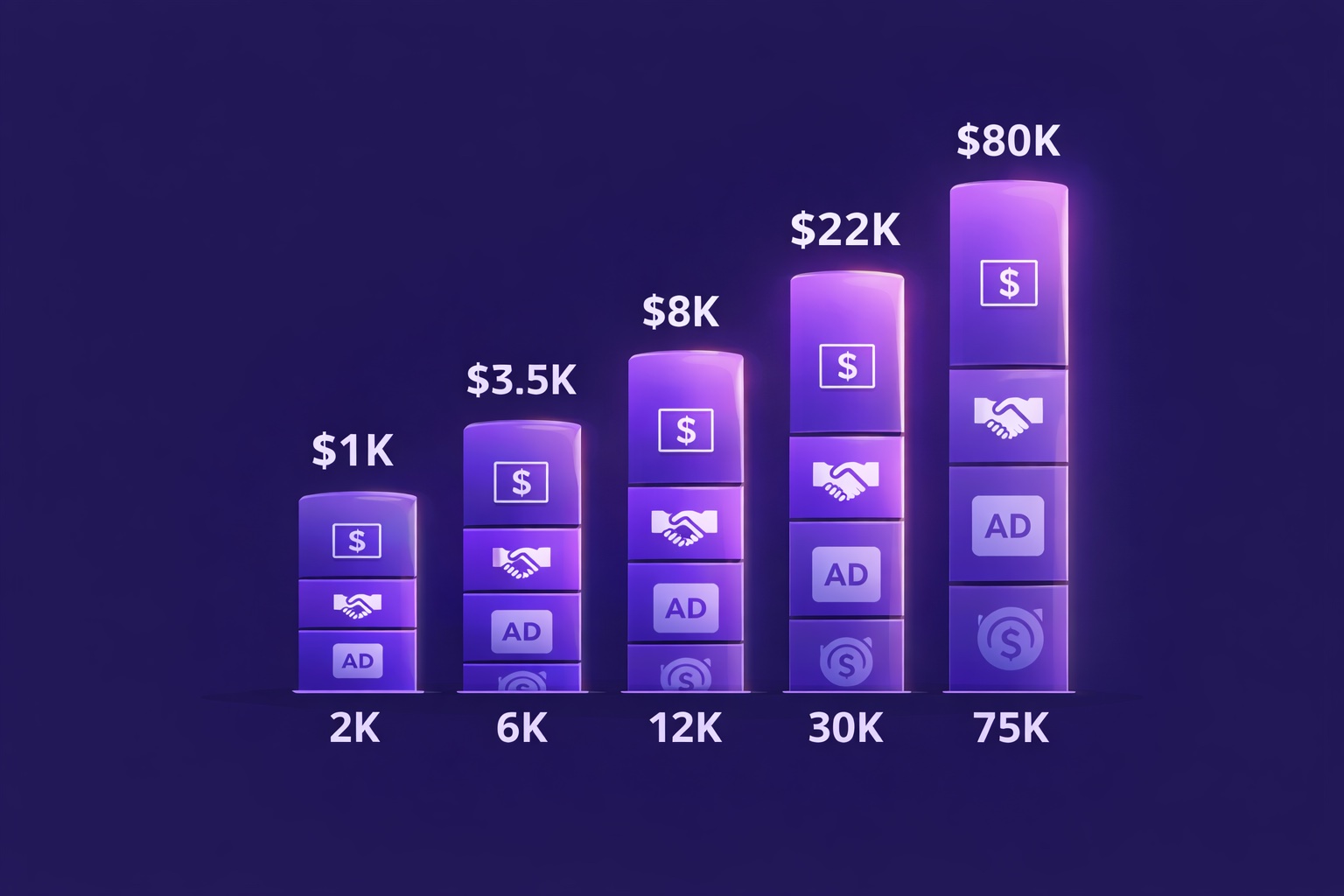
Real Newsletter Income Reports: How Creators Make $1K to $100K/Month (Actual Numbers)
The real data that creators search for but can't find. 5 detailed income profiles at different subscriber tiers — from $1,000/month at 2,000 subscribers to $80,000/month at 75,000 — with full revenue breakdowns by source, time invested, platform used, and the one decision that mattered most at each stage.

The Creator Economy in 2026: Complete Guide to Email Monetization
The creator economy is now a $250B industry. Learn how successful creators are building $100K-$1M+ businesses through email monetization. Real data, revenue breakdowns, and actionable strategies for 2026.

Your Readers Can Leave Without Ever Seeing Your Page.
Since 2024, Gmail and Yahoo require one-click unsubscribe. A mail-app button removes the reader instantly, with no page, no options and no reason. Your preference centre now reaches only footer-link leavers, so the 'less, not none' options belong inside the email.

They Unsubscribed, Then Signed Up Again. Now What?
Only the reader can reverse an unsubscribe. A fresh signup is a request, not proof. Why imports, forms and bulk edits quietly resubscribe people, and how to build a confirmation step that a link scanner or a stranger cannot trigger.

Your List Grew 1,500 Overnight. None of Them Are Real.
A signup spike with no launch behind it is usually list bombing. Fifteen hundred fake signups can push a welcome stream to six times Gmail's complaint limit and overstate your list by 30% to sponsors. How to spot them, why Apple Mail hides some, and how to clean up without making it worse.

Moving Your Newsletter? The List Is the Easy Part.
The CSV moves in five minutes. Sender reputation, unsubscribes, paid subscriptions, automations and old signup forms do not. The order that gets a newsletter to a new platform without losing inbox placement or emailing people who opted out.

You Cannot Pause a Newsletter. Only Stop Sending One.
Churn continues, acquisition stops, and sender reputation degrades fast while recovering over four to twelve weeks. Which makes an eight-week break cost far more than eight weeks — and makes reducing frequency a completely different decision from stopping.

Two Newsletters Earn $10k a Month. One Is Worth $100k More.
Same monthly income, very different sale price. Published multiples put paid subscription revenue around 24-42x MRR and sponsorship-supported newsletters closer to 20-32x, which means shifting your revenue mix beats a hard 30% growth year. The four discounts buyers apply, and why they are all decided 12-18 months before anyone makes an offer.

You Cannot Unsend a Newsletter. Write the Contract First.
A video can be unlisted, a post deleted. A send is gone, which means every piece of leverage you had disappears the moment you deliver. What actually needs to be in writing: the five-part payment clause, why you take a deposit, and the performance guarantee that makes you liable for someone else's landing page.
Your Account Was Removed. Here's the First 24 Hours.
Account recovery is a sequence ordered by decay, not a checklist. Some assets are recoverable in the first hours and gone within days; others can wait. What to export before access closes, why filing a second appeal usually sets you back, who to contact before they find out elsewhere, and how to rebuild in parallel rather than after.