Ghost vs Substack vs Email Marketing Platforms: Complete Comparison for Creators
Choosing between Ghost, Substack, and email platforms? This detailed comparison breaks down pricing, monetization, and features to help creators pick the right tool.

You've spent months building your audience on social media. Now you're ready to own your relationship with your followers through email. But here's where things get confusing: Should you go with Ghost? Substack? Or a traditional email marketing platform like ConvertKit or Beehiiv?
The answer isn't simple, and choosing the wrong platform can cost you thousands in revenue and months of migration headaches. I've watched creators make this decision hundreds of times, and the ones who choose wisely build sustainable businesses. The ones who don't? They're stuck on platforms that limit their growth or bleed their revenue through excessive fees.
In this guide, I'll break down exactly how Ghost, Substack, and email marketing platforms compare across the metrics that actually matter: pricing, monetization potential, ease of use, and long-term scalability. By the end, you'll know exactly which platform fits your creator business model.
The Three Platform Categories Explained
Before we dive into comparisons, let's clarify what we're actually comparing. These platforms fall into three distinct categories, each built for different purposes.
Substack: The All-in-One Publishing Platform
Substack is a complete publishing platform designed specifically for paid newsletters. Think of it as Medium meets Patreon meets email. You get a website, email delivery, payment processing, and a built-in discovery network—all in one package. The trade-off? You give up control and pay a 10% fee on all revenue.
Substack works best for writers who want to start publishing immediately without technical setup. You can literally go from zero to published newsletter in under 10 minutes. But that convenience comes with significant limitations on customization and monetization flexibility.
Ghost: The Self-Hosted Publishing CMS
Ghost is an open-source content management system built for professional publishers. It's more like WordPress specifically designed for newsletters and memberships. You can self-host it or use Ghost's managed hosting. Either way, you own your platform, your data, and your subscriber relationships completely.
Ghost appeals to creators who want full control and are willing to handle more technical complexity. You can customize everything from your website design to your email templates. The learning curve is steeper, but the long-term flexibility is unmatched.
Email Marketing Platforms: The Creator-Focused Tools
Platforms like ConvertKit, Beehiiv, Kit, and InfluencersKit are purpose-built email marketing tools for creators. They focus on list growth, segmentation, automation, and monetization features. You typically need a separate website (or use their basic landing pages), but you get powerful email capabilities and creator-specific features like referral programs and programmatic ad monetization.
These platforms work best for creators who already have a content home (YouTube, podcast, blog) and want professional email tools to monetize their audience. They offer the sweet spot between ease of use and advanced features.
Pricing Comparison: What You'll Actually Pay
Let's talk money. Pricing structures vary wildly between these platforms, and the "cheapest" option often ends up being the most expensive as you grow.
Substack Pricing
Substack is free to start. You pay nothing until you start charging subscribers. Then they take 10% of all revenue plus Stripe payment processing fees (around 2.9% + $0.30 per transaction). So if you're making $10,000/month, Substack takes $1,000 plus ~$320 in Stripe fees. That's $1,320/month in total platform costs.
The advantage: Zero upfront costs. The disadvantage: The fees never go down, no matter how big you get. At scale, you're essentially paying for a full-time employee's salary to a platform you don't control.
Ghost Pricing
Ghost offers managed hosting starting at $9/month for up to 500 members, $25/month for up to 1,000 members, and $50/month for up to 2,000 members. Beyond that, pricing scales to $200+/month for larger audiences. You can also self-host Ghost for free (only paying for server costs, typically $5-20/month), but you'll need technical knowledge.
Ghost charges 0% platform fees on your revenue. You only pay Stripe's payment processing fees. So if you're making $10,000/month, Ghost costs you $50-200/month (depending on subscriber count) plus ~$320 in Stripe fees. Total: $370-520/month—significantly less than Substack at scale.
Email Marketing Platform Pricing
Pricing varies widely. ConvertKit starts at $25/month for up to 1,000 subscribers. Beehiiv has a free tier up to 2,500 subscribers, then $49/month for growth features. Kit (formerly ConvertKit) ranges from $15-100+/month depending on features and list size.
InfluencersKit offers a more affordable structure: Free up to 1,000 subscribers, then Creator at $49/month up to 10,000 — with full features including programmatic ad monetization. Like Ghost, InfluencersKit charges 0% commerce fees on paid subscriptions and digital products, on every plan including free. Ad revenue works as a share rather than a fee — InfluencersKit creators keep 60–75% depending on plan.
Real-World Cost Comparison
Let's run the numbers for a creator with 5,000 subscribers making $5,000/month from paid subscriptions:
- Substack: $500/month platform fee + $175 Stripe fees = $675/month (13.5% of revenue)
- Ghost: $200/month hosting + $175 Stripe fees = $375/month (7.5% of revenue)
- Email Platform: $50-100/month + $175 Stripe fees = $225-275/month (4.5-5.5% of revenue)
The cost difference becomes massive at scale. At $50,000/month revenue, Substack costs $5,750/month while Ghost costs just $520/month and email platforms cost $275-500/month.
Monetization Options: How You'll Make Money
Pricing matters, but only if you can actually monetize. Let's compare how each platform helps you make money from your content.
Substack Monetization
Substack focuses exclusively on paid subscriptions. You set a monthly or annual price, and readers pay to access your premium content. The platform makes it dead simple to set up paid tiers and manage subscriber billing. Substack also has a discovery network where readers can find new newsletters, potentially driving organic growth.
What's missing: No programmatic ads, no sponsorship tools, no affiliate marketing features, no digital product sales beyond subscriptions. You're locked into one monetization model. If your audience doesn't want to pay for subscriptions (and many won't), you can't monetize them at all.
Ghost Monetization
Ghost supports paid memberships with multiple tier options (free, paid, VIP, etc.). You have complete control over pricing, billing cycles, and member benefits. Ghost also integrates with Stripe for payment processing and supports one-time payments for digital products.
Where Ghost falls short: No built-in sponsorship marketplace, no programmatic ads, and limited tools for affiliate marketing. You can technically add these yourself through custom code or integrations, but it requires technical work. Ghost is powerful but expects you to build your own monetization systems.
Email Marketing Platform Monetization
This is where email platforms shine. Most creator-focused platforms offer multiple monetization options:
- Paid subscriptions: Similar to Substack/Ghost but with more customization
- Programmatic ads: Platforms like InfluencersKit let you insert programmatic ads into emails, earning revenue from every subscriber—even free ones. This means you can monetize from day one, before you have enough audience for sponsorships
- Sponsorship tools: Many platforms help you manage sponsor relationships, track performance, and automate sponsor reporting
- Affiliate marketing: Built-in tracking and link management for affiliate partnerships
- Digital products: Sell courses, ebooks, or other products directly through your emails
The key advantage: You're not dependent on one revenue stream. Small creators can earn from programmatic ads while building toward sponsorships. Larger creators can stack multiple revenue sources for maximum earning potential.
Ease of Use: Getting Started and Daily Management
The best platform is useless if you can't figure out how to use it. Let's compare the learning curve and daily workflow for each option.
Substack: Beginner-Friendly Champion
Substack wins on simplicity. The interface is clean, intuitive, and requires zero technical knowledge. You can write your first newsletter in a simple text editor, click publish, and it's live. The mobile app lets you write and publish from your phone. There's essentially no learning curve.
The limitation: Simplicity means fewer features. You can't build complex automations, create advanced segments, or customize your email templates beyond basic formatting. What you see is what you get.
Ghost: Power User Territory
Ghost has a steeper learning curve. You'll need to understand concepts like membership tiers, portal settings, and email template customization. The editor is powerful but can feel overwhelming at first. Self-hosted Ghost requires server management skills or hiring a developer.
Once you learn it: Ghost becomes incredibly efficient. The editor supports markdown, custom cards, and reusable content blocks. You can build exactly the newsletter you envision. But expect to invest 5-10 hours learning the platform initially.
Email Marketing Platforms: The Middle Ground
Most email platforms strike a balance between simplicity and power. They're more intuitive than Ghost but offer more features than Substack. Modern platforms like Beehiiv and InfluencersKit have invested heavily in user experience, making advanced features accessible to non-technical creators.
Expect a 2-3 hour learning curve to understand the basics, then ongoing discovery as you explore automation, segmentation, and analytics features. Most platforms offer templates and guides to speed up the learning process.
Features and Functionality Comparison
Let's break down the specific features that matter most for newsletter creators.
Email Deliverability
Ghost and established email platforms generally have excellent deliverability because they invest heavily in sender reputation management. Substack's deliverability is solid but has faced occasional issues due to shared sending infrastructure (when one Substack newsletter gets flagged for spam, it can affect other users).
Winner: Established email platforms with dedicated sending infrastructure and active deliverability monitoring.
Design and Customization
Ghost offers the most design flexibility—you can customize every pixel of your website and emails if you know code. Substack offers the least customization (intentionally—everyone's Substack looks similar). Email platforms fall in the middle, offering template customization without requiring coding skills.
Winner: Ghost for maximum control, email platforms for practical customization without technical skills.
Automation and Workflows
Email marketing platforms dominate here. They're built for automation—welcome sequences, behavior-triggered emails, subscriber tagging, and complex segmentation. Ghost has basic automation but it's limited. Substack has essentially no automation features.
Winner: Email marketing platforms by a landslide.
Analytics and Reporting
All platforms provide basic analytics (open rates, click rates, subscriber growth). Ghost and email platforms offer more detailed analytics including subscriber behavior tracking, revenue reporting, and engagement scoring. Substack's analytics are solid but simpler.
Winner: Tie between Ghost and email platforms, both offering robust analytics for data-driven creators.
Growth Tools
This is where email platforms shine. Many offer referral programs (readers get rewards for referring friends), recommendation networks, embeddable signup forms, landing page builders, and viral growth features. Ghost has basic growth tools. Substack has its discovery network but limited growth automation.
Winner: Email marketing platforms with purpose-built growth features.
Data Ownership and Platform Lock-In
This might be the most important factor long-term, yet it's often overlooked by new creators.
Who Owns Your Audience?
With Ghost and email platforms, you completely own your subscriber data. You can export your entire list with full subscriber information and move to any other platform anytime. Your website, content, and subscriber relationships are truly yours.
Substack is more complicated. While you can export your subscriber list, your content lives on Substack's domain (yourname.substack.com). Moving your archive means recreating everything on a new platform. Subscribers are somewhat locked into the Substack ecosystem—they need Substack accounts to manage their subscriptions.
Migration Difficulty
Moving from an email platform to another email platform is relatively straightforward—export your list, import to the new platform, done. Moving from Ghost to an email platform (or vice versa) requires more work but is totally feasible. See our platform comparison guide to compare top options.
Moving off Substack is the hardest. Read our ConvertKit alternatives guide for platform options. You lose your URL structure (which affects SEO), you need to rebuild your website elsewhere, and you risk losing subscribers who don't want to update their payment information on a new platform. The 10% fee starts looking like a lock-in tax.
Which Platform Should You Choose?
After analyzing pricing, features, and limitations, here's my honest recommendation for different creator scenarios:
Choose Substack If:
- You're a complete beginner who wants to start publishing immediately with zero technical setup
- You're writing long-form essays and want a beautiful, distraction-free reading experience
- You plan to monetize exclusively through paid subscriptions (no ads, no sponsors)
- You value the Substack discovery network and brand association
- You're okay with paying 10% of all revenue indefinitely for convenience
Choose Ghost If:
- You want complete control over your website design and branding
- You're comfortable with technical complexity or willing to learn
- You're building a media company or publication (not just a personal newsletter)
- You want to avoid all platform fees and keep 100% of your revenue
- You prioritize long-term flexibility over short-term convenience
Choose an Email Marketing Platform If:
- You want to monetize through multiple revenue streams (ads, sponsors, products, subscriptions)
- You need powerful automation and segmentation features
- You want to monetize even with a small audience (under 1,000 subscribers)
- You already have a website or content platform and just need email tools
- You want growth features like referral programs and landing pages
- You prioritize affordability—especially if you're not doing paid subscriptions yet
The Hybrid Approach: Best of Both Worlds
Here's what many successful creators do: They use an email marketing platform for email delivery and monetization, while hosting their content archive on a simple website or blog. This gives you:
- Full email marketing features and automation
- Multiple monetization options including programmatic ads from day one
- Complete data ownership and easy migration
- A content home you control (unlike Substack)
- Lower costs than all-in-one platforms
This approach takes slightly more setup than Substack but gives you maximum flexibility and earning potential. You can start with a simple website (even a landing page) and expand over time.
Making Your Decision: Action Steps
Still not sure which platform is right for you? Follow this decision-making framework:
Step 1: Define Your Monetization Model (5 minutes)
Write down how you plan to make money in years 1, 2, and 3. If it's only paid subscriptions, Substack or Ghost work. If you want multiple revenue streams or need to monetize a small audience, email platforms are better.
Step 2: Calculate Your True Cost (10 minutes)
Project your subscriber count and revenue at 6 months, 1 year, and 2 years. Calculate what each platform would cost at those milestones. Substack's 10% fee seems small until you're making $10K/month and paying $1,000/month in platform fees.
Step 3: Test the Interface (30 minutes)
Sign up for free trials or free tiers of your top 2-3 options. Write a test newsletter in each platform. The one that feels most natural and enjoyable to use is probably your answer—you'll be using this tool daily for years.
Step 4: Consider Your Technical Comfort Level (5 minutes)
Be honest about your technical skills and willingness to learn. There's no shame in choosing simplicity if it means you'll actually publish consistently. A "less powerful" platform you use is better than a "more powerful" platform you abandon.
Final Thoughts: Focus on Publishing, Not Perfection
Here's what I've learned watching hundreds of creators choose platforms: The platform matters less than you think. The best platform is the one you'll actually use to publish consistently and connect with your audience.
Yes, Ghost offers more control. Yes, email platforms offer better monetization flexibility. Yes, Substack is easier to start. But none of that matters if you never publish.
My recommendation? Start with an email marketing platform like InfluencersKit. You get affordable pricing, multiple monetization options (including programmatic ads from day one), complete data ownership, and room to grow. If you later decide you need Ghost's power or Substack's simplicity, you can migrate—but you'll have built an audience and revenue stream first.
The creators who win aren't the ones who picked the "perfect" platform. They're the ones who picked a good enough platform and focused on creating valuable content their audience loves. Choose your platform this week, write your first newsletter, and start building your creator business. The perfect platform is the one you actually use.
Ready to Start Your Newsletter?
InfluencersKit is built specifically for content creators who want to monetize their email list without complexity or premium pricing. Start earning from subscriber #1 with built-in programmatic ads. Pay zero transaction fees on paid subscriptions. Get simple, powerful features designed for creators, not marketers.
Save $2,500-5,000 over 3 years compared to competitors while getting better monetization tools. Join thousands of creators who chose the platform that prioritizes their business outcomes
Start your free 14-day trial today—no credit card required. See why creators are choosing InfluencersKit for the best combination of value, features, and monetization.
Stay Updated
Get the latest insights, strategies, and tips delivered directly to your inbox. Join thousands of creators who are building their email communities with our weekly newsletter.
No spam, unsubscribe at any time. We respect your privacy.
Related Articles
ActiveCampaign Alternatives: Cheaper, Creator-Focused Platforms That Do More
ActiveCampaign starts at $49/month, scales to $500+, and is built for B2B sales teams. Most creators use 15% of what they pay for while missing the features that actually matter: programmatic ads, referral programs, and paid subscriptions. Six alternatives compared honestly.

AWeber Alternatives: 7 Better Email Platforms for Creators in 2026
AWeber was built in 1998. It shows. No creator monetization features, charges for unsubscribes, and pricing that doesn't reflect modern alternatives. Honest breakdown of 7 better options — with specific recommendations by creator type and a migration guide.

Mailchimp for Creators: Why It's Not Built for Content Monetization (+ Better Alternatives)
Mailchimp is powerful for e-commerce, but falls short for content creators. Discover why creator-specific platforms offer better monetization, growth tools, and value for newsletters and content businesses.

ConvertKit Alternatives: 10 Email Platforms for Creators (Pricing & Features Compared)
Complete comparison of the best ConvertKit alternatives for newsletter creators. Real pricing at every tier, honest pros and cons, and which platform actually fits your needs and budget in 2026.

Flodesk vs InfluencersKit: Which Email Platform Is Right for Your Creator Business?
Flodesk was built for beautiful emails. InfluencersKit was built for creator revenue. That design philosophy drives every product decision — and determines which platform is right for your business model. Honest comparison across pricing (including the flat-rate illusion), automation, monetization (where the gap is decisive), analytics, growth tools, and a three-year opportunity cost calculation that most platform reviews never run.
MailerLite vs Kit (ConvertKit): Which Email Platform Is Better for Creators in 2026?
MailerLite costs 59% less than Kit at every subscriber tier. But for course creators running complex product funnels, Kit's automation and commerce capabilities justify the premium. For newsletter-first creators, neither is optimal. Honest comparison across pricing, automation depth, monetization, growth tools, ease of use, integrations, and migration — with a clear verdict by creator revenue model.

Beehiiv vs Substack: The Honest Platform Comparison for Newsletter Creators (2026)
Substack charges 10% on paid subscriptions forever. Beehiiv charges 2.9% with growth tools and an ad network. But the real comparison runs deeper — discovery networks, automation depth, data ownership, and who each platform was actually built for. A complete breakdown including when neither is the right answer.

Mailchimp vs Beehiiv: Which Is Actually Better for Newsletter Creators in 2026?
Mailchimp was built for e-commerce businesses. Beehiiv was built for newsletter publishers. That philosophical difference drives every feature decision — and determines which platform is right for your specific creator business. Honest comparison across pricing at every tier, monetization, growth tools, deliverability, and the third option most creators never evaluate.
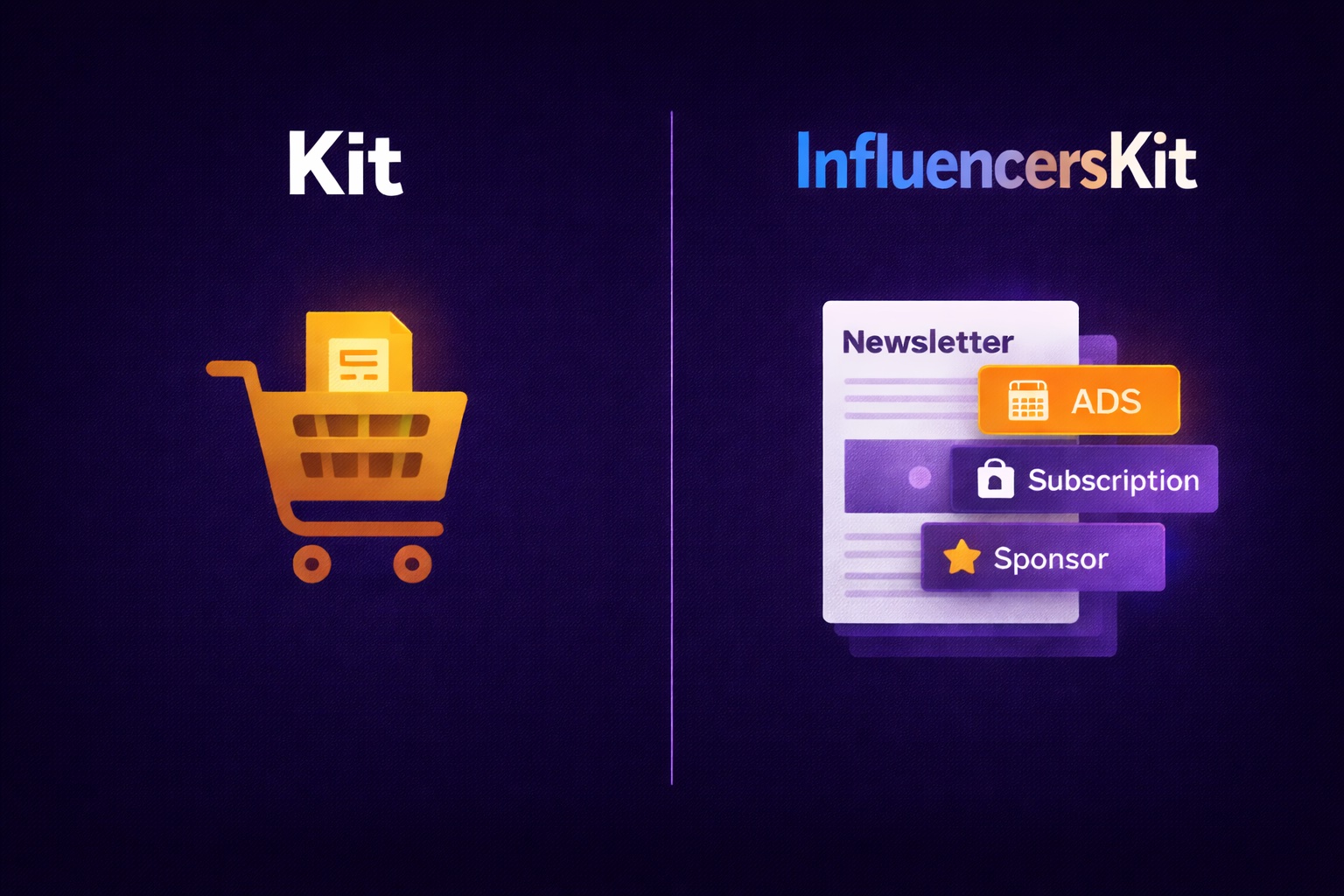
Kit (ConvertKit) vs InfluencersKit: The Honest Comparison for Creators Who Want to Monetize
Kit was built for creators who sell courses and digital products. InfluencersKit was built for creators who monetize through ads, sponsorships, and paid subscriptions. Direct, fair, data-driven comparison — with real pricing at every tier and a clear verdict by creator type.
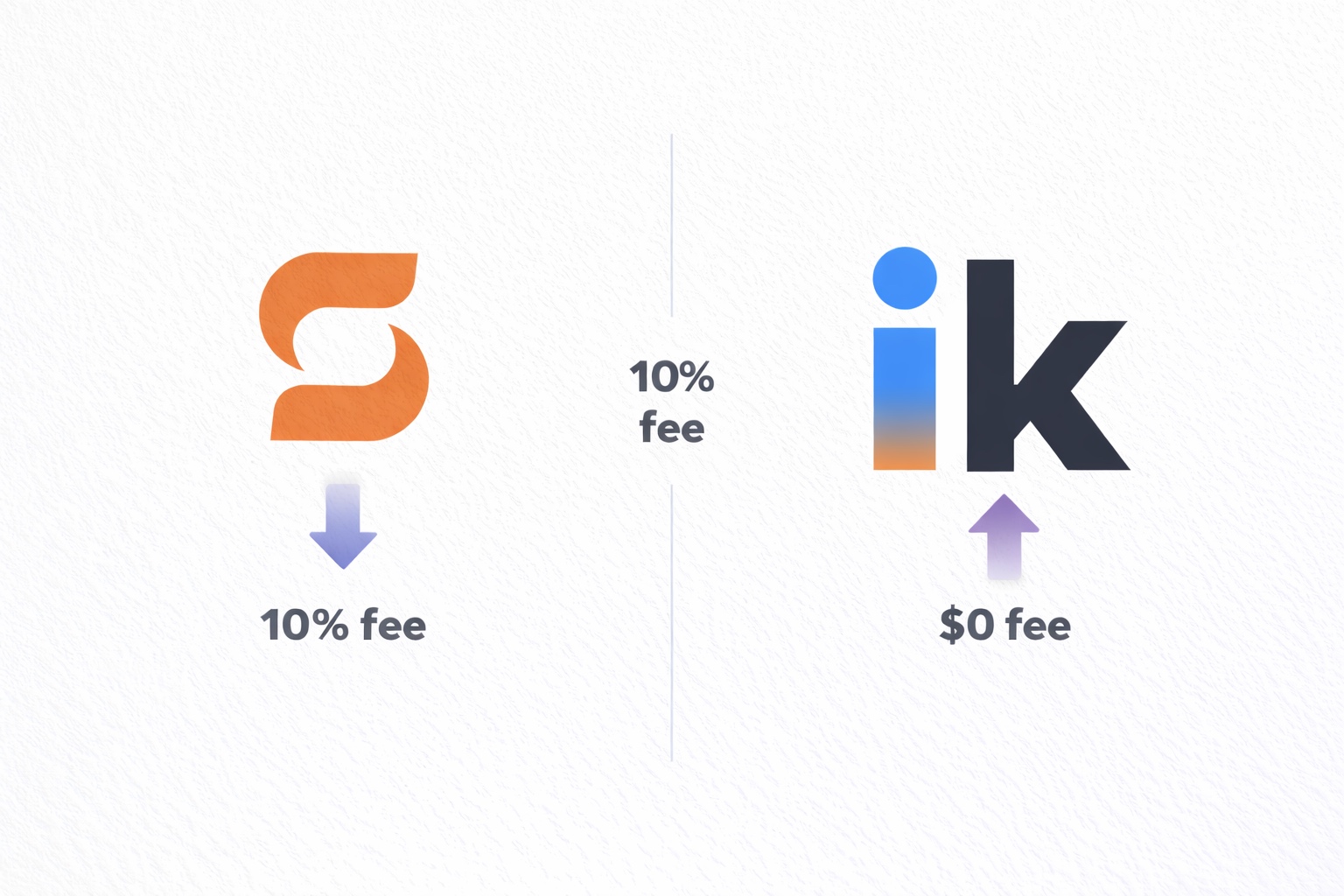
Substack vs InfluencersKit: Which Platform Is Actually Better for Creators in 2026?
Substack's 10% fee costs you $6,000/year at $5,000/month in subscription revenue. A fair but complete comparison: pricing at every revenue tier, monetization features (where the gap is enormous), growth tools, and who should actually use which platform.

Free vs Paid Email Marketing Platforms: What Creators Actually Need
Should you start with a free email platform or invest in paid tools? Honest breakdown of what creators actually need at each stage, hidden costs of 'free' platforms, and when to upgrade.

Beehiiv vs ConvertKit vs InfluencersKit: Best Email Platform for Creators 2026
Comprehensive comparison of the top 3 email platforms for creators. Real pricing at every tier, feature breakdowns, monetization capabilities, and honest recommendations for different creator types.