You Cannot Unsend a Newsletter. Write the Contract First.
A video can be unlisted, a post deleted. A send is gone, which means every piece of leverage you had disappears the moment you deliver. What actually needs to be in writing: the five-part payment clause, why you take a deposit, and the performance guarantee that makes you liable for someone else's landing page.

Newsletter sponsorship has a structural problem no other creator format shares: you deliver everything at once, irreversibly, and usually before you get paid.
A video can be unlisted. A post can be deleted. A send cannot be recalled. The moment you hit send, the advertiser has received the entire deliverable and you have lost every piece of leverage you had. Everything you wanted to negotiate had to be settled before that.
That is why the contract matters more here than the size of the deal suggests. It is not paperwork for large advertisers. It is the only mechanism doing the work that, in other media, the ability to withhold the asset does for you.
What follows is what actually needs to be written down, why each clause exists, and what the standard advice gets wrong about newsletters specifically.
The payment clause, in five parts
A payment clause that does its job answers five questions. Most creator agreements answer one or two.
When does the obligation arise?
On send. Not on "campaign completion", not on "delivery of results", not on anything that requires interpretation.
This is the clause that gets exploited most often, and rarely maliciously. "Payment on completion of the campaign" sounds reasonable until an advertiser decides the campaign is not complete because they are still waiting on a report, or because they are evaluating performance, or because the person who signed it left.
Your obligation ends when the issue sends. Write it that way.
When is payment due?
Net 30 from the invoice date is the common standard, and the phrase "from the invoice date" is doing real work. Net 30 from an unspecified starting point is not a deadline.
State it in the contract and repeat it on the invoice itself. Terms that appear in only one of those two places are where disputes start.
What happens if it is late?
A late fee is generally enforceable when it was agreed in advance, written into the contract, and restated on the invoice. A late fee invented after an invoice goes unpaid is a request rather than a term.
The point of the clause is almost never to collect the fee. It is that an invoice carrying stated consequences moves differently through an accounts payable queue than one that does not.
Can payment be withheld during a dispute?
Address this explicitly, because the default in its absence is that anything can be disputed indefinitely.
Reasonable language: undisputed amounts remain payable on the original terms, and any dispute must be raised within a stated window with a stated reason. That prevents a small complaint about one element from freezing the whole invoice.
What happens on persistent non-payment?
Suspension of further deliverables, termination, and your right to pursue collection. If a multi-issue package is involved, the right to stop sending is your only remaining leverage and it needs to exist in writing.
Take a deposit
For any advertiser you have not been paid by before, take part of the fee upfront. Fifty percent is a normal ask and is standard in adjacent creator markets.
The reasoning is the irreversibility problem. Once you send, you are an unsecured creditor with no asset to withhold and no practical enforcement route for an amount too small to litigate.
A deposit does three useful things at once. It caps your exposure. It filters advertisers who were never going to pay, since a company unwilling to pay half in advance is telling you something. And it changes the internal status of the invoice, because a company that has already paid you once has you set up as a vendor, which removes the single largest cause of slow payment.
Creators anticipate resistance and mostly do not get it. A deposit is unremarkable in professional services and reads as a sign you have done this before. What it looks like alongside the rest of your commercial materials is covered in the first sponsor guide.
Define the deliverable so it cannot be reinterpreted
The second most common source of trouble. "A sponsored placement in the newsletter" is not a specification.
What needs to be pinned down:
- Which issue, by date. Not "in March".
- Which position, named specifically. Top-of-issue and below-the-fold are different products at different prices and the difference is invisible after the fact unless you wrote it down.
- Format and length. Word count range, whether an image is included, whether it is a dedicated section or an inline mention.
- Link handling. How many links, whether tracking parameters are permitted, who supplies the destination URL.
- A subscriber count floor, if you have quoted against audience size, with a stated remedy if the list is materially smaller on the day.
- Who writes the copy, and who has final approval on how it reads.
That last one matters more than it looks. If the advertiser has final approval and no deadline attached to it, they can hold your issue hostage while an internal review runs. Attach a turnaround window with a default: copy not approved within a stated period is deemed approved, or the placement moves to the next issue at your discretion.
Format specifics that actually perform are in the rate card guide, which is also where to set the prices these clauses are protecting.
Never guarantee performance
The single most expensive mistake in creator sponsorship agreements, and it is usually made out of enthusiasm rather than pressure.
You can commit to delivery. The issue sends, on the agreed date, to a list of at least the agreed size, with the placement in the agreed position.
You cannot commit to response. Clicks, conversions, signups, and sales depend on the advertiser's offer, their landing page, their pricing, and their product. You control none of those, and a guarantee attached to them makes you liable for someone else's work.
This gets subtle. An advertiser asking for "a minimum of 200 clicks" is asking you to underwrite their creative. If their landing page is poor and the copy they insisted on is weak, you owe them a makegood for a failure you had no control over and possibly warned them about.
The honest answer: quote historical ranges, in writing, clearly labelled as historical and not guaranteed. That gives the advertiser real information and keeps the obligation where it belongs. It is also more credible than a guarantee, because anyone experienced knows a guarantee on response means either padding or a makegood queue. If you want to improve response rather than promise it, the levers are in the writing and the placement, covered in conversion-focused page and copy work.
If a makegood is agreed at all, tie it to a delivery failure rather than a performance one. A send that did not go out is your problem. A send that went out and did not convert is not.
Exclusivity, scoped
Advertisers frequently ask for category exclusivity, and the request is reasonable. Unbounded exclusivity is not.
Three things need bounds:
Category definition. "Project management software" is a category. "Software" is most of your potential advertiser base. Write the narrow version and write it down, because a vague category will be interpreted broadly later.
Duration. The issue, the month, the quarter. Exclusivity that continues until someone cancels it is a permanent restriction acquired for a single payment.
Price. Exclusivity has a cost, because it removes inventory you could otherwise sell. It should be a line item rather than a courtesy, and pricing it forces both sides to establish what it is actually worth.
This also connects to something with a longer horizon: revenue concentration suppresses what your newsletter is worth if you ever sell it, as set out in newsletter valuation. Broad, long exclusivity granted cheaply is a small discount today and a structural one later.
Reporting, bounded
State what you will provide and when. Typically: delivered count, unique opens, clicks on the sponsor link, and the send timestamp, delivered within a stated number of days.
Two things worth adding.
Say what the numbers mean. Open rates are inflated by machine reading from privacy features and inbox assistants, as we covered in the piece on Apple MPP. Reporting an open rate without that context invites a comparison against a benchmark it does not belong to. A short note in the report is enough, and it makes you look like someone who understands their own data. Segment-level reporting, where the advertiser can see how different parts of your audience responded, is a genuine upgrade on a single blended figure and is described in audience segmentation.
Bound the obligation. Reporting is a deliverable with a scope. Without one, a motivated advertiser can generate weeks of unpaid analysis requests after a single placement.
What is genuinely worth measuring, for your own purposes as much as theirs, is in the analytics guide.
Four smaller clauses that earn their space
Creative ownership and reuse. If you wrote the copy, say who owns it and whether the advertiser may reuse it elsewhere. Advertisers routinely repurpose creator-written copy across other channels, and it is a much easier conversation before than after.
Kill fee. If the advertiser cancels inside a stated window, you have already turned away other inventory for that issue. A percentage of the fee, scaled by notice given, is standard practice and reasonable to ask for.
Disclosure. Sponsored content must be identifiable as sponsored. Put it in the contract so the advertiser cannot later object to the label. This is a legal obligation on you rather than a preference, and having agreed it in advance removes an argument at the worst moment. The same principle applies to affiliate arrangements, which carry their own disclosure requirements as set out in affiliate marketing for creators.
Approval turnaround. Mentioned above and worth its own line. Every approval right the advertiser holds needs a deadline attached, with a stated default when the deadline passes.
Agencies pay differently from brands
Worth knowing before your first agency deal, because the behaviour surprises creators who have only sold direct.
Many agencies operate on a pass-through basis: they pay you once their client has paid them. That arrangement is between the agency and their client, and it is not your problem in principle. In practice it becomes your problem, because it inserts a payment cycle you cannot see and cannot influence.
Net 30 with an agency can mean net 30 after their client settles, which can be another thirty or sixty days out. The invoice is not being ignored. It is waiting behind a transaction you have no visibility into.
Two responses. Ask directly whether payment is contingent on their client, since the answer is usually given honestly when asked plainly and almost never volunteered. And write the terms so your payment obligation is not conditional on any third party, which is a normal clause and one most agencies will accept because they are used to being asked.
The upside is real and worth the friction: agencies bring repeat volume and multiple advertisers through one relationship, which is exactly what breaks up the revenue concentration that suppresses what your newsletter is worth. Treat the payment terms as the price of that rather than as a reason to avoid them.
Multi-issue packages change your leverage
Everything above assumes a single placement, where you have no leverage after sending. A multi-issue package is different, and better, in a way worth using deliberately.
With four issues booked, you hold three undelivered ones after the first send. That is real leverage and it is the reason a suspension clause matters: if issue one is unpaid past terms, you can pause issues two through four rather than delivering the whole package on hope.
Structure the payment to match. Either invoice per issue on send, or take a deposit covering roughly the first placement and invoice the balance across the rest. What you want to avoid is a single invoice at the end of the package, which concentrates the whole risk at the point where you have delivered everything and hold nothing.
Packages are also where advertisers most often ask for a discount, and it is worth being clear-eyed about what you are buying with it. A volume discount purchases predictable revenue and a reduced sales burden, which is genuinely valuable. It does not purchase the right to slower payment, and those two concessions get bundled in negotiation more often than they should be. Pricing across multiple placements is covered in the rate card guide.
The cash flow nobody mentions
Net 30 sounds like thirty days. It rarely is.
Say you send on the 5th, invoice the same day, and the terms are net 30. Payment is due on the 4th of the following month. In practice, invoices enter a payment run rather than being paid on their due date, and many companies run those twice a month. Add the gap between due date and the next run, add an approval step, and forty-five days from send is a normal outcome for an invoice nobody is doing anything wrong with.
Which means you delivered in early March and see the money in mid-April. Solo creators regularly plan as if sponsorship revenue arrives in the month it was earned, and it does not.
Three practical responses. Invoice on send day rather than at month end, since the clock starts at the invoice date and a week of delay is a week of your money. Take deposits, which converts part of every deal into cash on signature. And plan on a six to eight week lag between selling a placement and being paid for it, particularly early on, before you are set up in anyone's vendor system.
This is the real argument for a revenue mix that includes something recurring. Subscription revenue arrives on a schedule you control and requires no invoice, and the case for building it alongside sponsorship is in monetising a small newsletter and membership tiers and pricing.
Proportionality
None of this requires a lawyer for a $500 placement. A one-page written agreement covering payment trigger, amount, due date, deliverable specification, and approval deadlines handles the overwhelming majority of newsletter sponsorships.
What matters is that it exists in writing and that both parties have agreed to the same version. An email thread where terms are stated and confirmed is a written agreement. The failure mode is not an insufficiently formal contract, it is no contract, and that is the case for most creator sponsorships being sold today.
The pattern is consistent: creators write things down after the first deal that goes wrong. The clauses above are, more or less, a list of the ways deals go wrong, which is why they exist in professional media contracts and why they are worth borrowing before you need them. Sponsorship is one revenue line among several, and the wider picture of how it fits alongside subscriptions, products, and affiliate income is in monetising an email list.
If you are setting up your commercial side from scratch, the sponsorship rate calculator handles pricing, writing that holds attention covers what you are actually selling, and the monetisation tools cover running sponsorship and subscription revenue together. To see what a full setup looks like, start a trial.
Frequently asked questions
Do I need a contract for a small newsletter sponsorship?
Yes, though it does not need to be long. A one-page agreement, or even a confirmed email thread stating the terms, covers most creator sponsorships. What matters is that the payment trigger, amount, due date, deliverable specification, and approval deadlines are written down and agreed by both parties. The common failure is not an insufficiently formal contract, it is no written terms at all.
Should I ask for payment upfront?
For any advertiser you have not been paid by before, yes. Fifty percent on signature is a normal ask. A newsletter send cannot be recalled, so the moment you deliver you are an unsecured creditor with no asset to withhold and no practical enforcement route for a small amount. A deposit caps that exposure, filters out advertisers who were never going to pay, and gets you into their vendor system, which is the single biggest cause of slow payment for new suppliers.
What payment terms should a newsletter creator use?
Net 30 from the invoice date is the common standard, and the starting point should be stated explicitly since net 30 from an unspecified date is not a deadline. Trigger payment on send rather than on campaign completion, which is undefined and can be stretched. State any late fee in advance in the contract and repeat it on the invoice, since a fee introduced after an invoice is overdue is a request rather than a term.
Can I guarantee clicks or conversions to a sponsor?
You should not. You control delivery: whether the issue sends, on the date agreed, to a list of the agreed size, with the placement in the agreed position. You do not control the advertiser's offer, landing page, pricing, or product, all of which determine response. A guarantee on clicks makes you liable for someone else's work. Quote historical ranges instead, labelled clearly as historical rather than guaranteed, and tie any makegood to a delivery failure rather than a performance one.
How do I handle a sponsor who wants category exclusivity?
Grant it, but bound it on three axes. Define the category narrowly and in writing, since a vague category will be read broadly later. Set a duration, whether that is the issue, the month, or the quarter, so it does not become a permanent restriction bought with one payment. And price it as a line item, because exclusivity removes inventory you could otherwise sell.
What if a sponsor does not pay?
Your position depends almost entirely on what you agreed beforehand. With a deposit taken, a stated late fee, and a suspension clause on any remaining deliverables, you have both partial payment and leverage. Without those, a single unpaid placement is usually too small to pursue and functions as an expensive lesson. This asymmetry is the whole argument for taking deposits from advertisers you have not worked with before.
How long does it actually take to get paid?
Longer than the terms suggest. Net 30 from a send on the 5th means payment due on the 4th of the following month, but invoices enter payment runs rather than being paid on the due date, and many companies run those twice a month. Six to eight weeks from send to money in the bank is a normal outcome with nobody behaving badly. Invoice on send day rather than at month end, take deposits, and plan cash flow on the longer figure.
Stay Updated
Get the latest insights, strategies, and tips delivered directly to your inbox. Join thousands of creators who are building their email communities with our weekly newsletter.
No spam, unsubscribe at any time. We respect your privacy.
Related Articles

You Cannot Pause a Newsletter. Only Stop Sending One.
Churn continues, acquisition stops, and sender reputation degrades fast while recovering over four to twelve weeks. Which makes an eight-week break cost far more than eight weeks — and makes reducing frequency a completely different decision from stopping.

Two Newsletters Earn $10k a Month. One Is Worth $100k More.
Same monthly income, very different sale price. Published multiples put paid subscription revenue around 24-42x MRR and sponsorship-supported newsletters closer to 20-32x, which means shifting your revenue mix beats a hard 30% growth year. The four discounts buyers apply, and why they are all decided 12-18 months before anyone makes an offer.

Your Account Was Removed. Here's the First 24 Hours.
Account recovery is a sequence ordered by decay, not a checklist. Some assets are recoverable in the first hours and gone within days; others can wait. What to export before access closes, why filing a second appeal usually sets you back, who to contact before they find out elsewhere, and how to rebuild in parallel rather than after.
Your Readers Can Leave Without Ever Seeing Your Page.
Since 2024, Gmail and Yahoo require one-click unsubscribe. A mail-app button removes the reader instantly, with no page, no options and no reason. Your preference centre now reaches only footer-link leavers, so the 'less, not none' options belong inside the email.

They Unsubscribed, Then Signed Up Again. Now What?
Only the reader can reverse an unsubscribe. A fresh signup is a request, not proof. Why imports, forms and bulk edits quietly resubscribe people, and how to build a confirmation step that a link scanner or a stranger cannot trigger.

Moving Your Newsletter? The List Is the Easy Part.
The CSV moves in five minutes. Sender reputation, unsubscribes, paid subscriptions, automations and old signup forms do not. The order that gets a newsletter to a new platform without losing inbox placement or emailing people who opted out.

A Subscriber Is Worth $1.25 a Year. Now Price Your Ads.
Two sponsored slots at a $30 CPM with a 40% open rate earn about $1.25 per subscriber per year. Against a defensible CAC near $2 and cost-per-signup commonly $2-5, most paid acquisition is at or past break-even before you account for paid cohorts converting worse than organic ones.
Your Free-to-Paid Rate Is Two Numbers Pretending to Be One
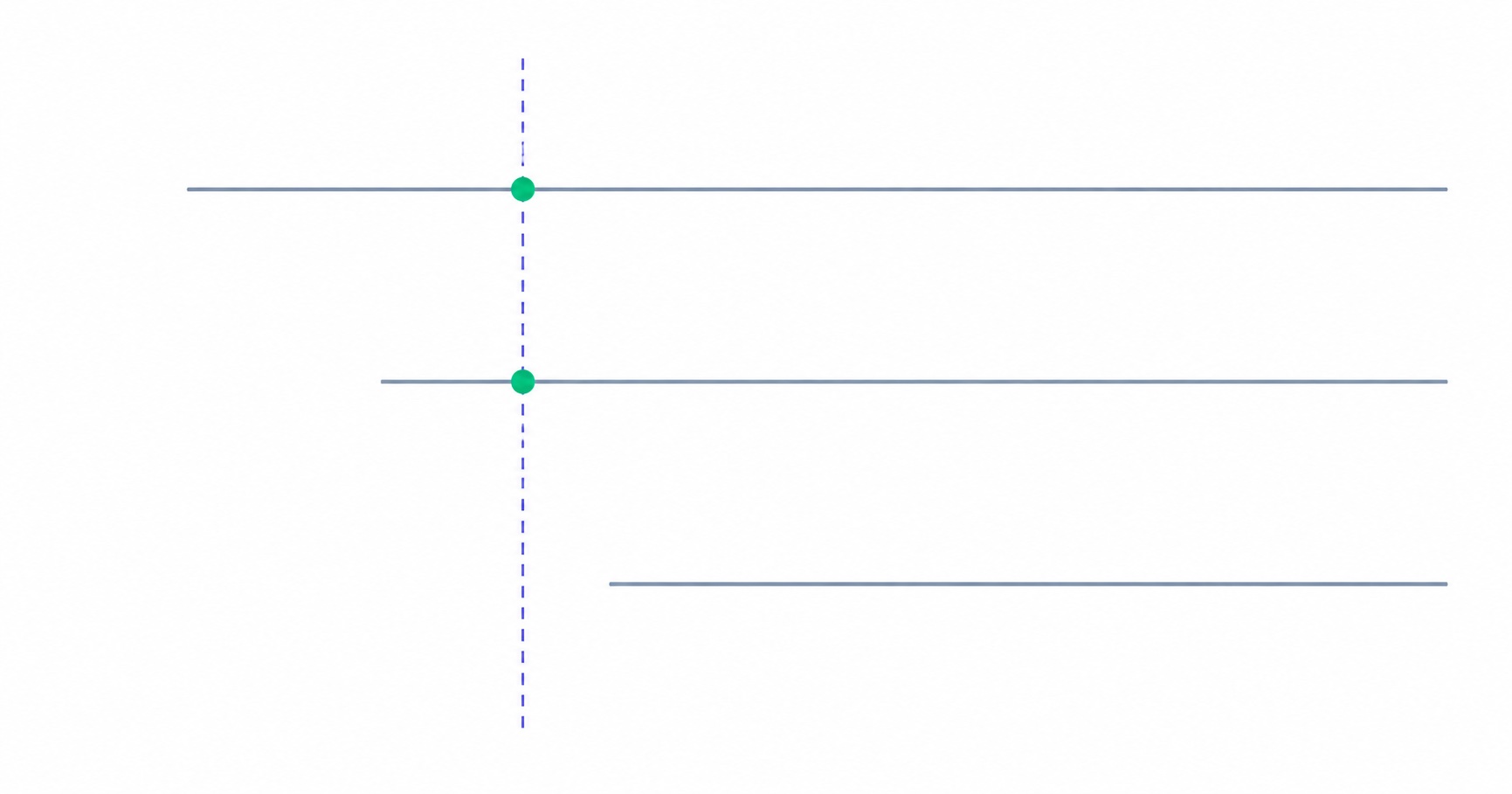
Long-tenured subscribers convert three to five times better than new ones, and later cohorts are acquired more broadly than early ones. Both effects correlate with join date, so they cancel inside your blended conversion rate — and the two situations they describe call for completely opposite responses. The same-tenure comparison that separates them.
Apple Broke Your Open Rate. And Your Subject Line Tests.
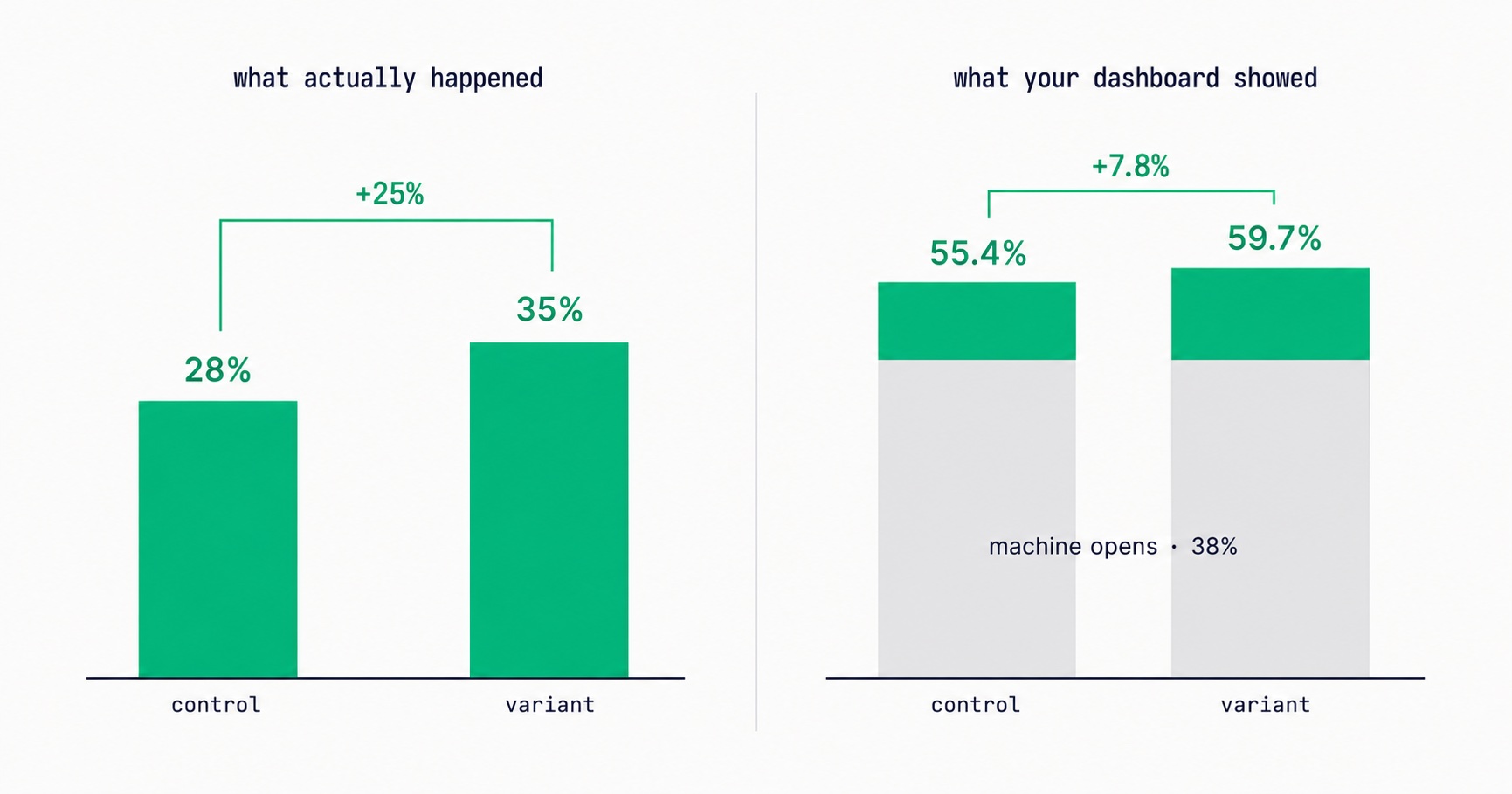
Every article about Apple Mail Privacy Protection says open rates are unreliable. None of them explain the part that actually changes your decisions: MPP doesn't add random noise, it systematically compresses the measured gap between two subject lines by roughly 3x — which is why so many creators ran good tests, saw flat results, and concluded subject lines don't matter.
Your Newsletter Has a Growth Ceiling. Here's the Formula.
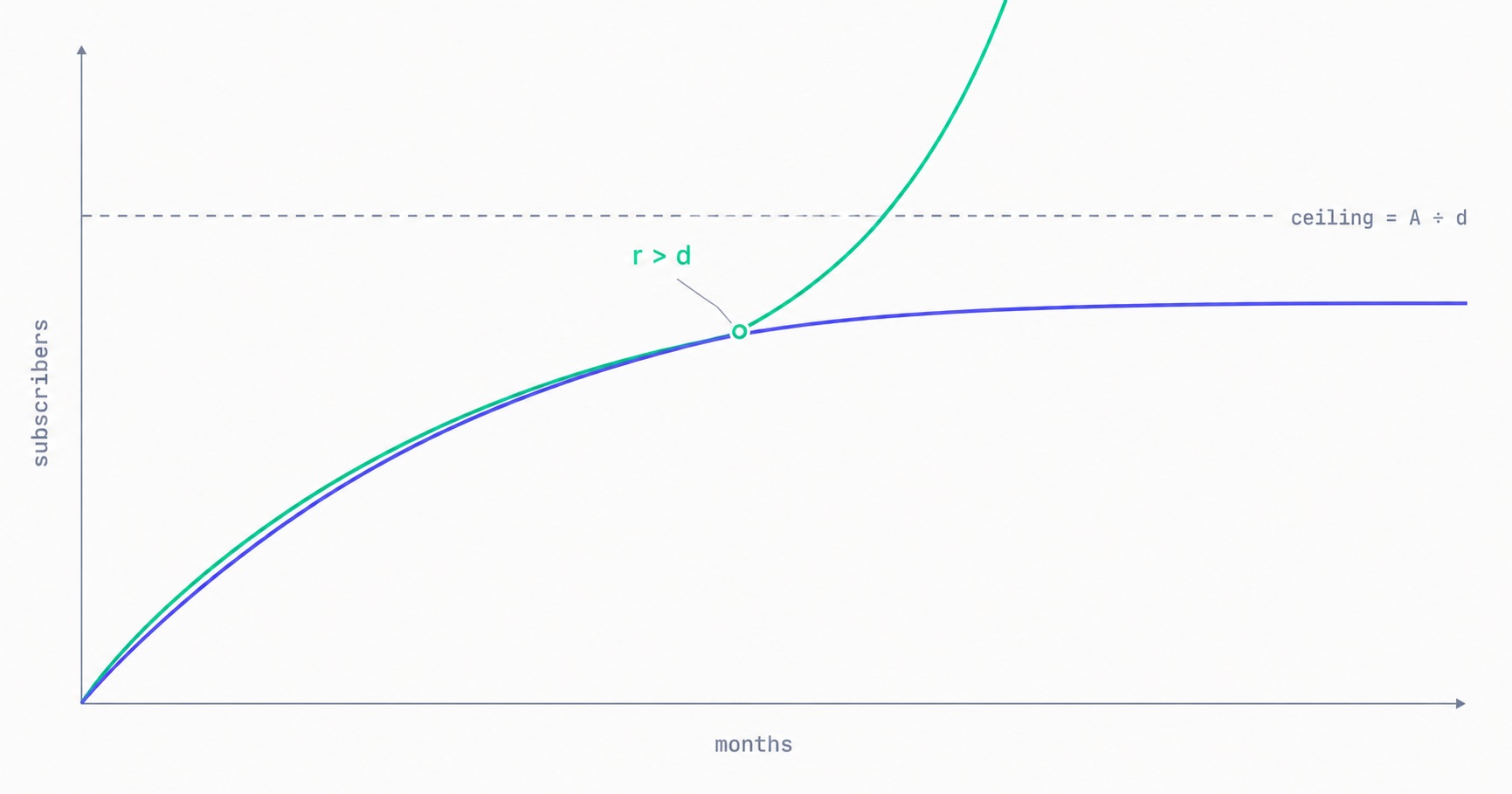
Your list has a maximum size you can calculate today: monthly new subscribers divided by monthly churn rate. At 500 signups a month and 2% churn, you will approach 25,000 and stop — no matter how long you keep publishing. The math behind the plateau, why halving churn beats doubling acquisition, and the one term that removes the ceiling entirely.

Email Marketing for Etsy Sellers: Build a List That Outlasts the Algorithm
Etsy changed its algorithm in 2022, raised fees in 2023, and updated seller standards in 2024 — each time without warning. The only structural protection against marketplace dependency is building a direct customer relationship through email. How to legally collect subscribers as an Etsy seller, the lead magnets that attract buyers, the welcome sequence that drives repeat purchases, and the seasonal campaign structure that makes revenue predictable.

Newsletter Upsell Strategies: How to Sell Digital Products to Your Email Subscribers
Email converts digital product sales at 40x the rate of social media — yet most newsletter creators undermonetize because they upsell incorrectly. The complete architecture: the 7-email post-subscribe sequence that warms subscribers before the pitch, the four mid-issue CTA formats ranked by conversion rate, dedicated launch issue structure, product-type positioning for courses/templates/ebooks/coaching, segmentation-based upselling, and the non-buyer re-engagement approach that reaches subscribers on their own timeline.