A Subscriber Is Worth $1.25 a Year. Now Price Your Ads.
Two sponsored slots at a $30 CPM with a 40% open rate earn about $1.25 per subscriber per year. Against a defensible CAC near $2 and cost-per-signup commonly $2-5, most paid acquisition is at or past break-even before you account for paid cohorts converting worse than organic ones.

Before deciding whether to pay for subscribers, work out what one is worth. Most creators have never done this, and the number is considerably lower than the advice around paid growth implies.
A newsletter running two sponsored slots per issue at a $30 CPM, with a 40% open rate, publishing weekly, earns about $1.25 per subscriber per year. Not per month. Per year.
That single figure ends a lot of paid acquisition plans before they start, and it explains why so many creators who tried ads concluded that ads do not work for newsletters. Ads work fine. The arithmetic underneath them was never run.
What a subscriber is actually worth
The value depends entirely on which revenue model you are running, and the two common ones produce different amounts on different timelines.
Sponsorship revenue
The per-subscriber value of an ad-supported newsletter is small and arrives in fractions. Working it through:
- Open rate 40%, so 0.40 opens per subscriber per send
- Two ad slots at a $30 CPM on opens, so $0.06 per thousand opens per slot
- Per subscriber per send: 0.40 × $0.030 × 2 = $0.024
- Weekly publishing, 52 sends: $1.25 per subscriber per year
Publishing twice weekly doubles it to $2.50. Charging a $45 CPM instead of $30 raises it to $1.87. Both are meaningful improvements and neither changes the order of magnitude.
This is worth internalising because it is the number creators most consistently overestimate. A 10,000-subscriber newsletter with good sponsorship rates is generating something in the region of $12,000 to $25,000 a year in ad revenue, and the per-subscriber figure behind it is measured in single dollars. Rate construction is covered in the rate card guide.
Subscription revenue
Different shape entirely. Almost nothing per subscriber, then a meaningful amount from a small minority.
- Free-to-paid conversion of 2%, which is inside the commonly reported range
- $8 per month, retained for 18 months
- Per free subscriber: 0.02 × $8 × 18 = $2.88 lifetime
Higher than the sponsorship figure over the same period, and it arrives later. A subscriber converts around month six on typical patterns rather than during the welcome sequence, which we covered in free-to-paid cohort analysis.
The blended figure
A newsletter running both, over an eighteen-month subscriber lifetime:
- Sponsorship: $1.25 per year × 1.5 years = $1.87
- Subscription: $2.88 lifetime
- Blended 18-month LTV: $4.75
Reporting in this area suggests a defensible customer acquisition cost sits at roughly 40% to 50% of lifetime value. Applied here:
A defensible CAC is somewhere between $1.90 and $2.38 per subscriber.
That is the number to hold in your head before opening an ads account. Everything that follows is either a reason it is lower than you think, or a way to raise it.
Why that number is a problem
Paid acquisition costs rose substantially between 2023 and 2025, with reported increases of 40% to 60% across major platforms, driven by competition, privacy-related signal loss, and general media inflation.
A newsletter signup is a low-friction conversion, so it costs less than the cross-industry averages that get quoted for customers or leads. But cost-per-signup in the $2 to $5 range is common, and narrower targeting costs more.
Put that against a defensible CAC of $1.90 to $2.38 and the picture is uncomfortable. At $3 per signup you are above the defensible line. At $5 you are paying roughly what the subscriber will produce across their entire life on your list.
Payback makes it starker. At a blended $0.264 per subscriber per month:
- $1.50 CAC: 5.7 months to break even
- $3.00 CAC: 11.4 months
- $5.00 CAC: 18.9 months
The last one is longer than the eighteen-month lifetime the LTV assumed. You would be paying for a subscriber who leaves before repaying you, which reporting on sponsorship-heavy newsletters reflects in payback estimates commonly quoted at nine to fifteen months.
None of this is an argument against paid acquisition. It is an argument for knowing which side of the line you are on, because the line is much closer than it looks.
The trap that catches careful people
Here is the part that is genuinely easy to get wrong even after doing everything above, and it is the reason paid acquisition disappoints creators who ran the numbers first.
You calculated LTV from your existing subscribers. The subscribers you are about to buy are not like them.
Your organic subscribers found you through search, a recommendation, a cross-promotion, or your own work. Every one of those routes filtered for genuine interest. Someone who paid attention to a piece of your writing and chose to subscribe has already demonstrated something.
A paid-acquired subscriber clicked an ad. Lower intent by construction, and the gap shows up in every downstream metric: open rates, click rates, churn, and most consequentially conversion to paid.
Run the same arithmetic with a paid cohort converting at half the organic rate:
- Sponsorship over 18 months: $1.87 (unchanged)
- Subscription at 1% rather than 2%: $1.44
- Paid-cohort 18-month LTV: $3.31
Against the blended $4.75 you used to justify the spend, that is an overstatement of 43%. A campaign that looked comfortably profitable at a $2 CAC is marginal, and one that looked marginal at $3 is losing money.
The correct LTV for a paid acquisition decision is the LTV of paid-acquired subscribers specifically, which you cannot know until you have acquired some. That circularity is unavoidable, and the way through it is to treat the first spend as measurement rather than as growth.
Running it as an experiment
A structure that produces an answer rather than a bill.
- Establish your organic baseline first. Open rate, click rate, six-month churn, and conversion to paid, measured on organic cohorts. Without this you have nothing to compare against and no way to tell whether paid subscribers are behaving differently.
- Tag the cohort at signup. Whatever your platform allows, so paid-acquired subscribers can be reported on separately for the next year. This is the step that determines whether the experiment produces knowledge, and it cannot be added retroactively.
- Spend a bounded amount. Enough for a few hundred subscribers, which is enough to see behavioural differences without committing to a channel you have not validated.
- Wait six months before concluding anything. This is the hard part. Cost per signup is visible on day one. Whether those signups convert is not visible until month six, and the day-one number is the misleading one.
- Compare at matched tenure. Measure the paid cohort at six months against an organic cohort at its own six-month mark. Comparing a young paid cohort against a mature organic one confuses acquisition quality with list maturity, which is the error the cohort analysis piece is entirely about.
- Then decide, using the paid cohort's own numbers. Not the blended ones.
Six months is a long time to hold a decision open, and it is genuinely the shortest honest answer. Creators who scale paid spend on a two-week cost-per-signup figure are optimising a number that does not predict the outcome they care about.
Making the arithmetic work
If a defensible CAC of around $2 is below what the channel costs, there are two directions, and one of them is much more available than creators assume.
Raise LTV before raising spend
Every improvement to per-subscriber value raises the CAC you can defend, and most of them help the organic business too.
Add a paid tier. The single largest lever in the model above. Going from sponsorship-only to sponsorship plus a paid tier at 2% conversion moves 18-month LTV from $1.87 to $4.75, which is a 154% increase. The mechanics are in launching a paid newsletter and the structure options in membership tiers and pricing.
Reduce churn. LTV scales linearly with retention. Extending an eighteen-month lifetime to twenty-four raises LTV by a third with no change to acquisition, pricing, or content volume. The compounding version is in the growth ceiling arithmetic.
Improve open rate. Sponsorship revenue is directly proportional to it. Going from 40% to 48% adds 20% to the ad line, and it is largely a deliverability and relevance problem rather than a subject line one. Covered in the deliverability guide.
Add revenue that does not depend on sends. Digital products and affiliate income accrue per subscriber without consuming ad inventory, discussed in selling digital products to a list and affiliate marketing for creators.
Raise your sponsorship rates. The most immediate and the most commonly deferred. Moving from a $30 to a $45 CPM raises the ad line by half.
Or find cheaper acquisition
The channels that reliably come in under a $2 CAC are mostly not ad platforms.
Cross-promotion. Trading audience with a comparable newsletter costs nothing but the placement, and the subscribers arrive pre-filtered for interest in your subject. Behaviourally these are closer to organic than to paid. Covered in newsletter cross-promotion.
Referral mechanisms. Existing subscribers recruiting new ones, at a cost you set. Referred subscribers typically behave like organic ones because the filter was a person who already reads you. Set out in referral programmes.
Search. Slow, compounding, and effectively zero marginal cost once the content exists, which is the argument in organic search for signup pages.
Sponsoring another newsletter. Buying a placement in a publication your target reader already trusts frequently produces a lower effective cost per subscriber than a social ad platform, and the subscribers arrive warmer, because the recommendation carried the publisher's credibility rather than a targeting parameter.
Conversion rate on the page you already have. The most overlooked. Doubling signup page conversion halves your effective CAC on every channel simultaneously, paid and organic, and costs nothing but the work. See signup page optimisation.
The costs that never make it into the calculation
Cost per signup is what the ad platform reports. It is not what the subscriber cost you, and the gap is consistently underestimated.
Invalid and low-quality signups. Some proportion of paid signups are mistyped addresses, disposable inboxes, or people who wanted the lead magnet and nothing else. They cost the same as real ones and produce nothing. If a tenth of a paid cohort is unusable, your true cost per usable subscriber is 11% higher than the platform reported.
Sending cost. Most email platforms price by list size or by sends. A subscriber who never opens still appears on the bill every month, so a poorly converting paid cohort is an ongoing cost rather than a one-off one.
Deliverability drag. The expensive one, and the one almost nobody prices. A cohort with materially lower engagement than your organic list pulls down your aggregate engagement rate, which is what mailbox providers use to decide inbox placement. Buy enough poorly engaged subscribers and you can measurably reduce the open rate of the list you already had, which reduces the sponsorship revenue on every subscriber rather than just the new ones.
That last mechanism is worth stating explicitly because it inverts the intuition. Paid acquisition can reduce total revenue while increasing list size, and it does so through a channel that appears nowhere in an acquisition report. The mechanics of engagement-based filtering are in the deliverability guide.
Your time. Campaign setup, creative, monitoring, and the analysis six months later. For a solo creator this is the scarcest input in the business, and paid acquisition consumes a meaningful amount of it for a channel that may not survive the test.
Adding these up, a $3.00 reported cost per signup is realistically $3.50 to $4.00 in true cost per usable, engaged subscriber. Against a defensible CAC near $2, the gap is not marginal.
Two newsletters, same spend
The abstract case is easier to accept with names attached, so here are two plausible situations that reach opposite conclusions from an identical budget.
Newsletter A is sponsorship-only. 8,000 subscribers, weekly, two slots at a $30 CPM, 40% open rate, no paid tier. Per-subscriber value is about $1.25 a year, or roughly $1.87 across an eighteen-month lifetime. A defensible CAC is around $0.75 to $0.95.
There is essentially no ad platform that reliably delivers newsletter signups at that price. Newsletter A should not be buying subscribers. It should be building a paid tier, which would roughly triple its per-subscriber value and change the answer entirely.
Newsletter B is the same size and publishes the same weekly issue, but runs a paid tier converting at 2% and sells a $180 annual course to about 1% of subscribers over their lifetime. Sponsorship $1.87, subscription $2.88, product $1.80. Eighteen-month LTV around $6.55, and a defensible CAC of $2.60 to $3.30.
Newsletter B can buy subscribers at prices that are actually available, and can absorb a paid cohort underperforming by a third and remain viable.
The two newsletters have the same subscriber count, the same publishing cadence and the same audience. What separates them is entirely what happens after someone subscribes. Which is the general lesson, and it is worth stating flatly: paid acquisition is a monetisation problem wearing a growth costume. Creators who cannot make the numbers work almost always have a monetisation gap rather than an acquisition one, and the fix is on the other side of the business.
When paid acquisition is straightforwardly correct
The case against above is the general case. Several specific situations invert it.
You have a high-priced offer behind the list. A newsletter feeding a $2,000 course or a consulting practice has a per-subscriber value in a completely different range. The arithmetic in this piece describes a newsletter whose revenue is advertising and subscriptions. If the list is a funnel for something expensive, run the numbers on that instead and they will look very different.
You are buying a specific audience you cannot reach organically. Paying a premium for a narrow, hard-to-reach segment can be justified by what that segment is worth to a sponsor even when the blended figures say otherwise, particularly in business categories where rate cards are much higher.
You have a deadline that organic growth cannot meet. A launch, a sponsor commitment with an audience threshold, a seasonal window. Paying for speed is a legitimate reason to accept a worse CAC, provided it is a decision rather than a habit.
Your organic channels are genuinely saturated. Rare, and worth verifying rather than assuming. Most creators reaching for paid have unexploited cross-promotion, an unoptimised signup page, and no referral mechanism. Work through those first and the paid question frequently answers itself, either because you no longer need it or because the higher conversion rate has made it affordable.
The question underneath
Paid acquisition is a financing decision rather than a marketing one. You are spending money now against revenue that arrives over the following year or two, from subscribers whose behaviour you are estimating from a different population.
That is a reasonable thing to do when you know the numbers and can absorb being wrong about them. It is an expensive thing to do on the assumption that growth is inherently good. Subscribers are not uniformly valuable, and a larger list assembled from people who do not read it is worth less than the smaller one it replaced.
The uncomfortable version, which is worth sitting with before spending anything: if a subscriber is worth $4.75 over eighteen months, then a list of 10,000 is an asset worth something like $47,500 in gross future revenue, before any costs. Every decision about acquisition, retention and monetisation is a decision about that number, and most creators have never calculated it.
Which is also why the retention work usually beats the acquisition work. A subscriber you keep costs nothing to keep. The reactivation piece covers the cheapest subscribers available to you, which are the ones already on your list.
To run the numbers against your own list, the revenue calculator handles the per-subscriber side and the growth tools cover the channels that come in under the paid ones. If you want the wider frame, monetising an email list puts the revenue models side by side.
Frequently asked questions
How much is a newsletter subscriber worth?
It depends on your revenue model, and the figures are lower than most creators expect. A sponsorship-only newsletter with two slots per issue at a $30 CPM, a 40% open rate and weekly publishing earns about $1.25 per subscriber per year. Adding a paid tier converting at 2% at $8 a month with eighteen-month retention adds about $2.88 lifetime per free subscriber. Blended over eighteen months that is roughly $4.75.
What is a good customer acquisition cost for a newsletter?
Reporting suggests a defensible CAC sits at 40% to 50% of lifetime value. On a blended eighteen-month LTV of $4.75 that means roughly $1.90 to $2.38 per subscriber. Sponsorship-only newsletters need to be tighter, often below $2, because their per-subscriber value is lower and arrives more slowly. The figure is specific to your monetisation, so calculate it rather than adopting a benchmark.
Are paid ads worth it for growing a newsletter?
Sometimes, and the margin is narrower than the advice suggests. Cost per newsletter signup commonly lands in the $2 to $5 range against a defensible CAC nearer $2, which means much paid acquisition is at or past break-even before accounting for the fact that paid subscribers convert worse than organic ones. It works reliably when there is a high-priced offer behind the list, when speed has independent value, or when a narrow audience is worth a premium to sponsors.
Why do paid subscribers perform worse than organic ones?
Because the acquisition route filtered for something different. Organic subscribers arrived through search, a recommendation, or your own work, each of which required them to engage with something you made. A paid subscriber clicked an ad. The gap shows in open rates, click rates, churn and conversion to paid. If a paid cohort converts at half the organic rate, an LTV calculated on blended data overstates the paid cohort's value by around 43%.
How long should I wait before judging a paid acquisition test?
About six months, which is longer than anyone wants. Cost per signup is visible immediately and it is the misleading number. Whether those subscribers convert to paid, and whether they stay, is not visible until around month six on typical patterns. Compare the paid cohort at six months against an organic cohort at its own six-month mark, rather than against your mature list, or you will confuse acquisition quality with list maturity.
What is the payback period on a newsletter subscriber?
On a blended figure of about $0.264 per subscriber per month, a $1.50 CAC pays back in roughly 5.7 months, $3.00 in 11.4 months, and $5.00 in 18.9 months. The last exceeds the eighteen-month lifetime the calculation assumes, meaning the subscriber leaves before repaying the acquisition cost. Reporting on sponsorship-heavy newsletters commonly quotes payback in the nine to fifteen month range.
What is cheaper than paid ads for newsletter growth?
Most things, and several arrive with better-behaved subscribers. Cross-promotion with comparable newsletters costs only the placement and delivers pre-filtered readers. Referral mechanisms recruit through people who already read you. Organic search compounds at near-zero marginal cost once written. Sponsoring another newsletter frequently beats social platforms on effective cost per subscriber because the recommendation carries the publisher's credibility. And doubling your signup page conversion halves effective CAC on every channel at once.
Stay Updated
Get the latest insights, strategies, and tips delivered directly to your inbox. Join thousands of creators who are building their email communities with our weekly newsletter.
No spam, unsubscribe at any time. We respect your privacy.
Related Articles
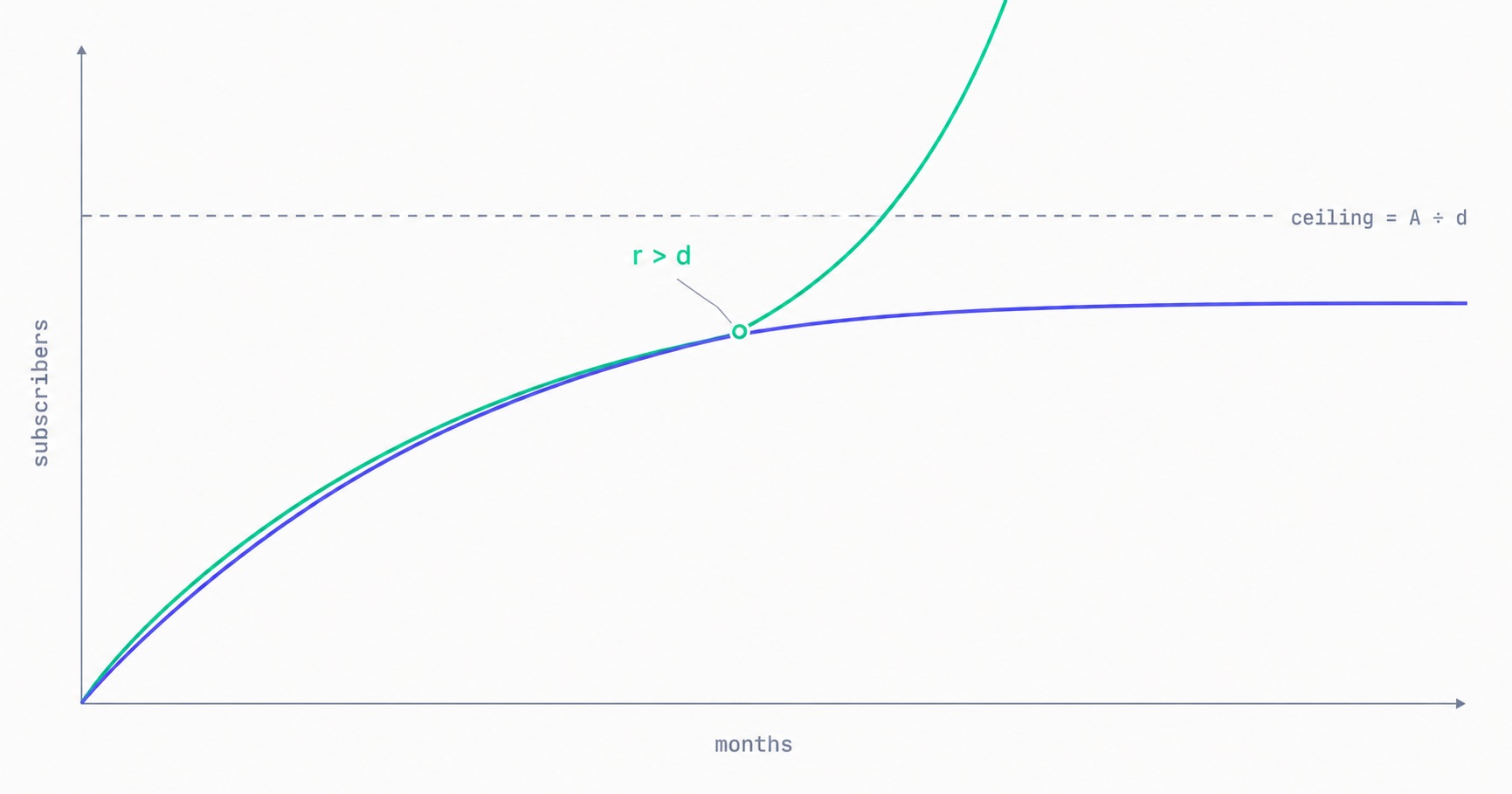
Your Newsletter Has a Growth Ceiling. Here's the Formula.
Your list has a maximum size you can calculate today: monthly new subscribers divided by monthly churn rate. At 500 signups a month and 2% churn, you will approach 25,000 and stop — no matter how long you keep publishing. The math behind the plateau, why halving churn beats doubling acquisition, and the one term that removes the ceiling entirely.

Your Readers Can Leave Without Ever Seeing Your Page.
Since 2024, Gmail and Yahoo require one-click unsubscribe. A mail-app button removes the reader instantly, with no page, no options and no reason. Your preference centre now reaches only footer-link leavers, so the 'less, not none' options belong inside the email.

You Cannot Pause a Newsletter. Only Stop Sending One.
Churn continues, acquisition stops, and sender reputation degrades fast while recovering over four to twelve weeks. Which makes an eight-week break cost far more than eight weeks — and makes reducing frequency a completely different decision from stopping.
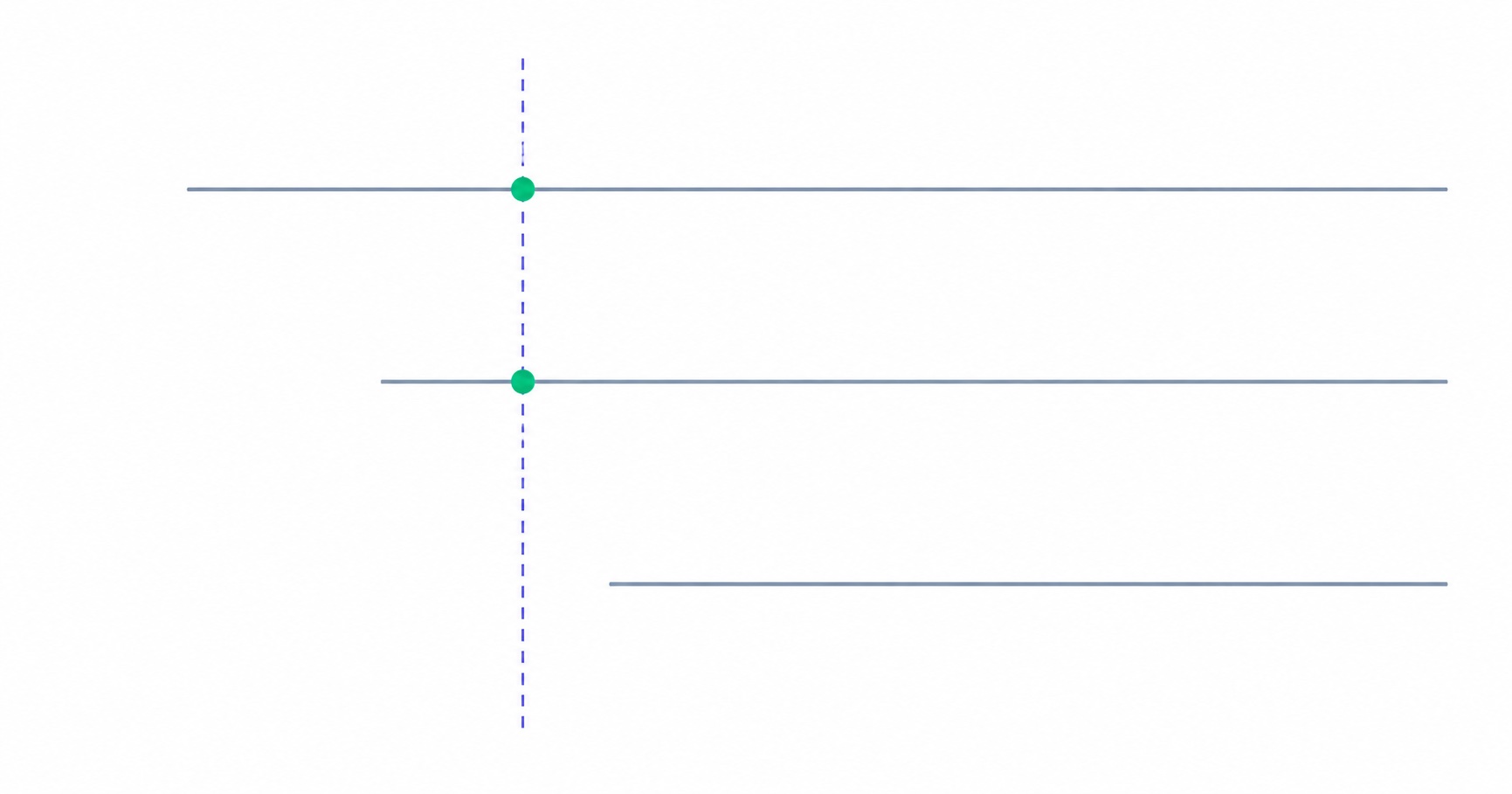
Your Free-to-Paid Rate Is Two Numbers Pretending to Be One
Long-tenured subscribers convert three to five times better than new ones, and later cohorts are acquired more broadly than early ones. Both effects correlate with join date, so they cancel inside your blended conversion rate — and the two situations they describe call for completely opposite responses. The same-tenure comparison that separates them.
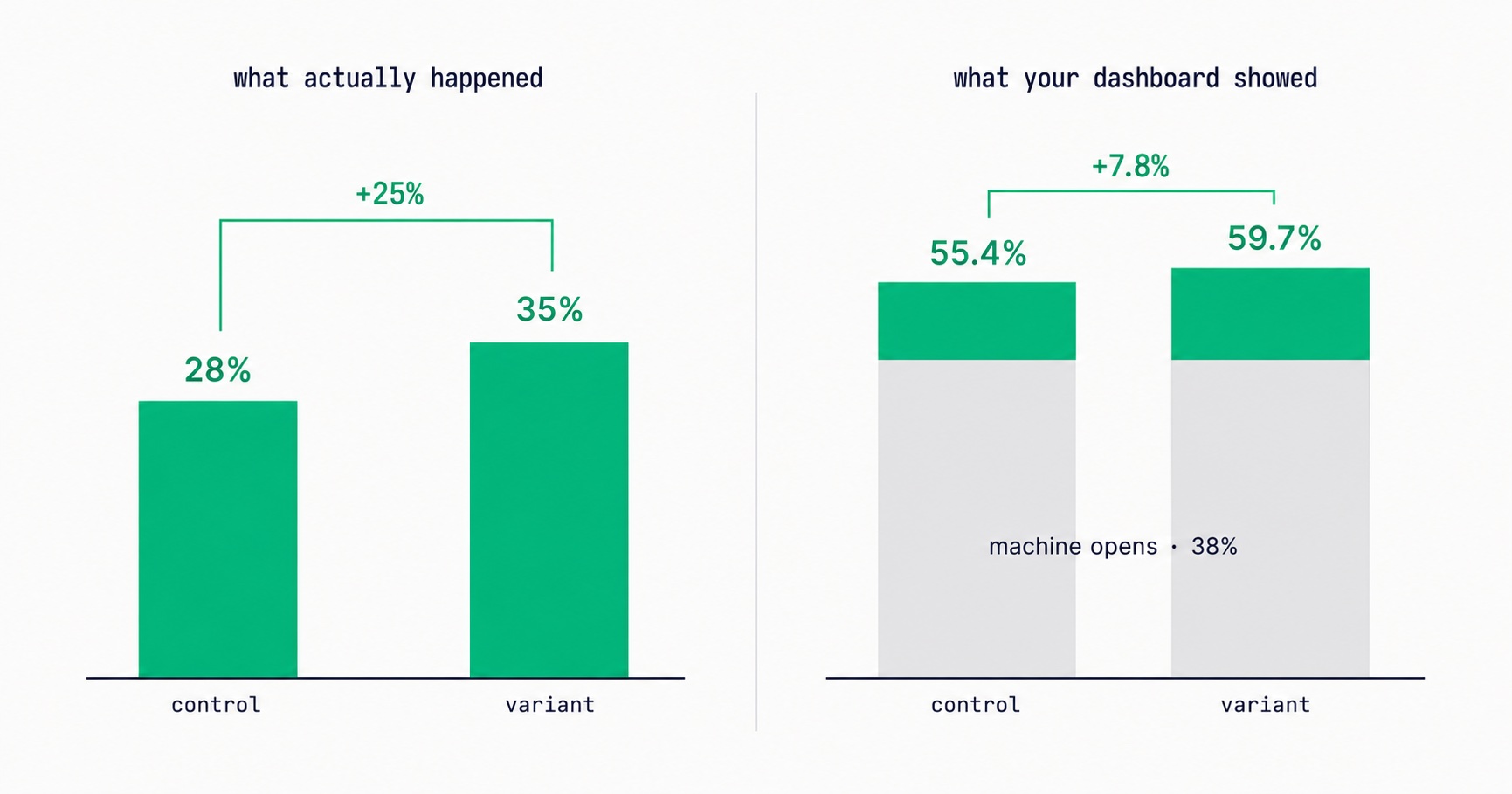
Apple Broke Your Open Rate. And Your Subject Line Tests.
Every article about Apple Mail Privacy Protection says open rates are unreliable. None of them explain the part that actually changes your decisions: MPP doesn't add random noise, it systematically compresses the measured gap between two subject lines by roughly 3x — which is why so many creators ran good tests, saw flat results, and concluded subject lines don't matter.

Newsletter Viral Loops: How to Make Your Subscribers Your Growth Engine
Most newsletter growth requires proportional effort. A viral loop changes this: each new subscriber creates a mechanism that brings in additional subscribers. The viral coefficient math, four loop architectures (referral, forward, access gate, social proof), stacking strategy, re-promotion system, and the content quality foundation that makes viral growth compound rather than spike.

Newsletter Cross-Promotion: How to Add 300-700 Subscribers Per Month at Zero Cost
A well-executed newsletter swap can generate 200–500 new subscribers in 48 hours at zero acquisition cost. The complete system: the 4-factor partner qualification criteria, five cross-promotion formats ranked by conversion rate, outreach pitch templates that get replies, and a monthly programme that produces subscriber growth reliably.

Newsletter SEO: How to Get Organic Traffic to Your Email Sign-Up Page in 2026
Referral programs and cross-promotions require an existing audience. SEO compounds forever and brings in subscribers who are actively searching for what you publish. The complete playbook: sign-up page optimization, blog content that converts readers to subscribers, technical SEO for newsletter sites, and backlink strategies that don't require a PR budget.
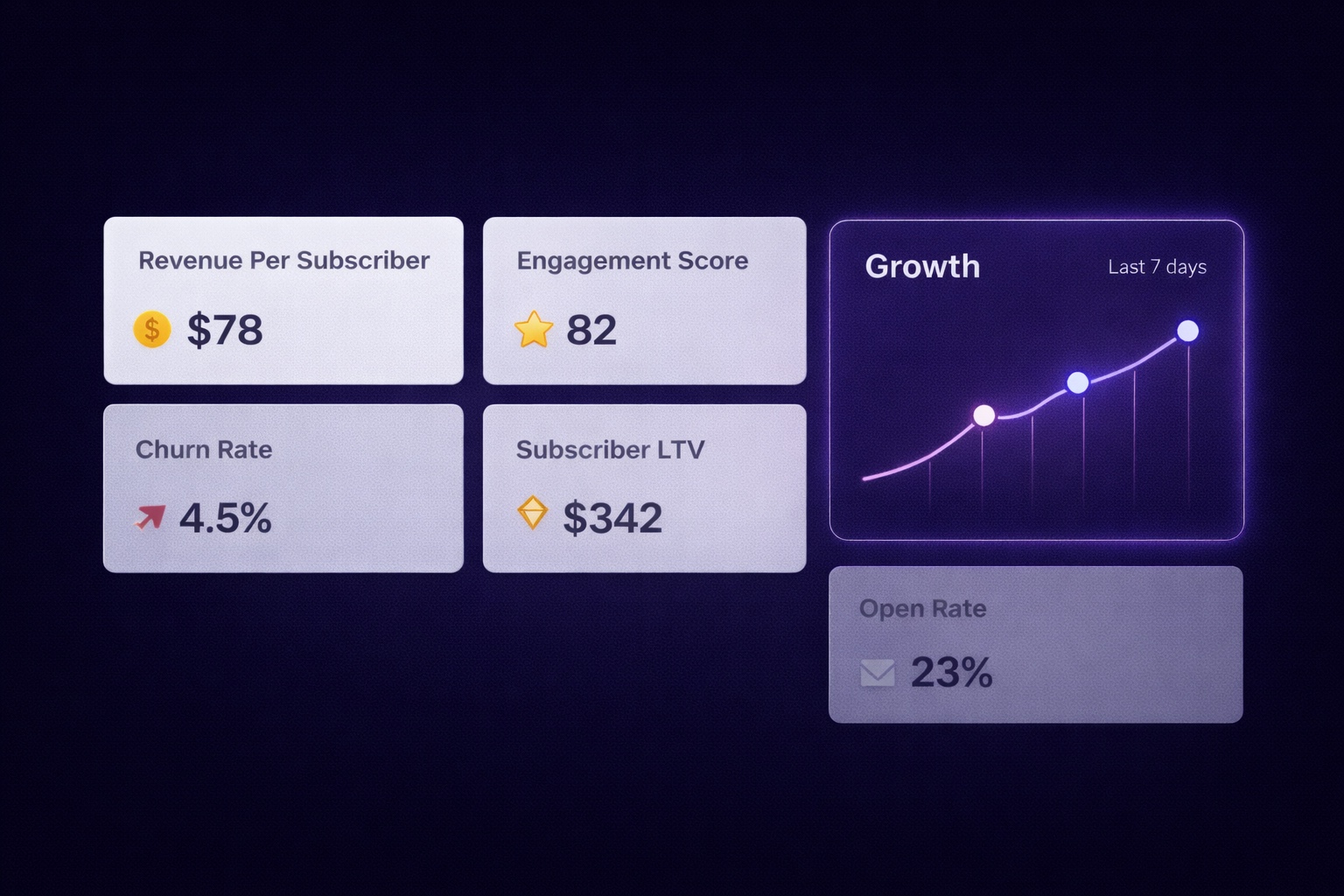
Newsletter Analytics for Creators: The 8 Metrics That Actually Matter (And 5 to Ignore)
A 60% open rate sounds great until you realize it's from 800 people and you're earning $0.08/subscriber. The metrics that actually predict newsletter success — revenue per subscriber, engagement score, churn rate, CPM efficiency, subscriber LTV — and what good looks like at every stage.
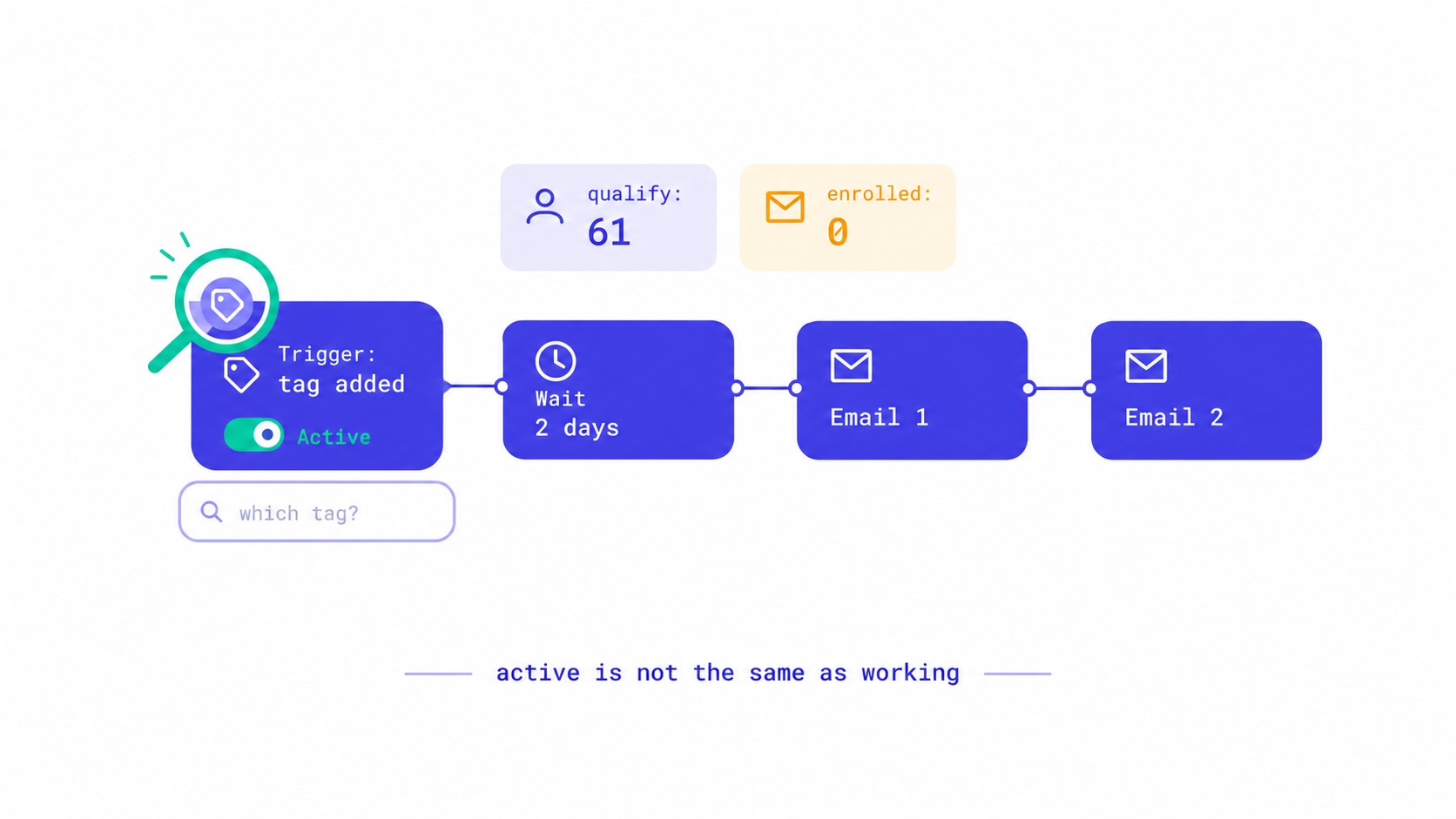
Your Automation Says Active. Nobody Has Received It.
Seven reasons an email automation is switched on but sends nothing, from triggers that ignore existing subscribers to tag triggers with no tag. The qualify-versus-enrolled check that found 28 of our own sequences silent, and a fifteen-minute monthly audit.
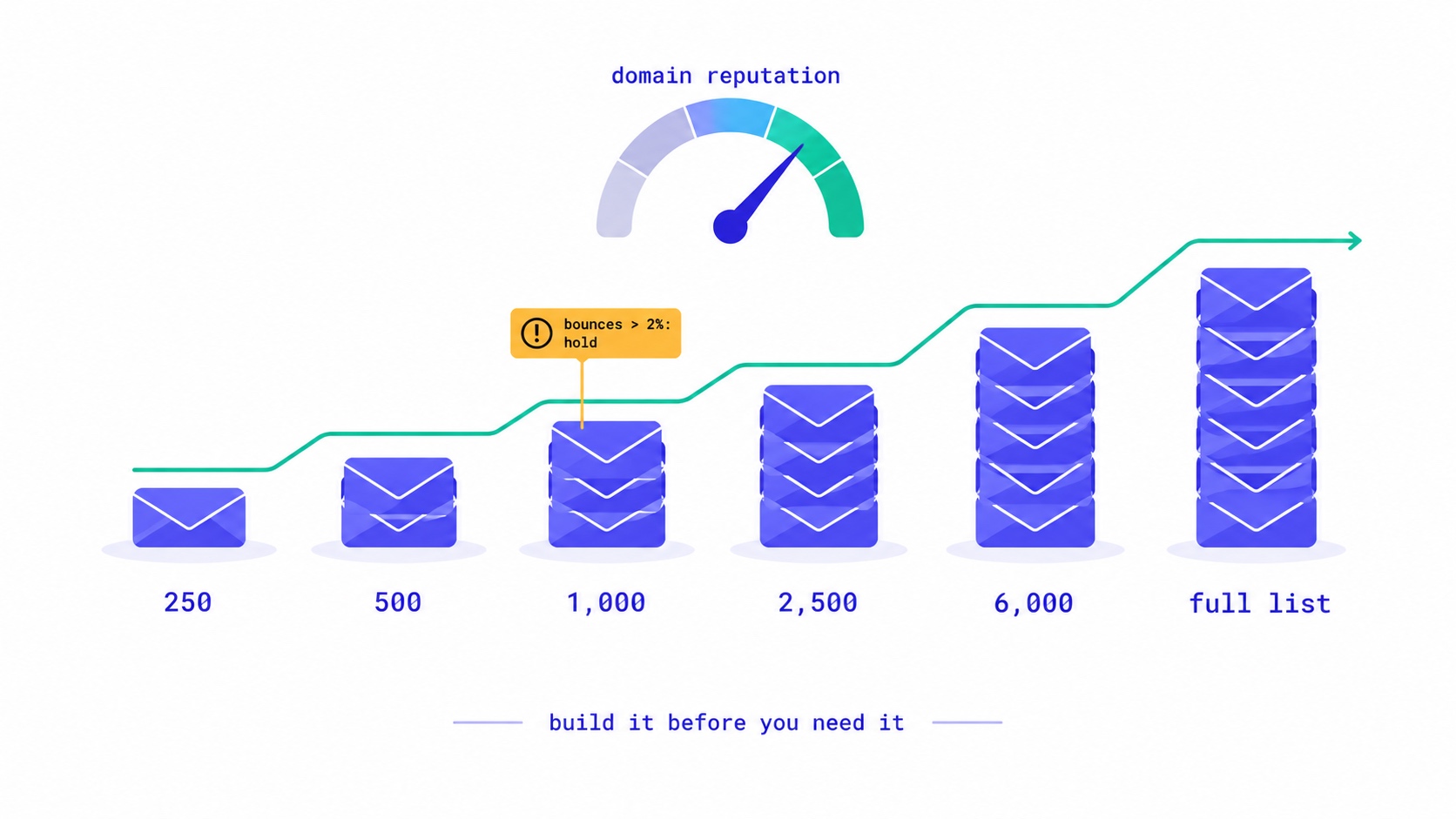
A New Domain Has No Reputation. Here Is How to Build One.
How to warm up a new email domain for a newsletter: authenticate first, send to recent clickers in small batches, and grow only while bounces stay under 2% and complaints under 0.1%. A 20,000-subscriber schedule, the numbers to watch, and what happened when an account skipped it.

They Unsubscribed, Then Signed Up Again. Now What?
Only the reader can reverse an unsubscribe. A fresh signup is a request, not proof. Why imports, forms and bulk edits quietly resubscribe people, and how to build a confirmation step that a link scanner or a stranger cannot trigger.