Your Account Was Removed. Here's the First 24 Hours.
Account recovery is a sequence ordered by decay, not a checklist. Some assets are recoverable in the first hours and gone within days; others can wait. What to export before access closes, why filing a second appeal usually sets you back, who to contact before they find out elsewhere, and how to rebuild in parallel rather than after.

If your account was removed in the last few hours, skip to the next section. The first day matters more than the rest of the week combined, and most of what you need to do decays fast.
The short version: export whatever you can still reach, screenshot the removal notice and case reference, file exactly one appeal, and contact anyone who has paid you money before they find out elsewhere. Do not post publicly yet, do not file duplicate appeals, and do not create a second account.
This is a sequence rather than a checklist, and the ordering principle is decay. Some assets are recoverable in the first hours and gone within days. Others are stable and can wait. Working in the wrong order is how recoverable things become unrecoverable.
Hours 0 to 24: capture what expires
Export everything you can still reach
Access frequently degrades in stages rather than all at once. A partially restricted account, a still-connected scheduling tool, an analytics integration, a linked business account. Any one of these may retain access for a window after the primary account is gone.
That window between partial and total access is where recovery either happens or fails. Priority order: contact or subscriber data first, content archive second, analytics third.
Screenshot the removal notice and save the case reference
Capture the notice itself, any stated reason, the timestamp, your follower count, and verification status. Platform interfaces stop displaying most of this once removal completes.
The case reference number matters specifically. It is what any subsequent appeal, escalation, or support conversation will be indexed against, and reconstructing it later is difficult.
File exactly one appeal, on one surface
Most platforms offer a formal appeal path, and the guidance across platform-specific recovery advice is consistent on one point: file once. Use either the in-app button or the web form, not both simultaneously. Duplicate submissions frequently reset your queue position rather than escalating anything.
If identity verification is requested, whether a selfie video or a document upload, complete it immediately and then wait. Resubmitting while a verification is pending is one of the more common ways creators slow their own case down.
Write the appeal short and factual. Name the policy you are said to have breached and explain concretely why your content does not fall under it. Avoid speculating about motive, bias, or competitor action, because any of those shifts the reading from a factual review to a defensive one. Include links, timestamps, and screenshots in the appeal itself — a reviewer will not go looking.
Do not post about it publicly yet
This is the strongest instinct and it is usually premature. You do not yet know whether this is a reversible error or a permanent decision, and those call for very different public messaging.
Platforms have acknowledged that a meaningful share of enforcement actions are mistakes, and false positives are frequently reinstated on appeal. A day of silence costs almost nothing. A public statement you subsequently have to walk back costs considerably more.
Days 1 to 3: hold the relationships
Contact anyone with money attached, first
Sponsors mid-campaign. Brand partners with outstanding deliverables. Anyone who has paid for something you can no longer deliver.
Tell them before they discover it. State what you know, what you do not, and propose a specific remedy — a makegood on another channel, a partial refund, a pause until resolution.
This is the single highest-return action in the entire sequence. Partners who hear it from you generally stay. Partners who find out themselves generally do not, and the difference is almost entirely about who spoke first. Sponsorship relationships and what they actually rest on are covered in getting your first sponsor.
Reach your audience anywhere you still can
Email if you have it. A secondary platform. Anywhere a relationship exists outside the affected account.
Say plainly what happened, what you are doing about it, and where to find you. Do not over-explain and do not speculate about the platform's reasoning.
This is the moment the value of an owned channel becomes concrete rather than theoretical. A creator with an email list has an announcement channel. A creator without one has nothing but the accounts that may also be at risk.
Secure your other accounts
Removals occasionally cascade across linked properties, particularly where accounts share an email address or a business entity. Check each one, enable any additional protection available, and decouple anything that does not need to be linked.
Days 3 to 7: rebuild the path
Establish one owned channel as the reference point
If you have an email list, it becomes the primary. If you do not, this is the week you start one, and the clarity of the moment makes it easier to prioritise than it will ever be again. Starting from zero is covered in building a list from zero to 10,000.
Point everything at it. Every remaining social profile, every collaboration, every mention.
Then decide about going public
By now you know whether the appeal is moving. If it is not, a factual public account has real value: it mobilises the audience you can still reach, and it is frequently the only mechanism that produces a human review of an automated decision.
Keep it documentary. Describe what happened, include the case reference, state what you have already tried, and make the request specific. The versions that work read as documentation. The versions that do not read as grievance.
Rebuild in parallel with the appeal, not after it
The most common and most expensive error is waiting for resolution before restarting. Resolution may not come, and the waiting period is unbounded.
Assume it is permanent, act accordingly, and treat a reversal as a bonus rather than as the plan. Creators who spend six weeks waiting have lost six weeks of rebuilding, and the reversal — if it arrives — arrives to a smaller audience than it would have.
Weeks 2 to 8: convert the lesson
Compute your actual exposure. For each platform, what share of your income and audience access depends on it. Most creators have never written this down and are surprised by the concentration when they do. The same dependency arithmetic applies to sellers on marketplaces, which is the argument in email marketing for Etsy sellers.
Set a target for platform-independent audience. A specific percentage of your audience reachable without any platform's cooperation. Pick a number, measure against it, treat it as a business metric rather than an aspiration. We track notable platform policy shifts on our platform changes page for the same reason.
Build the export habit. Whatever data each platform allows you to take, take it on a schedule. Monthly is sufficient. The moment you need it is the moment you cannot get it.
Diversify the revenue, not only the reach. Being on five platforms instead of one diversifies the failure point without removing the category of risk. Revenue that comes directly from an audience you own is the version that survives, which is the underlying argument in monetising an email list.
What the removal actually costs, itemised
Creators consistently underestimate the scope, because the visible loss is the follower count and that is the least consequential item on the list.
Audience access. Not the followers themselves, who still exist and still remember you, but any ability to reach them. This is recoverable only to the extent you had another channel.
The content library. Years of work, and with it whatever ongoing discovery that archive was generating. If you have not been exporting, this is the item most likely to be gone permanently.
Direct messages. Frequently overlooked and often the most commercially valuable thing in the account. Brand conversations, partnership threads, contact details for people you have no other route to. If those relationships were priced against follower counts, the rate card guide covers rebuilding that pricing on owned reach instead. Many creators keep their entire business development history in a DM inbox and discover its importance the day it becomes inaccessible.
Pending deals. Anything negotiated but not yet contracted usually evaporates, because the counterparty's reason for the deal was the account.
Attribution history. Analytics showing what worked, which you needed for your media kit and for arguing your rate. Rebuilding a rate case without historical performance data is considerably harder.
Listing these before anything happens is useful in itself, because it converts an abstract risk into an inventory. Most creators who do it discover at least one item they could protect this afternoon.
The exposure calculation worth running now
Ten minutes, and it gives you a number rather than a feeling.
List your revenue by source for the last quarter. Sponsorships, affiliate, products, subscriptions, platform payouts. Actual figures.
For each line, mark which platform it depends on. Not where the money came from, but which account's continued existence it requires. A sponsorship sold on the strength of an Instagram following depends on Instagram even if the payment arrived by bank transfer.
Sum the revenue attached to your largest single platform. Divide by total revenue. That percentage is your concentration.
Then the harder question: how long to replace it. If that platform disappeared tonight, how many months until revenue returns to current levels? Be honest rather than optimistic.
A creator with 70% concentration and an eighteen-month replacement horizon is running a business with a single point of failure they have never priced. That is not an argument for panic. It is an argument for knowing the number, because the number determines how much the twenty-minute preparation below is actually worth.
Most creators who run this find the concentration higher than expected and the replacement horizon considerably longer. The revenue-diversification options are covered in the 0 to $10k per month guide.
What not to do
Do not pay anyone promising reinstatement. This is a well-established scam category that specifically targets people at their most vulnerable, and there is no legitimate paid path to a platform enforcement decision.
Do not create a duplicate account. On most platforms, evading an enforcement action is itself a violation, and it converts a potentially reversible situation into a permanent one. It also usually ends any pending appeal.
Do not file repeatedly. Duplicate appeals commonly reset queue position rather than adding urgency to the case. File one appeal, then wait. If it fails and you have genuinely new information, a second attempt is reasonable — some platform-specific guidance suggests switching surfaces on a second attempt, such as moving from an in-app button to a web form, submitted from a clean device and network.
Do not rebuild the same concentration elsewhere. The instinct after losing one platform is to commit fully to another, which reproduces precisely the exposure that just cost you.
The twenty-minute version, before it happens
Everything above is far easier if three things already exist, and all three take one sitting.
A scheduled export. Whatever each platform lets you download, on a monthly calendar reminder. Contact data first, content second.
A reachable audience outside every platform. An email list is the practical version. The number that matters is not its size but what percentage of your audience you could reach tomorrow if every platform account vanished tonight. Converting platform reach into owned audience is covered in turning followers into subscribers and the TikTok to email strategy.
A one-page contact sheet. Current sponsors, their contacts, contract dates, and what you owe them. On the day, you will not want to reconstruct this from your inbox under pressure. Keeping it alongside the rest of your subscriber and campaign records is what the manage tools are for.
That is the entire preparation, and it converts a catastrophe into a bad week.
If the appeal fails
Some cases do not reverse, and the advice available to creators tends to stop at the appeal, which leaves people without a plan for the outcome they most need one for.
Set a decision date. Pick a point, and four weeks is a reasonable one, after which you stop treating recovery as the plan and start treating rebuilding as the plan. Without a date, waiting extends indefinitely because there is always a reason to give it another week, and the week after that will offer the same reason.
Tell your audience where you are, explicitly and more than once. People do not follow you somewhere new on a single announcement. The creators who transfer an audience successfully repeat the destination across every channel they still hold, over weeks rather than days.
Rebuild on the owned channel first, social second. The temptation is to immediately reconstruct a following on another platform, because that is what was lost and it feels like the thing to restore. Doing that first reproduces the exposure. Build the list, then use the new social presence to feed it.
Reconstruct what you can of the archive. Republish your best work on something you control. This recovers some of the discovery the lost library was producing, and it is the fastest way to look established somewhere new. Trading audiences with other creators, covered in cross-promotion, rebuilds reach without depending on any single platform's distribution.
Re-approach sponsors deliberately rather than apologetically. A creator who handled a platform loss transparently, kept partners informed, and rebuilt is demonstrating something useful about how they operate. That is a legitimate thing to say in a pitch, and it lands better than pretending the gap did not happen.
Recovery timelines vary enormously and depend almost entirely on one variable: whether an owned channel existed on the day. With one, the audience follows and the interruption is measured in weeks. Without one, you are starting close to zero regardless of how large the lost following was.
Why the base rate is the wrong way to think about this
Most creators reading this have not been removed and will assume it is unlikely. For any individual, it genuinely is.
But cost is not proportional to probability. A low-probability event that eliminates most of your income and audience access warrants preparation well beyond what its likelihood alone suggests, particularly when the preparation is nearly free.
And enforcement is not the only version of this risk. Reach decline achieves a similar outcome more slowly: same followers, progressively fewer of them reached, no notification and no appeal available. That version is covered in our piece on platform dependency and the creator economy.
The creators who recover fastest are not the ones who handled the crisis well. They are the ones who had an audience they could still reach on the day it happened, and an audience with a reason to follow them somewhere specific.
An audience attached to a format or a feed does not transfer, because what they valued was encountering you in that place. An audience attached to a person and a subject does, because what they valued exists wherever you put it next.
Which means the preparation that actually protects you is only partly technical. Export habits and an owned channel are the mechanism, and they are worth doing this afternoon. The thing being preserved is whether anyone would go looking for you, and that is built in ordinary weeks by being specific enough to be missed. A creator with ten thousand people who would notice their absence is in a stronger position than one with a hundred thousand who would not.
Frequently asked questions
What should I do in the first hour after being banned?
Export any data you can still access, screenshot the removal notice and save the case reference number, and file exactly one appeal on one surface. Complete any requested identity verification immediately. Do not file duplicate appeals, do not create a second account, and do not post publicly until you know whether the decision is being reviewed.
How many times should I appeal?
Once, initially. Duplicate or repeated submissions commonly reset your position in the review queue rather than escalating the case. If the first appeal is rejected and you have genuinely new information, a second attempt is reasonable, and some platform guidance suggests using a different surface — a web form rather than the in-app button — submitted from a clean device and network.
Should I tell my sponsors?
Yes, immediately, and before they find out another way. Contact anyone with an active campaign or outstanding deliverable within the first day or two. State what you know and propose a remedy — a makegood elsewhere, a partial refund, or a pause. Partners who hear it from you generally stay; partners who discover it themselves generally do not.
Should I go public about it?
Not immediately. Wait until you know whether the appeal is progressing, because a reversible error and a permanent decision call for different messaging. If the appeal stalls, a factual public account has real value, since it can mobilise your remaining audience and is often the only route to a human review. Keep it documentary rather than aggrieved.
How long do appeals usually take?
There is no reliable published figure, and stated timelines vary widely by platform and by whether the review is automated or human. Plan on the assumption that it is unbounded rather than waiting on an expected date, and set your own decision point of around four weeks, after which rebuilding becomes the plan regardless of appeal status. The cost of waiting is entirely in the rebuilding you did not do during it, and that cost compounds.
Can I just start a new account?
Generally no. On most platforms, creating an account to evade an enforcement action is a separate violation that converts a potentially reversible situation into a permanent one, and it typically terminates any pending appeal. Wait for the appeal process to conclude before considering it.
Does having a large following protect me?
Not in the way creators assume. Size can help an appeal get human attention, particularly if an audience mobilises publicly, and it does not prevent the enforcement action and does not preserve access while the case is pending. The creators who recover fastest are not reliably the largest ones. They are the ones who had a channel to reach their audience on the day, which is a property of preparation rather than of scale.
What if I never get a reason for the removal?
This is common and it is frustrating rather than unusual. Automated enforcement frequently produces a generic policy citation or none at all. Appeal against the stated reason if there is one; if there is not, state factually what your account published and why it complies with the policies you believe are relevant. Do not guess at the cause in the appeal itself, because guessing wrong gives the reviewer something irrelevant to evaluate. Set your decision date and begin rebuilding in parallel.
How do I protect myself before anything happens?
Three things, all achievable in one sitting: a monthly scheduled export of whatever data each platform allows you to download, an email list or other owned channel that reaches your audience without any platform's cooperation, and a one-page sheet listing current sponsors, contacts, and obligations. The relevant measure is not list size but what share of your audience you could reach tomorrow if every platform account disappeared tonight.
Build the channel that survives the platform
InfluencersKit gives creators an owned email audience, full data export, and monetisation that does not depend on any platform's enforcement decisions.
Stay Updated
Get the latest insights, strategies, and tips delivered directly to your inbox. Join thousands of creators who are building their email communities with our weekly newsletter.
No spam, unsubscribe at any time. We respect your privacy.
Related Articles

You Cannot Pause a Newsletter. Only Stop Sending One.
Churn continues, acquisition stops, and sender reputation degrades fast while recovering over four to twelve weeks. Which makes an eight-week break cost far more than eight weeks — and makes reducing frequency a completely different decision from stopping.

Two Newsletters Earn $10k a Month. One Is Worth $100k More.
Same monthly income, very different sale price. Published multiples put paid subscription revenue around 24-42x MRR and sponsorship-supported newsletters closer to 20-32x, which means shifting your revenue mix beats a hard 30% growth year. The four discounts buyers apply, and why they are all decided 12-18 months before anyone makes an offer.

You Cannot Unsend a Newsletter. Write the Contract First.
A video can be unlisted, a post deleted. A send is gone, which means every piece of leverage you had disappears the moment you deliver. What actually needs to be in writing: the five-part payment clause, why you take a deposit, and the performance guarantee that makes you liable for someone else's landing page.

Email Marketing for Etsy Sellers: Build a List That Outlasts the Algorithm
Etsy changed its algorithm in 2022, raised fees in 2023, and updated seller standards in 2024 — each time without warning. The only structural protection against marketplace dependency is building a direct customer relationship through email. How to legally collect subscribers as an Etsy seller, the lead magnets that attract buyers, the welcome sequence that drives repeat purchases, and the seasonal campaign structure that makes revenue predictable.

How TikTok Creators Build Email Lists That Survive Algorithm Changes
TikTok can suppress your reach overnight, ban your account, or get blocked in your country — and you lose every follower instantly. The 5 strategies TikTok creators use to convert followers into email subscribers they actually own: comment funnels, lead magnets built for mobile, live CTAs, and bio optimization that converts.
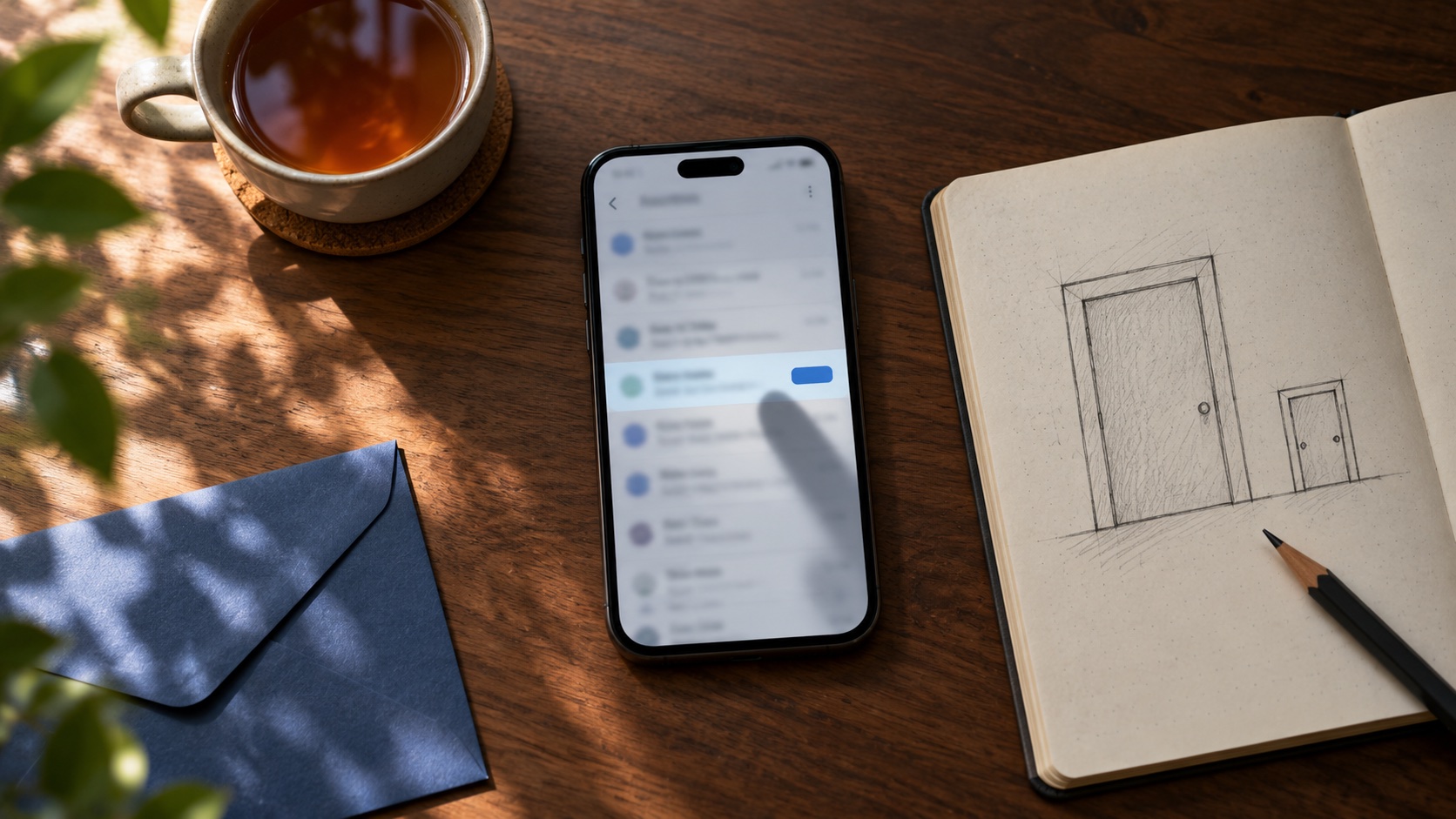
Your Readers Can Leave Without Ever Seeing Your Page.
Since 2024, Gmail and Yahoo require one-click unsubscribe. A mail-app button removes the reader instantly, with no page, no options and no reason. Your preference centre now reaches only footer-link leavers, so the 'less, not none' options belong inside the email.

They Unsubscribed, Then Signed Up Again. Now What?
Only the reader can reverse an unsubscribe. A fresh signup is a request, not proof. Why imports, forms and bulk edits quietly resubscribe people, and how to build a confirmation step that a link scanner or a stranger cannot trigger.

Moving Your Newsletter? The List Is the Easy Part.
The CSV moves in five minutes. Sender reputation, unsubscribes, paid subscriptions, automations and old signup forms do not. The order that gets a newsletter to a new platform without losing inbox placement or emailing people who opted out.

A Subscriber Is Worth $1.25 a Year. Now Price Your Ads.
Two sponsored slots at a $30 CPM with a 40% open rate earn about $1.25 per subscriber per year. Against a defensible CAC near $2 and cost-per-signup commonly $2-5, most paid acquisition is at or past break-even before you account for paid cohorts converting worse than organic ones.
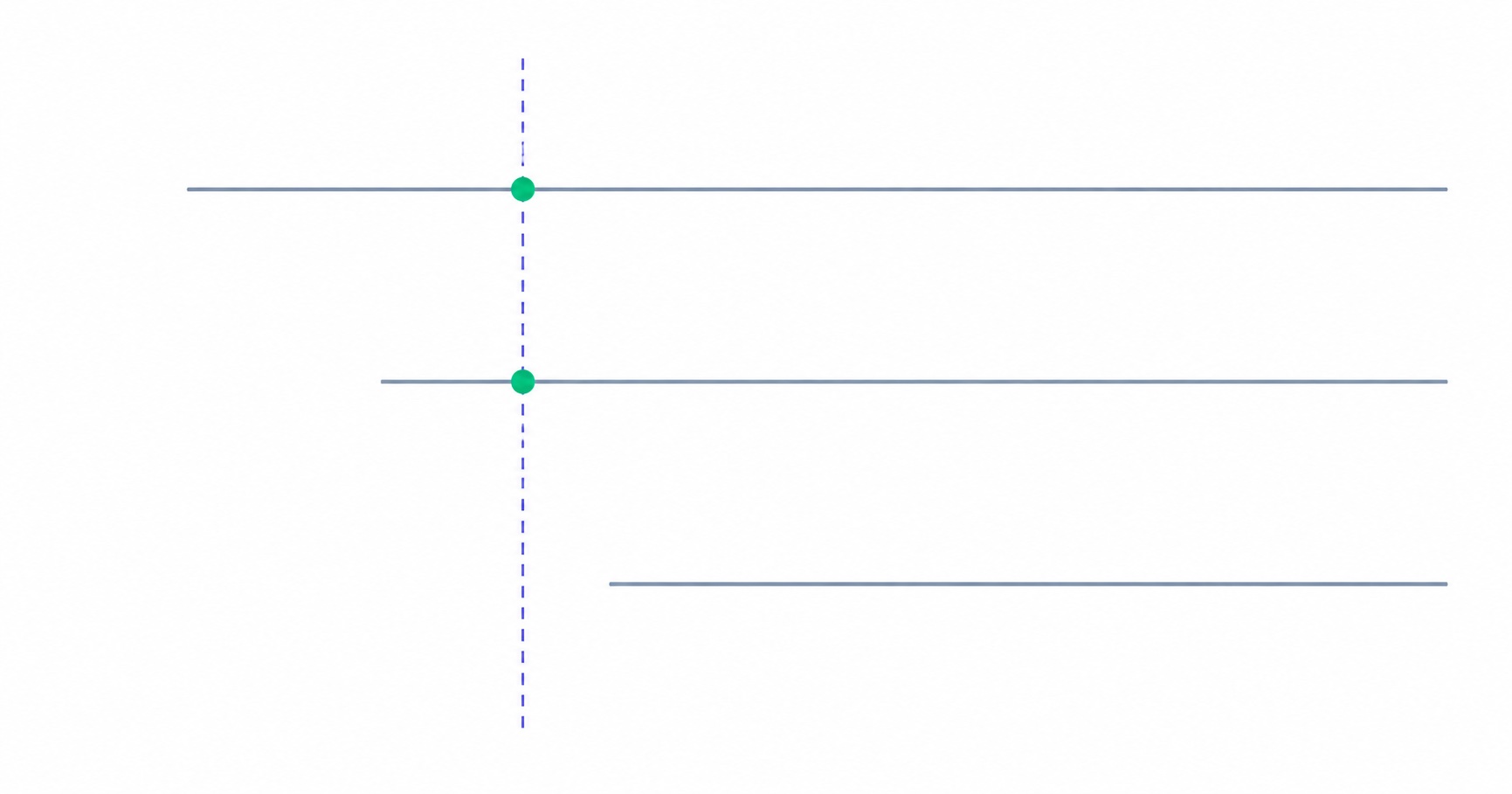
Your Free-to-Paid Rate Is Two Numbers Pretending to Be One
Long-tenured subscribers convert three to five times better than new ones, and later cohorts are acquired more broadly than early ones. Both effects correlate with join date, so they cancel inside your blended conversion rate — and the two situations they describe call for completely opposite responses. The same-tenure comparison that separates them.
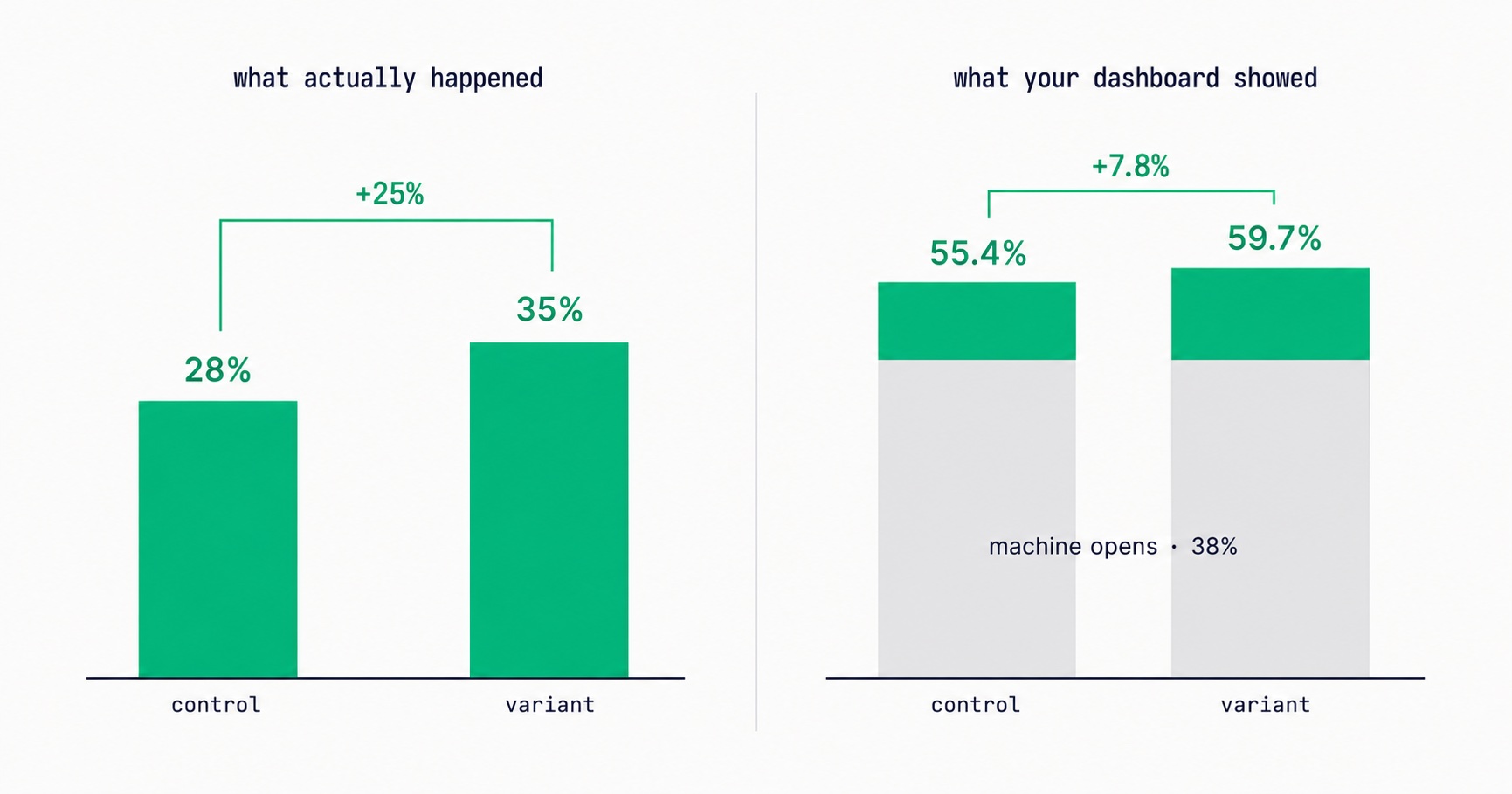
Apple Broke Your Open Rate. And Your Subject Line Tests.
Every article about Apple Mail Privacy Protection says open rates are unreliable. None of them explain the part that actually changes your decisions: MPP doesn't add random noise, it systematically compresses the measured gap between two subject lines by roughly 3x — which is why so many creators ran good tests, saw flat results, and concluded subject lines don't matter.
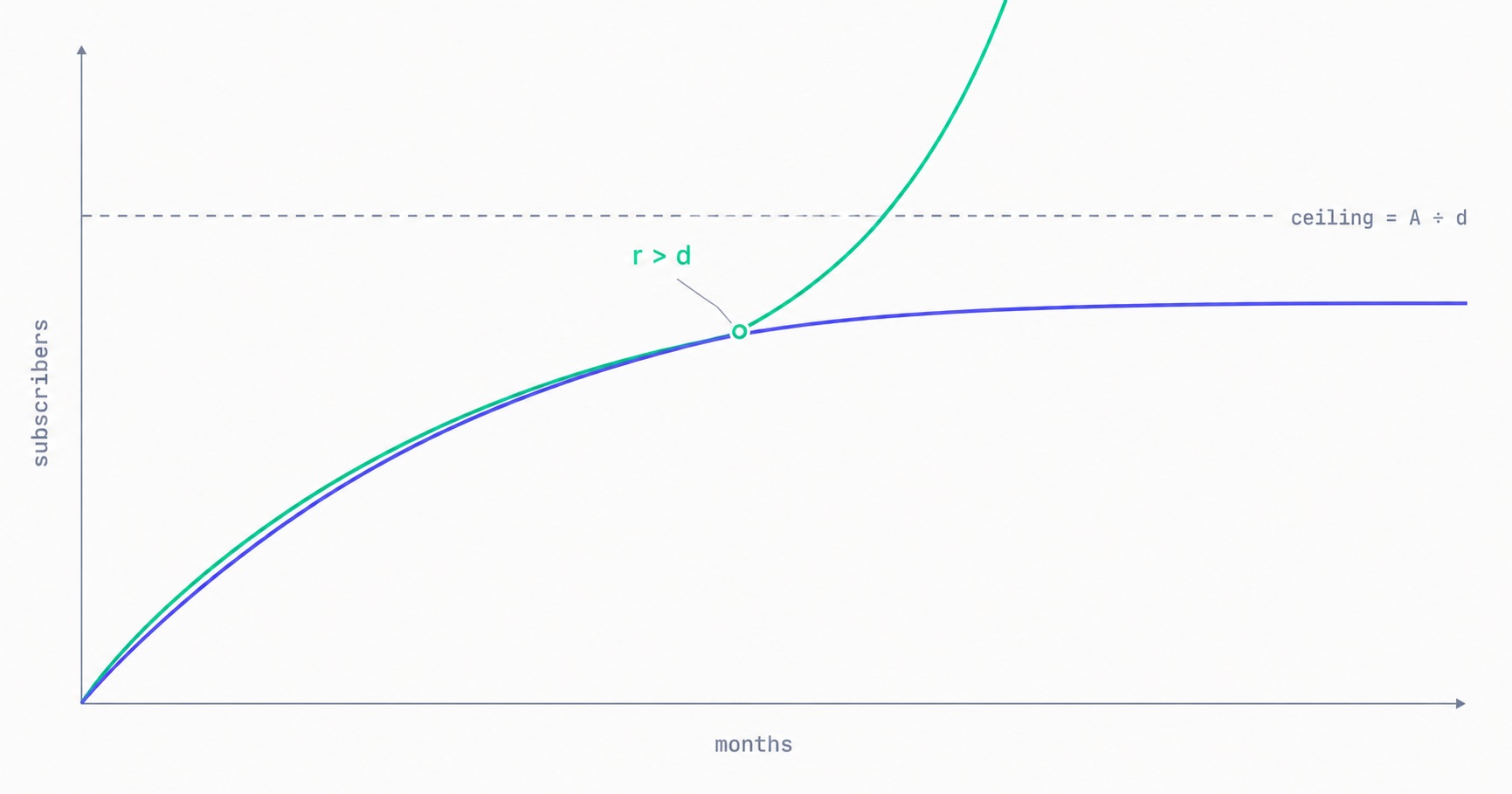
Your Newsletter Has a Growth Ceiling. Here's the Formula.
Your list has a maximum size you can calculate today: monthly new subscribers divided by monthly churn rate. At 500 signups a month and 2% churn, you will approach 25,000 and stop — no matter how long you keep publishing. The math behind the plateau, why halving churn beats doubling acquisition, and the one term that removes the ceiling entirely.