Newsletter Welcome Email Sequence: The 7-Email Series That Turns Subscribers into Superfans
Your welcome email gets a 50-80% open rate — the highest of any email you'll ever send. Most creators waste it with a single 'thanks for subscribing.' This is the exact 7-email sequence with day-by-day timing, subject lines, full content frameworks, and automation setup in InfluencersKit.
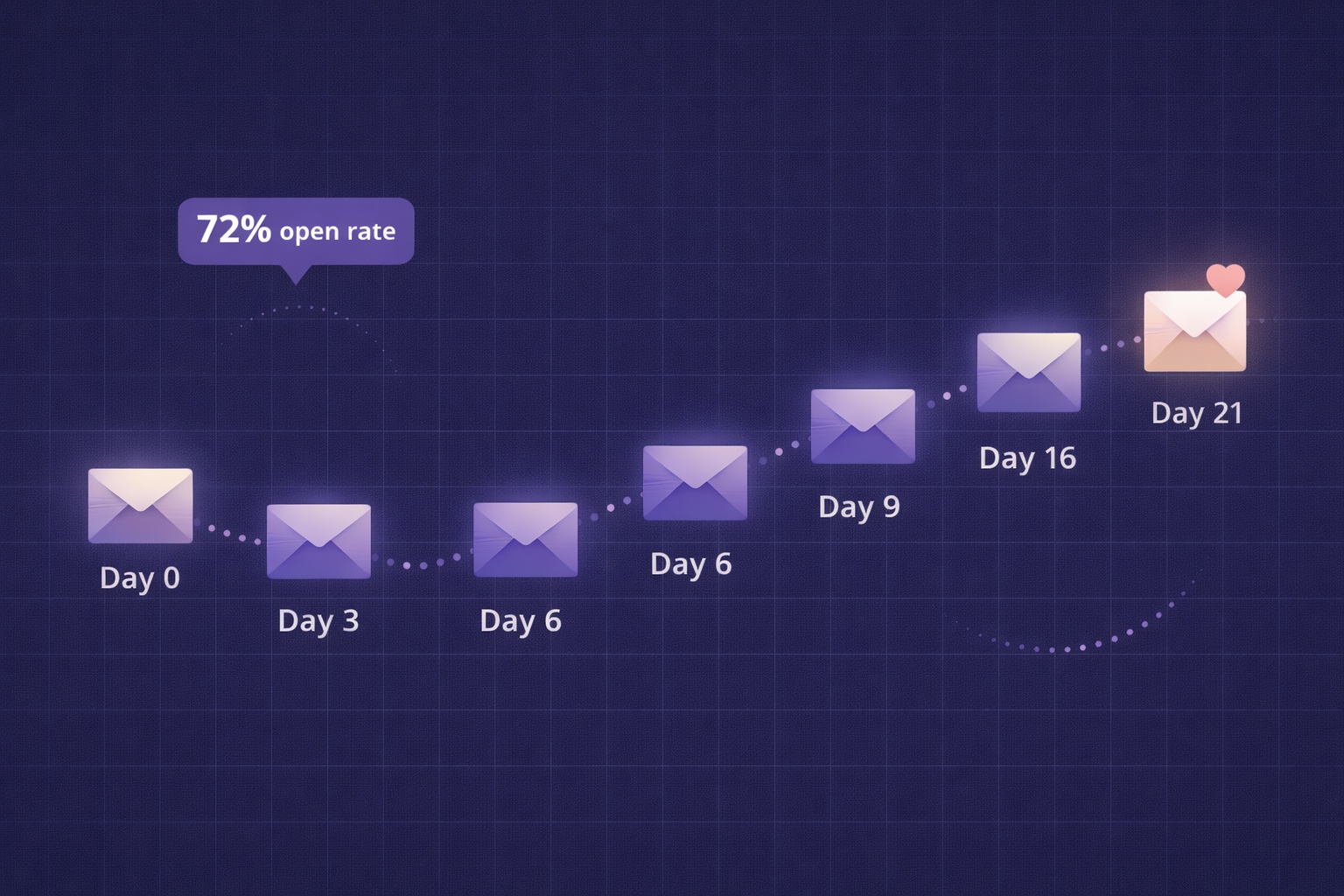
The moment someone subscribes to your newsletter, something important happens that most creators completely waste.
That new subscriber just made a decision. Out of every newsletter they could have subscribed to, every tool competing for their attention, every piece of content in their feed — they chose yours. Their interest is at an all-time high. They haven't formed any habits around your email yet, haven't decided how important it is to them, haven't categorized it in their mental inbox as "must-read" or "skim when I get to it." Those decisions form in the first two weeks.
Most creators send one welcome email: "Thanks for subscribing! Look out for weekly emails every Tuesday." Then they add that subscriber to their general list and wonder why they open the weekly issue at 22% when new subscribers supposedly have peak engagement.
The creators with 45%+ overall open rates understand something different. They don't waste the honeymoon. They use the first 21 days — when a new subscriber's attention and goodwill are highest — to deliver concentrated value, establish what their newsletter is all about, and build enough of a relationship that opening it becomes a habit, not a choice.
This is the exact 7-email welcome sequence that does that: full email content frameworks for each message, the day-by-day timing that doesn't overwhelm, subject lines proven to get 60%+ open rates, and the automation setup in InfluencersKit so it runs on its own forever.
Why Your Welcome Sequence Is Your Most Important Email Asset
Welcome emails have, on average, a 50-80% open rate. For context: industry average open rates for newsletters are 25-35%. Your welcome email gets 2-3x normal engagement without any extra effort — purely because the timing is right.
But that stat only tells half the story. What happens in the first few emails a subscriber receives from you shapes every open rate they'll give you after. If their first experience is a single generic thank-you email followed by a regular weekly issue that doesn't feel connected to why they subscribed, you've wasted the moment and set a mediocre baseline.
What a strong welcome sequence accomplishes:
- Confirms the right decision: Reassures them immediately that subscribing was worth it — your first job after someone subscribes is justifying that decision
- Sets expectations: What topics you cover, how often you send, what makes your newsletter different from others in the same space
- Delivers early wins: Gives them something genuinely valuable in the first few days before they've seen much of your regular content
- Trains the inbox: A sequence of opened, engaged-with emails signals to Gmail and other providers that your emails are wanted — which protects your deliverability long-term
- Establishes voice and personality: The first 2-3 emails do more to establish your relationship with a subscriber than the next 20 regular issues combined
- Creates a natural upgrade moment: Once you've delivered concentrated value over 2-3 weeks, a soft mention of your paid tier or premium offering converts at dramatically higher rates than cold upgrade CTAs
The Psychology of New Subscriber Onboarding
Before mapping out specific emails, it's worth understanding what a new subscriber is actually going through. This shapes everything from email timing to content choices.
When someone subscribes, they're in a high-curiosity, low-trust state. They're interested enough to hand over their email address, but they haven't yet decided if you belong in their "must-read" category. The welcome sequence moves them from curious to committed by following a specific psychological arc:
The 4-Stage Subscriber Psychology Arc:
- Stage 1 — Confirmation (Day 0): Did I make the right call? Did they notice I subscribed? Give immediate validation and the first hit of value.
- Stage 2 — Discovery (Days 1-5): What is this newsletter really about? What's the best they have to offer? This is where you showcase your most valuable content and clearest point of view.
- Stage 3 — Connection (Days 6-14): Do I like this person/voice? Is this relevant to my actual life? Introduce personality, personal stories, and questions that invite them to respond and engage.
- Stage 4 — Commitment (Days 15-21): Is this worth keeping? Soft introduction to deeper engagement — community, paid tier, or simply a direct ask to make the newsletter a regular read.
Each email in the sequence maps to one of these stages. Skip stages or rush them and the psychological foundation doesn't form properly.
The 7-Email Welcome Sequence: Complete Breakdown
Email 1 (Day 0 — Immediately on Subscribe): The First Impression
Goal: Immediate value + set expectations + deliver lead magnet (if applicable)
Timing: Send instantly on subscription
Subject line formulas that hit 70-80% open rates:
- "You're in — here's what comes next"
- "Welcome to [Newsletter Name] — your first resource is inside"
- "Here's your [lead magnet name] + what to expect from me"
- "[First name], welcome — let me tell you exactly what this is"
Email structure:
- Warm, personal welcome (2-3 sentences): Not corporate, not enthusiastic-for-the-sake-of-it. Genuine. "You just joined [X] subscribers who get [specific thing] every [frequency]. I'm really glad you're here."
- Lead magnet delivery (if you have one): Download link, access instructions, or the content itself. If no lead magnet, skip to the next section.
- The 3 things they should know about this newsletter: What topics you cover, your sending frequency, and what makes your newsletter different. Keep it to 1-2 sentences each — not an essay.
- One specific promise: Tell them what they'll get from the next email. "Tomorrow I'm sending you the best thing I've written in the past year on [topic] — I think it'll change how you think about [X]."
- One question to reply to: Ask something easy and relevant. "Quick question: what's the one thing about [topic] you're most trying to figure out right now?" Every reply improves your deliverability and gives you editorial intelligence.
Length: 200-350 words. Short, warm, focused.
Email 2 (Day 1): Your Best Work
Goal: Demonstrate your ceiling. Show them your best.
Timing: 24 hours after Email 1
Subject line formulas:
- "The most important thing I've ever written about [topic]"
- "As promised — the piece that changed everything"
- "My most-forwarded newsletter issue (resending because you're new here)"
Email structure:
This is your single best piece of content. The essay, breakdown, or resource that has generated the most replies, shares, or subscriber feedback. If you've been publishing for a while, you know which one it is — the email that got 20 replies when you normally get 2, or the one subscribers say first when they describe your newsletter to someone else.
Send it in full, or send a lightly updated version framed for new subscribers: "Before you see my weekly issues, I want to share the piece that best represents what this newsletter is about."
If you're brand new and don't have a "best piece" yet, write one specifically for this slot. Make it your clearest, most useful standalone piece of content — something worth keeping.
Length: As long as the content needs to be. This is the one email where length is determined by the quality of what you're sending.
Email 3 (Day 3): Your Origin Story
Goal: Build personal connection. They follow you, not just your topic.
Timing: Day 3 after subscription
Subject line formulas:
- "Why I started this newsletter (the real reason)"
- "Something about me you won't find anywhere else"
- "The story behind [newsletter name]"
Email structure:
Tell your actual story — what brought you to this topic, what you were trying to figure out when you started, and how the newsletter evolved from that. Don't position this as a brand origin story. Make it personal and honest. The goal is for the reader to feel like they know you, not just your content.
Include: a moment that was pivotal for you, something you got wrong early that you've since corrected, and a clear statement of what you believe about your niche that not everyone agrees with. Opinions create loyalty. Neutral informational voices are forgettable.
End with a question: "What's your story with [topic]? I read every reply."
Length: 300-500 words. Conversational, not essay-like.
Email 4 (Day 5): Your Resource List
Goal: Deliver concentrated practical value. Make this email worth saving.
Timing: Day 5
Subject line formulas:
- "My [number] best resources on [topic] — save this one"
- "The [topic] starter kit I wish I'd had"
- "Everything I recommend for [specific goal in your niche]"
Email structure:
Curate your top 5-10 resources — tools, articles, books, frameworks, or templates — that a new person in your niche should know about. Add 2-3 sentences of commentary on each: why you recommend it, what it does, and who specifically benefits most from it. Your commentary is the value here, not the list itself.
This email has the highest forward rate of any email in the sequence because it's standalone-useful. Someone can send it to a colleague without any context about your newsletter. That's exactly what you want.
Length: 400-700 words.
Email 5 (Day 8): The Deep Dive
Goal: Establish expertise. Show the depth behind your newsletter.
Timing: Day 8
Subject line formulas:
- "The [topic] framework I use every week (explained in full)"
- "A complete breakdown of [complex but important topic]"
- "Everything you need to know about [topic] — in one email"
Email structure:
Choose a complex topic within your niche that most people get wrong or find confusing. Write the most clear, complete explanation of it you can. This is the email that makes subscribers think "I've tried to understand this for years and this is the first time it actually clicked."
If you have a signature framework or approach that defines your newsletter's perspective, this is a good place to introduce it. Not as a product pitch — just as "this is the lens I use to think about [topic], and it might be useful for you too."
Length: 600-1,200 words. This is your substantive teaching email — give it the space it needs.
Email 6 (Day 14): The Community Email
Goal: Deepen the relationship. Move from "newsletter I read" to "community I belong to."
Timing: Day 14
Subject line formulas:
- "You've been here 2 weeks — I have a question for you"
- "What are you working on right now?"
- "A message from a reader that you should see"
Email structure:
This email is less about content delivery and more about engagement and connection. Options:
- Subscriber spotlight: Share a reply or story from another subscriber (with permission), then ask the new subscriber their version
- Progress check-in: Ask them how things are going with whatever problem or goal your newsletter addresses. Make it feel like you actually want to know.
- Community invitation: If you have a community, Discord, or forum for subscribers, introduce it here — after 2 weeks of delivered value, they're much more likely to join than they were on Day 0
- Personalization survey: 3-question email survey about their goals, challenges, and what they want more of. The responses improve your content; the act of responding deepens their investment in your newsletter
End with something personal: what you're thinking about or working on. Make it feel like a conversation, not a broadcast.
Length: 200-400 words. Short and warm.
Email 7 (Day 21): The Soft Upgrade (Or Commitment Deepening)
Goal: Invite deeper engagement — paid tier, community, or a direct ask to stay.
Timing: Day 21
Subject line formulas:
- "Three weeks in — here's what's next for you"
- "If you've been reading this, you might want to know about [X]"
- "A note for readers who are serious about [topic]"
Email structure (two options):
Option A — If you have a paid tier:
Acknowledge that they've been subscribed for 3 weeks. Thank them for being an engaged reader (frame this for readers who opened your emails — they're the ones who deserve this email). Briefly describe what paid subscribers get that free subscribers don't. Include the link to upgrade. Keep it honest and low-pressure: "No rush, no deadline. If the free newsletter has been valuable, I think the paid tier will be even more so. Here's what's included."
Option B — If you don't have a paid tier yet:
Ask them to do one thing to deepen their commitment: forward the newsletter to one person who would benefit from it, follow you on your main social platform, or reply with the one thing they most want you to cover in the coming weeks. Small commitment actions increase retention significantly — the psychology of consistency means people who take one small action are much more likely to keep engaging.
After Email 7:
New subscribers graduate to your regular list and receive your standard weekly (or whatever frequency) newsletter. You've spent 21 days building a relationship — their baseline engagement with your regular content will be noticeably higher than subscribers who received only a single welcome email.
Subject Lines That Get Opened at 60%+
Welcome sequence emails consistently outperform regular newsletter issues on open rate, but you still need to give each one the best possible chance. A few patterns that specifically outperform in welcome sequences:
What works specifically for welcome sequences:
- Continuity references: "As promised in my last email" or "Following up on what I sent you yesterday" — these signal an ongoing conversation and achieve higher open rates than standalone subject lines
- Numbered sequencing: "Your week 1 resource" or "Day 3: [topic]" — reminds subscribers they're in a sequence and that each email is intentional
- Personal tone over broadcast: Welcome emails from "me" to "you" outperform newsletter-style subject lines in this window of high trust
- The forward-tease: Ending each email with a preview of the next one ("Tomorrow: the resource list I've been building for 2 years") creates a cliffhanger effect that boosts the next email's open rate
What to avoid in welcome sequence subject lines:
- ALL CAPS or excessive punctuation — signals spam, especially from a new sender relationship
- Generic newsletter-style subject lines ("[Newsletter Name] — Week 1") — treat these like real emails to a real person
- Sales-heavy language in the early emails — build the relationship before the offer
Setting Up Your Welcome Sequence in InfluencersKit
Step-by-step automation setup:
- Step 1: In InfluencersKit, navigate to Automation → New Sequence
- Step 2: Set trigger: "New subscriber added to list" — this fires the sequence automatically whenever someone subscribes through any of your forms or landing pages
- Step 3: Add Email 1 (delay: 0 hours — send immediately)
- Step 4: Add Email 2 (delay: 24 hours after Email 1)
- Step 5: Add Emails 3-7 with delays: Day 3, Day 5, Day 8, Day 14, Day 21 from subscription date
- Step 6: Set exclusion: If subscriber already received these emails (prevents duplicates if they re-subscribe), or if subscriber upgrades to paid (skip remaining sequence, move to paid welcome sequence instead)
- Step 7: Test the sequence with your own email — verify timing, links, and personalization tags ({first_name} etc.) work correctly
- Step 8: Activate. Every new subscriber from this point forward goes through the full sequence automatically.
Ongoing management:
Review sequence performance monthly. Key metrics to track: open rate per email (expect gradual decline from Email 1 to Email 7, but any sharp drop signals an underperforming email), reply rate per email (replies indicate true engagement), and upgrade rate from Email 7 (if you have a paid tier). Update content in the sequence every 6-12 months to stay current.
Measuring Success: What Good Looks Like
Welcome Sequence Benchmarks:
- Email 1 open rate: 65-80% (anything below 50% suggests a deliverability or subject line issue)
- Email 2-3 open rate: 50-65%
- Email 4-5 open rate: 40-55%
- Email 6-7 open rate: 35-50%
- Sequence reply rate (at least one reply from subscriber): 15-30% of subscribers should reply to at least one welcome email
- Upgrade rate from Email 7 (if paid tier): 3-8% of new subscribers who complete the full sequence
- Long-term open rate lift: Subscribers who completed your welcome sequence should show 10-20% higher open rates on regular issues vs. those who received no sequence
Once your welcome sequence is running, the next layer of automation to build is the re-engagement sequence for inactive subscribers — the counterpart that protects your list health over time. Our guide to 5 email automation sequences every creator needs covers that and the four other sequences that compound revenue over time. And for getting the content inside each email right, see our guide to writing newsletters people actually read.
Set It Up Once. Run It Forever.
InfluencersKit's automation builder lets you set up your complete 7-email welcome sequence in under an hour — with conditional logic, personalization tags, and the ability to branch based on subscriber behavior (opened vs. didn't open, paid subscriber vs. free). Once it's live, every new subscriber goes through the same relationship-building experience automatically, whether you have 100 subscribers or 100,000.
Start your free trial and build your welcome sequence today. It's the highest-ROI hour you'll spend on your newsletter this year.
Stay Updated
Get the latest insights, strategies, and tips delivered directly to your inbox. Join thousands of creators who are building their email communities with our weekly newsletter.
No spam, unsubscribe at any time. We respect your privacy.
Related Articles
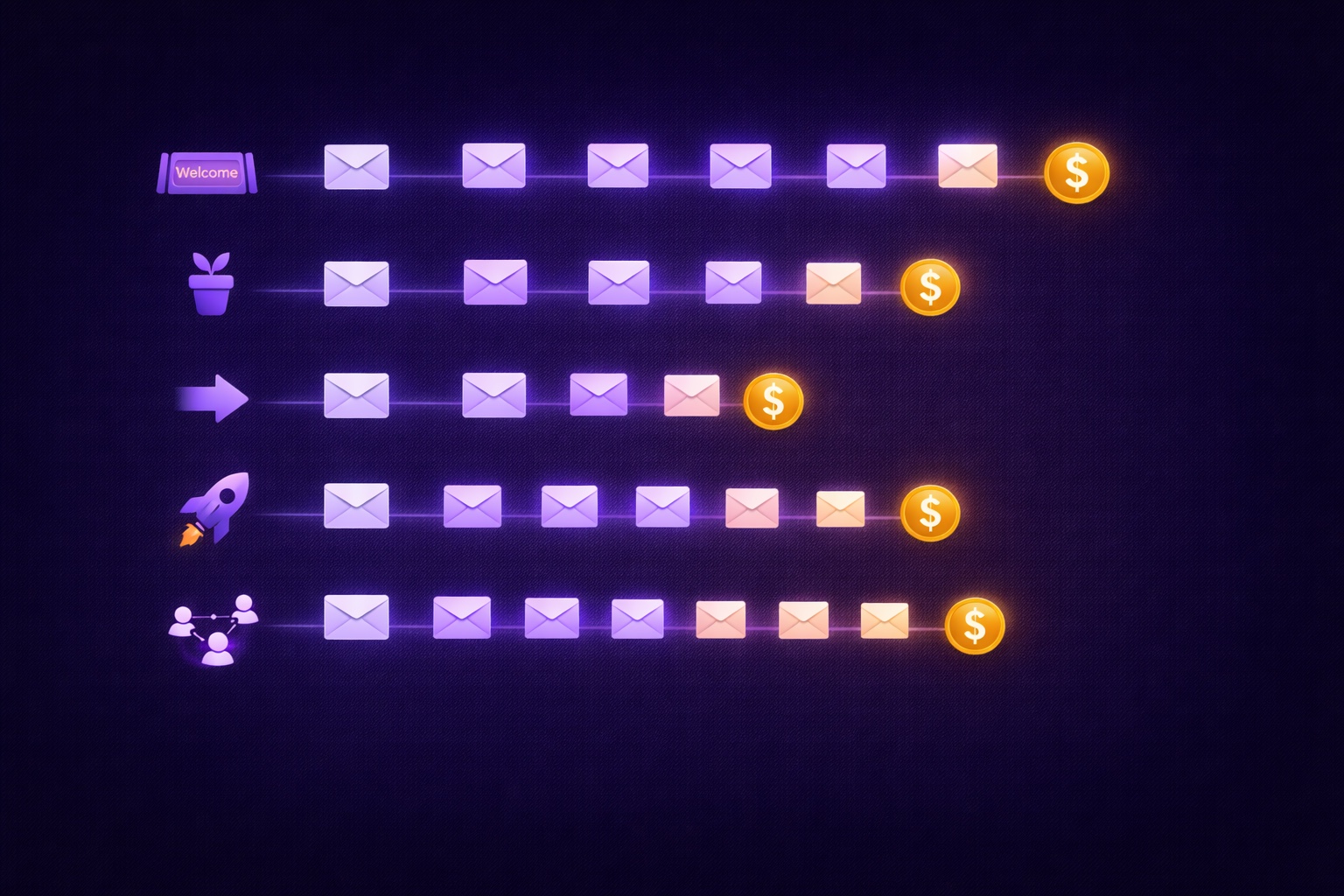
Email Automation for Creators: Set Up These 5 Sequences Once and Earn Forever
Most creators think automation means a welcome email. The reality: 5 automated sequences running simultaneously can generate $2,000–8,000/month passively. The complete guide with exact email timing, subject lines, content frameworks, and setup walkthrough for every sequence.
Your Readers Can Leave Without Ever Seeing Your Page.
Since 2024, Gmail and Yahoo require one-click unsubscribe. A mail-app button removes the reader instantly, with no page, no options and no reason. Your preference centre now reaches only footer-link leavers, so the 'less, not none' options belong inside the email.
They Unsubscribed, Then Signed Up Again. Now What?
Only the reader can reverse an unsubscribe. A fresh signup is a request, not proof. Why imports, forms and bulk edits quietly resubscribe people, and how to build a confirmation step that a link scanner or a stranger cannot trigger.

Moving Your Newsletter? The List Is the Easy Part.
The CSV moves in five minutes. Sender reputation, unsubscribes, paid subscriptions, automations and old signup forms do not. The order that gets a newsletter to a new platform without losing inbox placement or emailing people who opted out.
Apple Broke Your Open Rate. And Your Subject Line Tests.
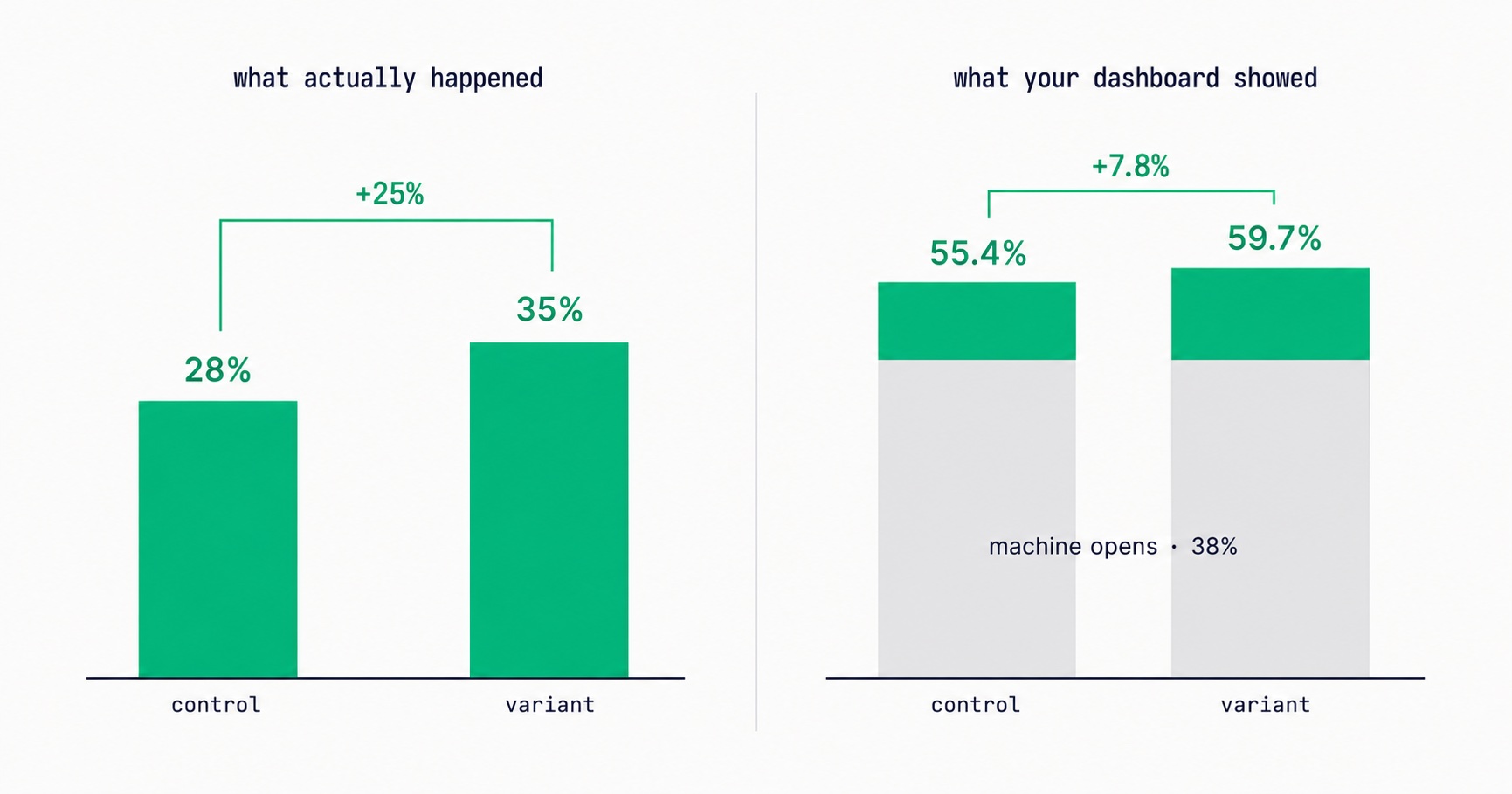
Every article about Apple Mail Privacy Protection says open rates are unreliable. None of them explain the part that actually changes your decisions: MPP doesn't add random noise, it systematically compresses the measured gap between two subject lines by roughly 3x — which is why so many creators ran good tests, saw flat results, and concluded subject lines don't matter.

Newsletter Reactivation: How to Win Back Inactive Subscribers (With Templates)
Every newsletter has inactive subscribers silently dragging down deliverability. A well-designed reactivation campaign recovers 8–20% of them while identifying the truly unrecoverable. The four-part reactivation sequence, subject lines that break through inbox habituation, the list hygiene logic that improves metrics after removal, and the onboarding system that prevents inactivity from accumulating in the first place.
Email Marketing for Online Coaches: Build Your List, Nurture Prospects, Fill Your Program
Coaching has a long sales cycle — clients need weeks of trust-building before they commit. Email is the only marketing channel that matches this cycle structurally. The complete system: how to build a list that attracts your ideal client profile, the 7-email welcome sequence that pre-qualifies prospects, and how to run enrollment conversations through email without feeling salesy.
Newsletter Segmentation for Creators: Send the Right Email to the Right Subscriber
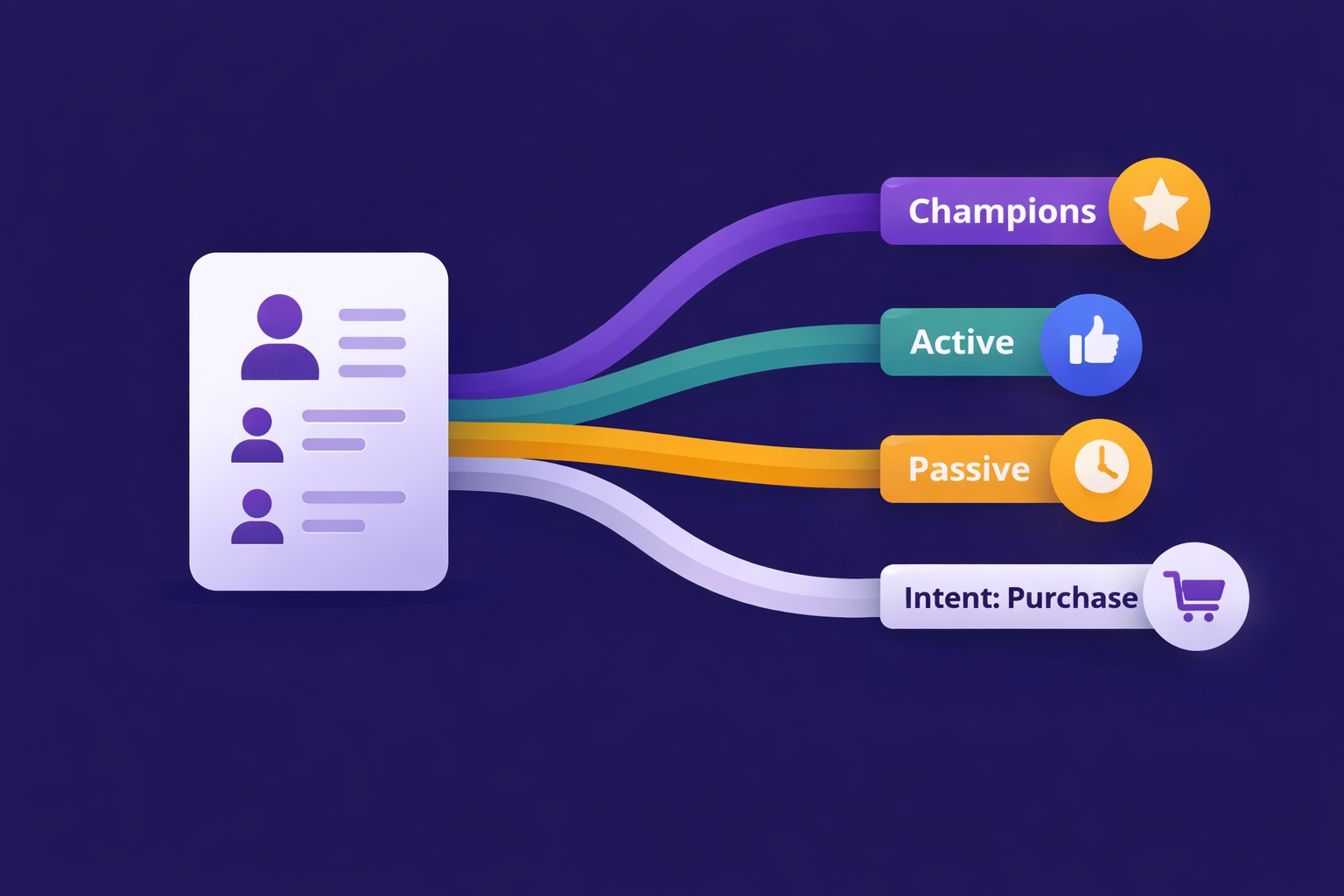
Segmentation is the gap between 25% open rates and 45% open rates — and between 3% paid conversion and 9%. The 5 segmentation types that move the needle, the exact tags to set up from day one, and how to build a behavioral targeting system that runs automatically in InfluencersKit.
Email Deliverability for Newsletter Creators: Why Your Emails Land in Spam (And How to Fix It)
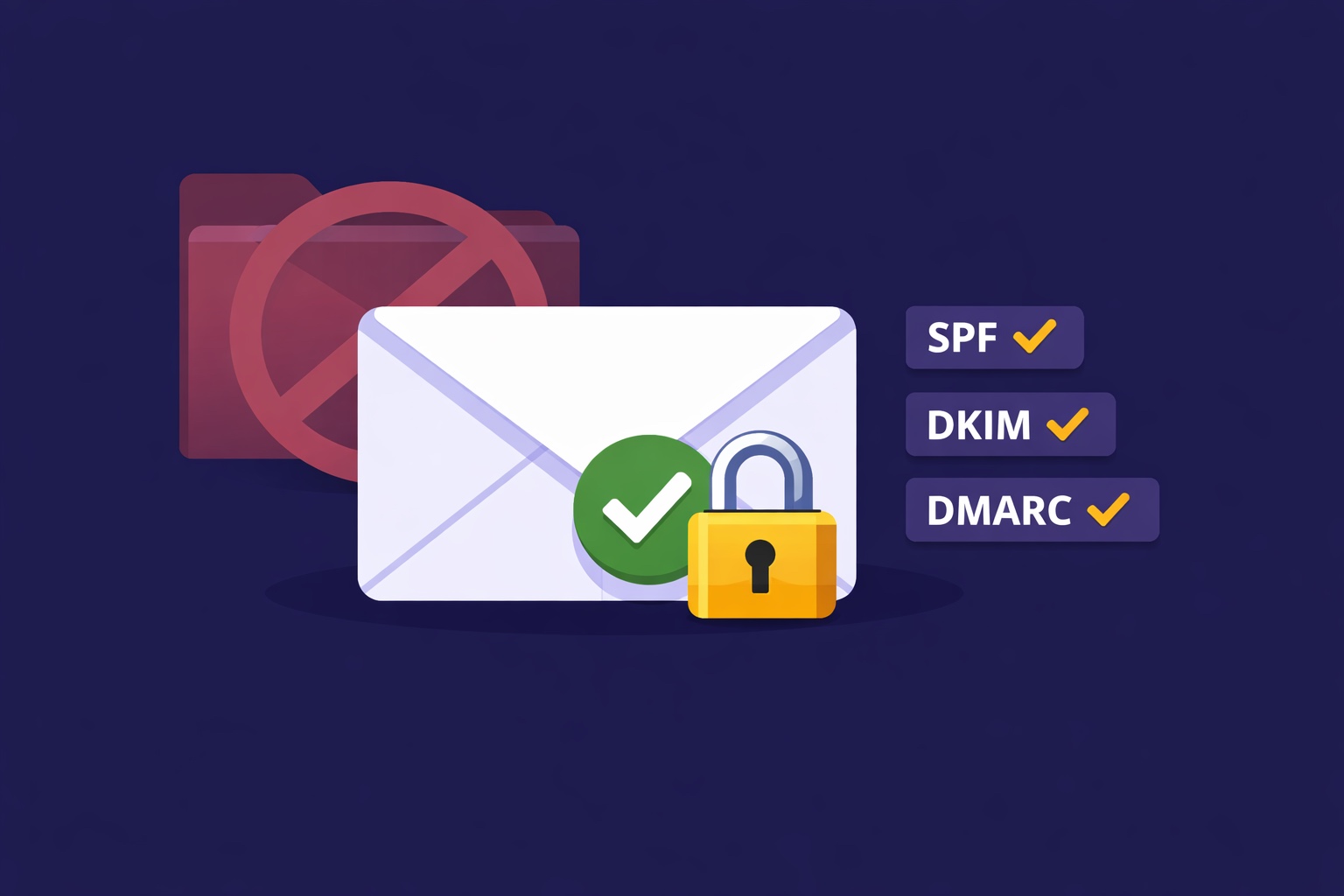
Deliverability is the silent newsletter killer — a 30% spam rate cuts your revenue potential by 30% while your dashboard shows 98% delivered. SPF, DKIM, DMARC in plain English, list hygiene that protects your sender reputation, the tools to diagnose the problem, and a 7-day recovery plan.
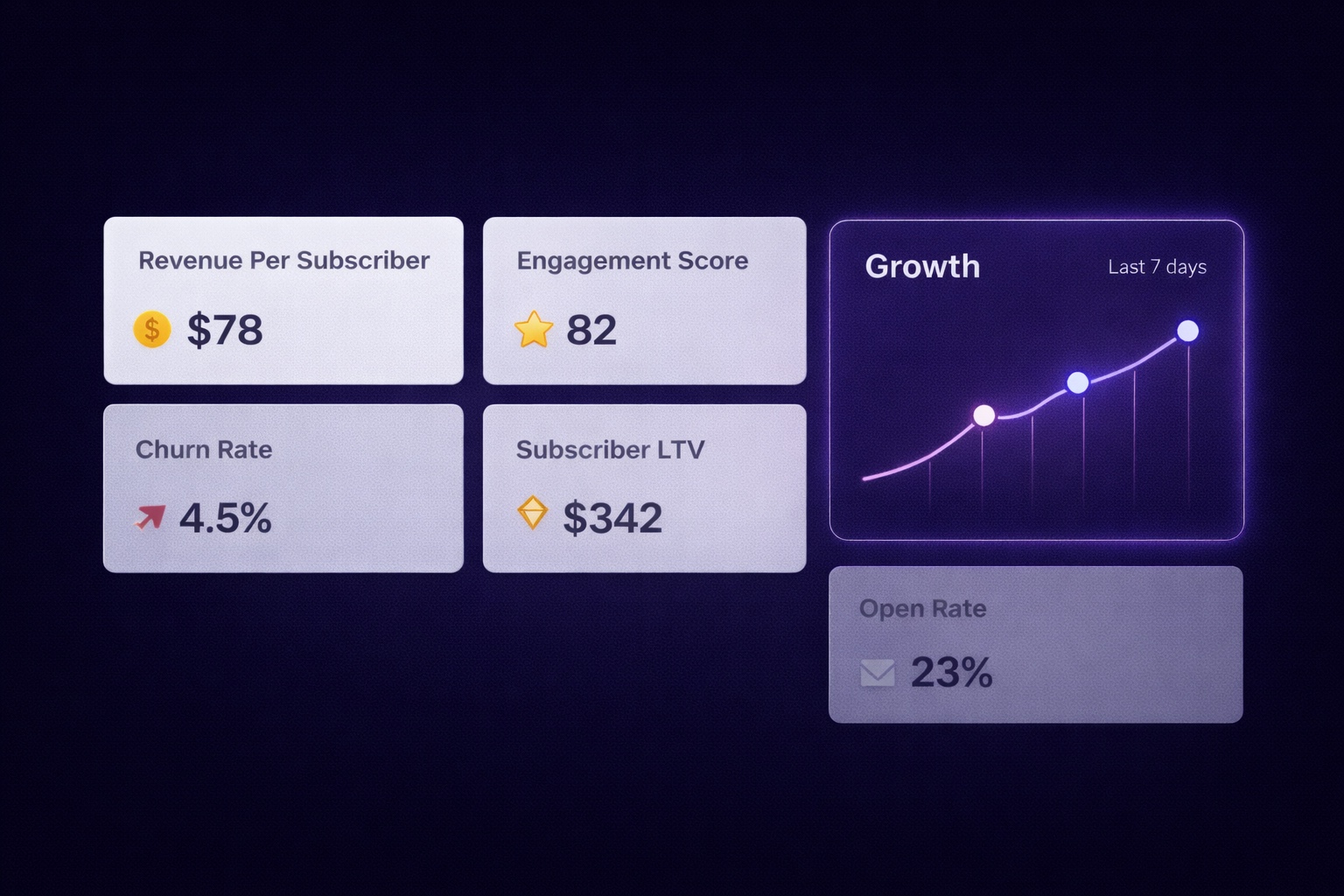
Newsletter Analytics for Creators: The 8 Metrics That Actually Matter (And 5 to Ignore)
A 60% open rate sounds great until you realize it's from 800 people and you're earning $0.08/subscriber. The metrics that actually predict newsletter success — revenue per subscriber, engagement score, churn rate, CPM efficiency, subscriber LTV — and what good looks like at every stage.

Your List Grew 1,500 Overnight. None of Them Are Real.
A signup spike with no launch behind it is usually list bombing. Fifteen hundred fake signups can push a welcome stream to six times Gmail's complaint limit and overstate your list by 30% to sponsors. How to spot them, why Apple Mail hides some, and how to clean up without making it worse.

A Subscriber Is Worth $1.25 a Year. Now Price Your Ads.
Two sponsored slots at a $30 CPM with a 40% open rate earn about $1.25 per subscriber per year. Against a defensible CAC near $2 and cost-per-signup commonly $2-5, most paid acquisition is at or past break-even before you account for paid cohorts converting worse than organic ones.